
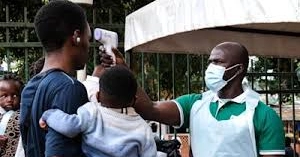
The World Health Organization (WHO) on Sunday declared the Ebola outbreak in Congo and neighboring Uganda a public health emergency of international concern following more than 300 suspected infections and 88 deaths.
WHO Director-General Tedros Adhanom Ghebreyesus announced the decision, while the UN health agency clarified in a post on X that the outbreak does not qualify as a pandemic emergency similar to COVID-19 and advised countries against shutting international borders.
The WHO said a laboratory-confirmed Ebola case has been identified in Congo’s capital, Kinshasa, nearly 1,000 kilometres from the outbreak’s epicentre in the eastern Ituri province, raising concerns over wider transmission.
According to the agency, the infected patient had recently travelled from Ituri. Additional suspected cases have also emerged in North Kivu province, a densely populated region bordering Ituri.
Ebola spreads through contact with bodily fluids such as blood, vomit and semen. The disease is highly infectious and often fatal.
Health authorities said the current outbreak is linked to the Bundibugyo strain of Ebola, a rare variant for which there are no approved vaccines or treatments. Although Congo and Uganda have experienced more than 20 Ebola outbreaks in the past, this is only the third outbreak involving the Bundibugyo virus.
WHO said all but two of the reported cases were recorded in Congo, while the remaining two were identified in Uganda.
The Bundibugyo strain was first detected in Uganda’s Bundibugyo district during a 2007-08 outbreak that infected 149 people and killed 37. The second outbreak occurred in Isiro, Congo, in 2012, resulting in 57 cases and 29 deaths.
The WHO’s emergency declaration is intended to mobilise international support and resources. However, previous global emergency declarations have drawn criticism for failing to ensure rapid delivery of vaccines, medicines and diagnostic tools to affected countries.
Director-General of the Africa Centres for Disease Control and Prevention, Dr Jean Kaseya, said a significant number of active cases remain within communities, particularly in Mongwalu, where the outbreak was first detected.
He noted that ongoing armed conflict, militant activity and population movement linked to mining operations in eastern Congo and across the Ugandan border are complicating containment efforts and contact tracing.
Authorities officially confirmed the outbreak in Ituri province on Friday. By Saturday, the Africa CDC reported 336 suspected cases and 87 deaths in Congo.
Tedros said there remain major uncertainties regarding the actual number of infections and the geographical spread of the outbreak, adding that epidemiological links among known and suspected cases are still unclear.
The two Ugandan cases involved travellers from Congo, including one patient who later died in a hospital in Kampala.
WHO warned that the high positivity rate among tested samples, transmission to Kampala and clusters of deaths in Ituri suggest the outbreak may be far larger than currently reported, posing serious local and regional risks.
Dr Kaseya said delayed detection allowed the virus to spread for weeks before authorities responded.
According to Africa CDC, the outbreak likely began in April, but by the time officials were alerted through social media reports on May 5, at least 50 deaths had already occurred.
The earliest known suspected patient, a 59-year-old man, developed symptoms on April 24 and died three days later in a hospital in Ituri.
WHO also reported that at least four healthcare workers showing Ebola symptoms have died during the outbreak.