
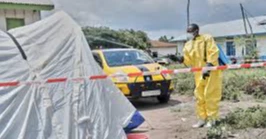
The World Health Organization (WHO) on Wednesday warned that the risk of Ebola spreading in Congo and neighboring Uganda remains high at both national and regional levels, although the global threat is still considered low.
The assessment came as WHO officials said the outbreak, which has already caused more than 130 suspected deaths, may continue for at least two more months despite intensified international response efforts.
The WHO has classified the outbreak as a public health emergency of international concern, calling for a coordinated global response. Earlier this week, the agency raised concerns over the rapid spread and scale of infections.
Health experts said the outbreak involves the rare Bundibugyo strain of the Ebola virus, for which there are currently no approved vaccines or treatments. The virus reportedly circulated undetected for several weeks after the first known death because initial tests focused on a different and more common Ebola strain.
WHO Director-General Tedros Adhanom Ghebreyesus said 51 confirmed cases have so far been recorded in Congo’s Ituri and North Kivu provinces, along with two confirmed cases in Uganda. In addition, authorities have reported nearly 600 suspected infections and 139 suspected deaths.
“We know that the scale of the epidemic is much larger,” Tedros said, adding that case numbers are expected to rise further.
Congo is expected to receive shipments of an experimental Ebola vaccine developed by Oxford researchers from the United States and Britain, according to virologist Jean-Jacques Muyembe of the National Institute of Biomedical Research.
Authorities said the vaccine would be administered experimentally to monitor its effectiveness against the disease.
In Bunia, where the first known death was recorded, schools and churches remained open Wednesday, though many residents were seen wearing face masks amid growing public concern.
Residents reported sharp increases in the prices of protective items, with disinfectants that previously sold for about one dollar now costing more than four dollars.
Aid workers described severe pressure on local health facilities. Trish Newport of Doctors Without Borders said hospitals in Bunia are overwhelmed with suspected Ebola patients and lack proper isolation facilities.
In Mongbwalu, the epicenter of the outbreak, daily activities including gold mining and cross-border movement with Uganda have continued, although awareness campaigns are increasing.
Health experts said the delayed detection of the virus, population movement and ongoing insecurity in eastern Congo have complicated efforts to contain the outbreak. Armed rebel activity in some areas has also hindered humanitarian operations.
Congo’s Health Minister Samuel Roger Kamba said the first Ebola-related death occurred on April 24 in Bunia, but confirmation took weeks, allowing the virus to spread further.
WHO official Dr Anne Ancia said authorities have yet to identify the outbreak’s “patient zero” and warned that funding shortages are negatively affecting the humanitarian response.
Meanwhile, US Secretary of State Marco Rubio said Washington would expand its support for Ebola response efforts, including funding for 50 emergency clinics in affected areas. The United States has already contributed $13 million to the response, with additional support expected.