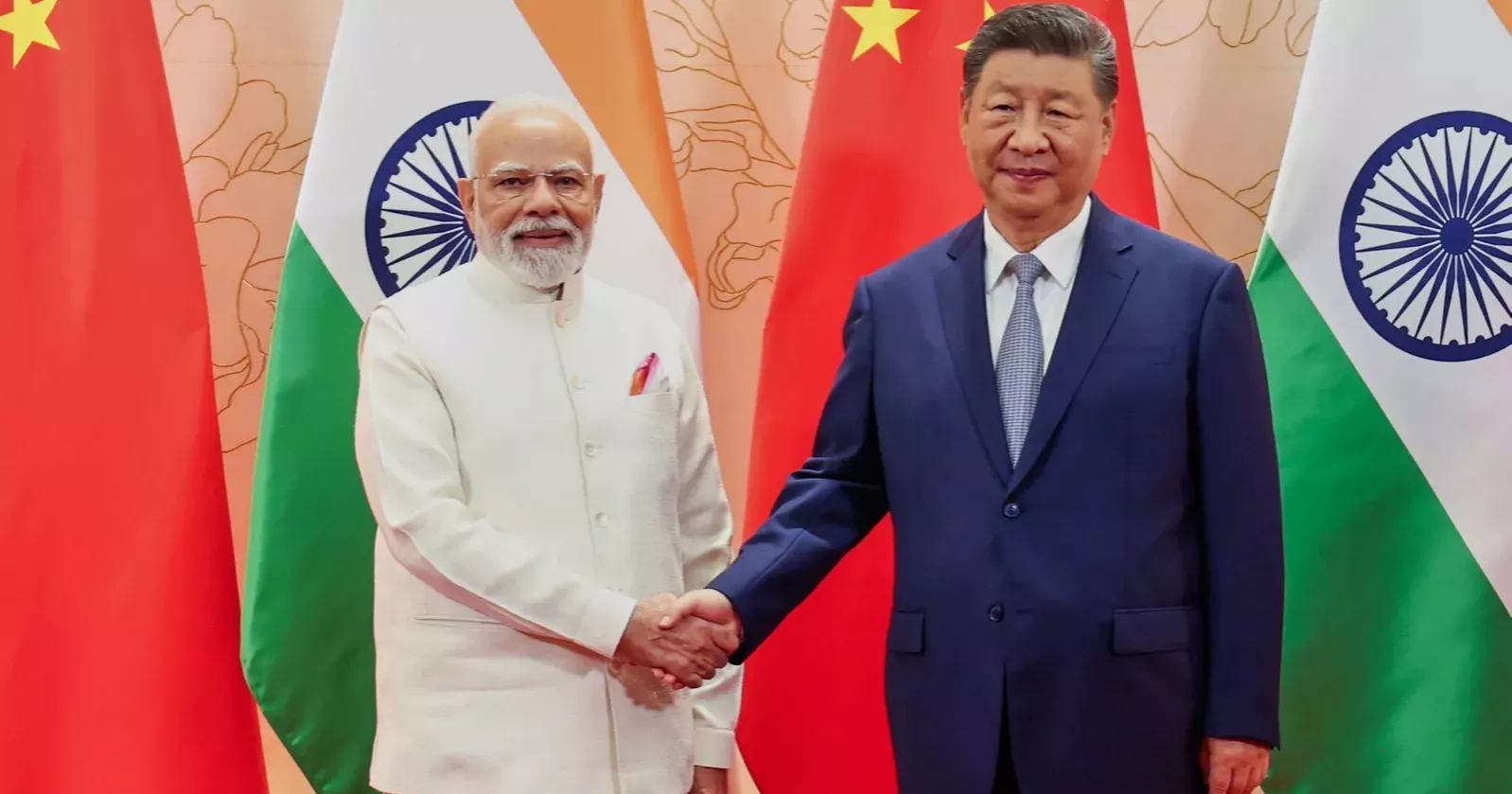
Chinese President Xi Jinping and Indian Prime Minister Narendra Modi have vowed to address longstanding border disputes and enhance bilateral cooperation during a meeting held ahead of a regional summit in Tianjin.
Modi’s trip marks his first visit to China since relations between the two nuclear-armed neighbors sharply declined following deadly clashes between their troops in 2020. The visit comes as part of India's participation in the Shanghai Cooperation Organization (SCO), a regional bloc focused on political, economic, and security issues, spearheaded by China.
In his remarks, Modi said that ties between the two countries have progressed “in a meaningful direction,” highlighting that the border situation has calmed after disengagement efforts. He emphasized that peace and stability along the frontier are essential for further development of India-China relations, according to a statement from India's Ministry of External Affairs.
President Xi echoed this sentiment, expressing hope that the talks in Tianjin would “further elevate” and sustain the “healthy and stable” trajectory of bilateral relations, as reported by China’s state broadcaster CCTV.
He urged both sides not to allow the border dispute to define their overall relationship. Instead, Xi said, the focus should be on mutual development. “As long as both countries stay committed to being partners rather than rivals, and prioritize opportunities over threats, China-India ties will steadily move forward,” he said.
Russian President Vladimir Putin also arrived in Tianjin on Sunday and is expected to hold talks with both leaders in the coming days.
Earlier this month, Chinese Foreign Minister Wang Yi visited New Delhi as part of a diplomatic thaw between the two nations. During that visit, both countries agreed to restart stalled border negotiations, resume direct flights, and ease visa restrictions.
Wang’s visit occurred around the same time the U.S. imposed 50% tariffs on India in response to its continued imports of Russian oil. However, Indian officials have indicated that efforts to repair ties with China had been underway well before that development.
Reaffirming India's independent foreign policy stance, Modi stated on Sunday that “India and China both value strategic autonomy, and their relationship should not be viewed through the prism of any third country,” according to India's foreign ministry.
In a sign of improving ties, both sides have increased high-level exchanges this year and discussed removing some trade and travel restrictions. In June, China granted Indian pilgrims permission to visit sacred sites in Tibet, further signaling progress in diplomatic engagement.