A new report shows how Information and Communication Technology, or ICT, has become the cornerstone of Bangladesh's banking industry, driving efficiency, enhancing operations, and bolstering competition in a rapidly evolving global financial environment.
Technology and banking are now intertwined, part of the growing footprint of 'fintech', with continuous innovation shaping the sector's future.
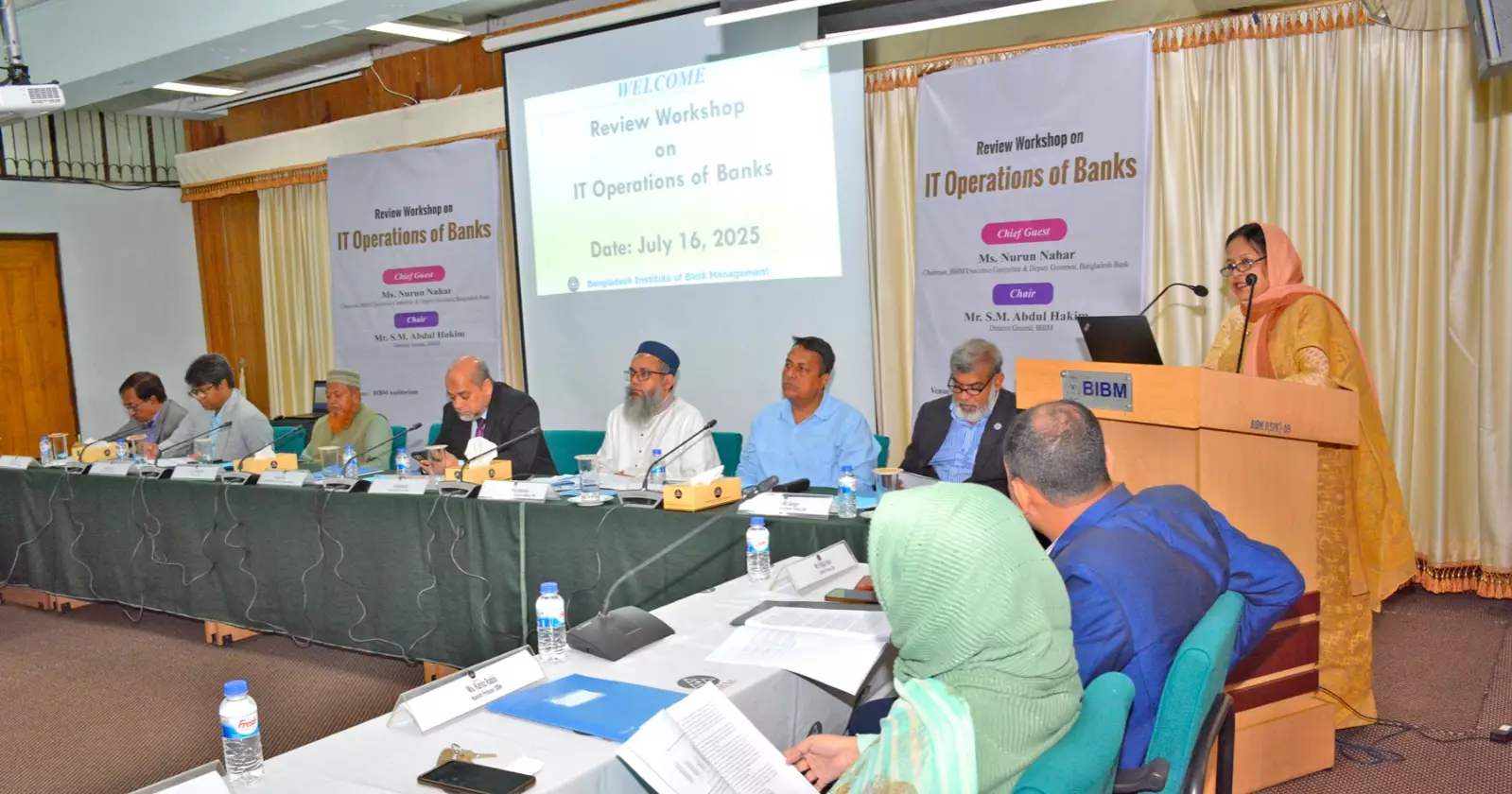
A recent study by the Bangladesh Institute of Bank Management (BIBM), presented in a seminar at its Auditorium on Wednesday (July 16), has revealed the progress of ICT in the banking sector.
Nurun Nahar, Deputy Governor and Chairman, BIBM was the chief guest in the seminar.
Md. Shihab Uddin Khan and Md. Mahbubur Rahman Alam professor of BIBM, Associate Professors Kaniz Rabbi, Md. Foysal Hasan, Md. Saiful Islam, Executive Vice President, Bank Asia PLC, the members of the research team.
According to the report, as of 2024, the banking sector employs approximately 8,250 ICT professionals. The largest proportion (25.59 percent) is dedicated to Network Services, underscoring the critical need for stable and secure connectivity. Significant portions of the workforce are also engaged in Hardware and Software Operations (13.41 percent) and Development Teams (12.82 percent), reflecting a strong focus on maintaining systems and fostering digital product innovation.
Bangladeshi banks have made substantial investments in ICT platforms, leading to the establishment of diverse digital channels and services. These include extensive networks of Automated Teller Machines (ATMs), Cash Recycling Machines (CRMs), and Point of Sale (POS) terminals, offering 24-hour customer access.
ADB approves $500 mln loan for Bangladesh banking sector reform
Electronic payment services through e-money, e-cards, mobile banking, internet banking, and app-based solutions are now common. Key national payment systems like the Bangladesh Automated Clearing House (BACH), Bangladesh Electronic Funds Transfer Network (BEFTN), National Payment Switch Bangladesh (NPSB), and Real Time Gross Settlement (BD-RTGS) facilitate efficient and secure interbank transactions. Initiatives such as Electronic Know Your Customer (e-KYC) and Agent Banking have also expanded financial inclusion.
From 2018 to 2024, the total investment in IT operations across the banking sector reached an estimated Tk 53,413 crore. While investment saw an initial upward trend, a sharp decline in 2020 due to the COVID-19 pandemic was followed by a rebound in 2022, and a period of stabilization by 2024, as banks focused on optimizing existing infrastructure.
Analysis of IT budget allocation reveals a renewed emphasis on hardware and software, with increased spending on security solutions to counter rising digital threats.
However, financial instability, largely stemming from loan defaults, continues to constrain the sector's full digital potential.
Despite progress, challenges persist in IT operations, particularly concerning cybersecurity and disaster recovery. The push towards a cashless society faces hurdles related to infrastructure, regulatory frameworks, financial literacy, security concerns, cultural dependence on cash, and interoperability.
Bangladesh Bank (BB) actively supports this transformation, encouraging innovation, and issuing comprehensive guidelines for establishing digital banks and managing cloud computing to strengthen the financial system's security and efficiency. Moving forward, key recommendations include enhancing cybersecurity measures, improving disaster recovery management, and prioritizing public awareness and education for a truly cashless society.
Financial instability, a familiar challenge driven by loan defaults, casts a long shadow over the sector, limiting the ideal allocation of resources for crucial IT initiatives.
Despite these hurdles, banks are pushing forward, with 58 percent embracing modern technologies like Near Field Communication (NFC) for seamless payments and Microservices for agile system development.
While cutting-edge innovations such as Blockchain (6 percent) and Internet of Things (IoT) (13%) are still finding their footing, the commitment to digital innovation is clear.
The human element of preparedness is also highlighted. While 75 percent of banks tested their disaster recovery sites in 2024, ensuring services can continue even in adverse events, the fact that 90 percent of local banks only performed partial tests indicates room for improvement in ensuring full resilience.
On the security front, there's a strong defensive posture: 100 percent of banks now boast Next Generation Firewalls, and 75 percent have fortified themselves against ransomware threats, safeguarding customers' data and trust.
The BIBM study doesn't just state facts; it offers a roadmap for a more secure and efficient future. Its recommendations include a critical re-evaluation of IT spending to bolster cybersecurity, training, and audits.
It also calls for strengthening the human shield against cyber threats by increasing staff in security and audit units and champions mandatory ISO 27001 and PCI DSS certifications.