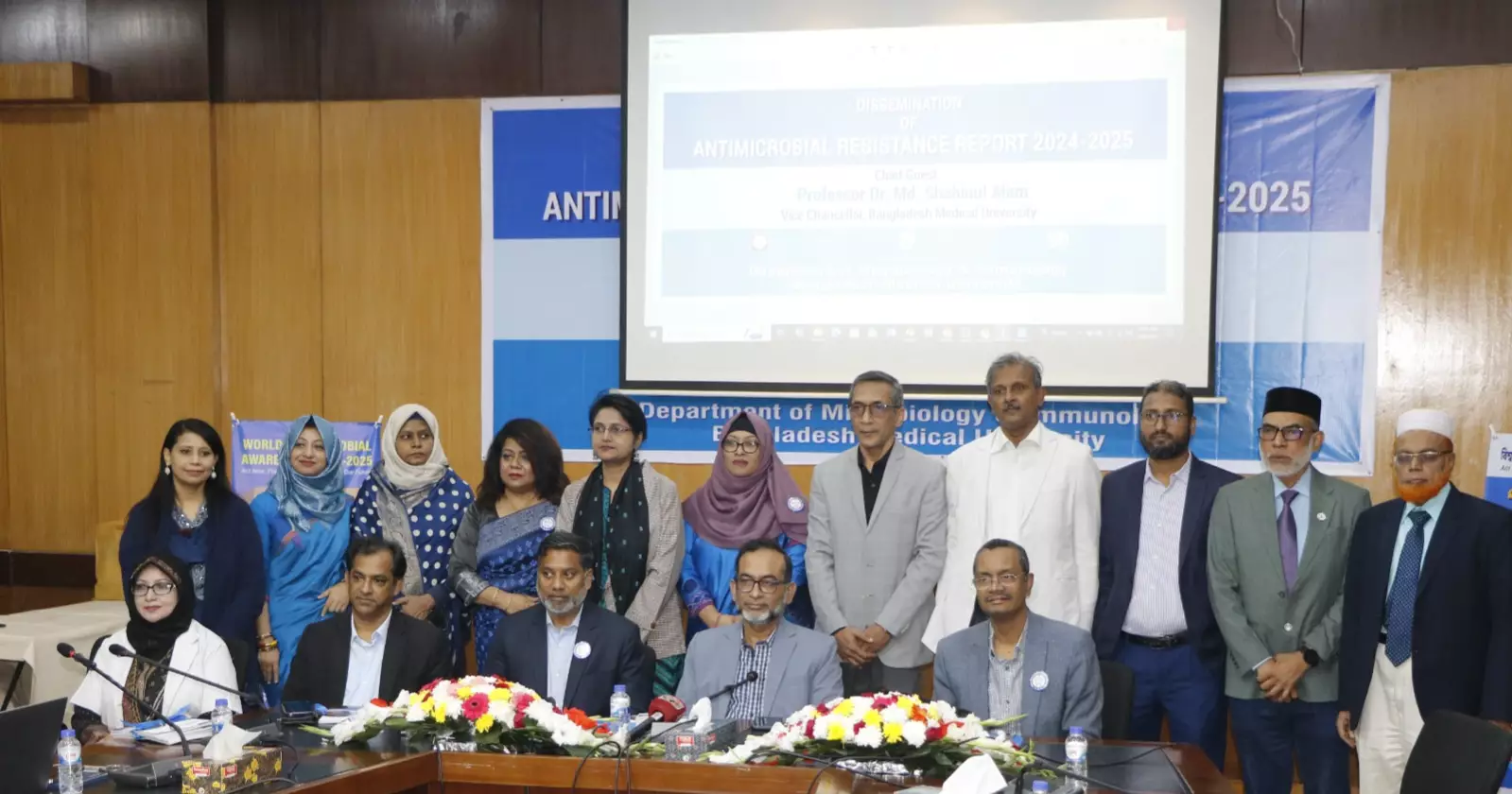
Bangladesh Medical University (BMU) warned of a rapidly worsening antimicrobial resistance (AMR) situation in the country, as its Microbiology and Immunology Department recorded alarming levels of drug resistance in major pathogens after analyzing 46,279 clinical samples over the past year.
The findings were revealed on Monday during the dissemination of the Antimicrobial Resistance Report 2024–25, organized to mark World Antimicrobial Awareness Week 2025.
According to the report, 24 percent (11,108) of the samples tested positive in culture, with urine samples accounting for the highest proportion, followed by blood. E. coli was found to be the dominant urinary pathogen, while Salmonella Typhi topped the list in bloodstream infections.
BMU researchers reported high resistance to ciprofloxacin and amoxicillin in E. coli, while drugs such as meropenem and tigecycline remain effective but exhibit early signs of reduced susceptibility. Several Salmonella Typhi isolates also demonstrated resistance to ceftriaxone, prompting calls for genetic sequencing to detect possible clonal spread.
Klebsiella spp. showed moderate to high resistance to ceftriaxone, gentamicin, and ciprofloxacin, though colistin and tigecycline continue to work in most cases. The situation is particularly difficult in hospital-acquired infections, with Acinetobacter spp. exhibiting resistance to nearly all commonly used antibiotics—including rising resistance to meropenem and tigecycline.
Trend analysis from 2022–2025 shows a slight decline in MRSA and ESBL-producing E. coli, but carbapenemase-producing E. coli, Klebsiella, Acinetobacter and Pseudomonas have surged to worrying levels. Invasive ICU-related fungal infections were dominated by Candida tropicalis and Candida albicans, with significant fluconazole resistance across multiple species.
Speaking at the event as the chief guest, BMU Vice-Chancellor Prof Dr Md Shahinul Alam said universities must take responsibility for research, guideline development and implementation to curb AMR. “Challenges linked to antimicrobial resistance are not insurmountable. Universities must lead by finding solutions and offering hope to the nation,” he said.
In a video message, Adviser to the Chief Adviser Prof Dr Md Sayedur Rahman warned that within the next 10–15 years, humanity could face a crisis similar to the pre-antibiotic era. “There will be medicines, but they will no longer work against bacteria,” he cautioned.
Online ticketing service introduced at BMU to reduce patients’ hassles
Pro-Vice Chancellor (Administration) Prof Dr Md Abul Kalam Azad said AMR has taken a “frightening turn”, urging immediate collective action.
Chairing the event, Microbiology and Immunology Department chief Prof Dr Abu Naser Ibn Sattar said misuse, incomplete doses and overuse of antibiotics in humans and livestock are contributing to deadly resistance patterns. “We must commit to responsible antibiotic use, proper hygiene, vaccination and infection control,” he emphasised.
Faculty members, department chairs and specialists from various BMU units attended the programme. Poster presentation winners were awarded at the end of the event.