Dhaka North City Corporation (DNCC) administrator Md Shafiqul Islam Khan has said that push notifications and mobile SMS will be used to ensure that no child is left out of vaccination coverage, alongside strengthened awareness campaigns at the grassroots level and door-to-door outreach activities.
He said the initiative aims to deliver vaccine-related information directly to parents through mobile messages, as part of a coordinated effort to achieve full immunisation coverage.
DNCC distributes 2,500 raincoats among cleaners ahead of monsoon
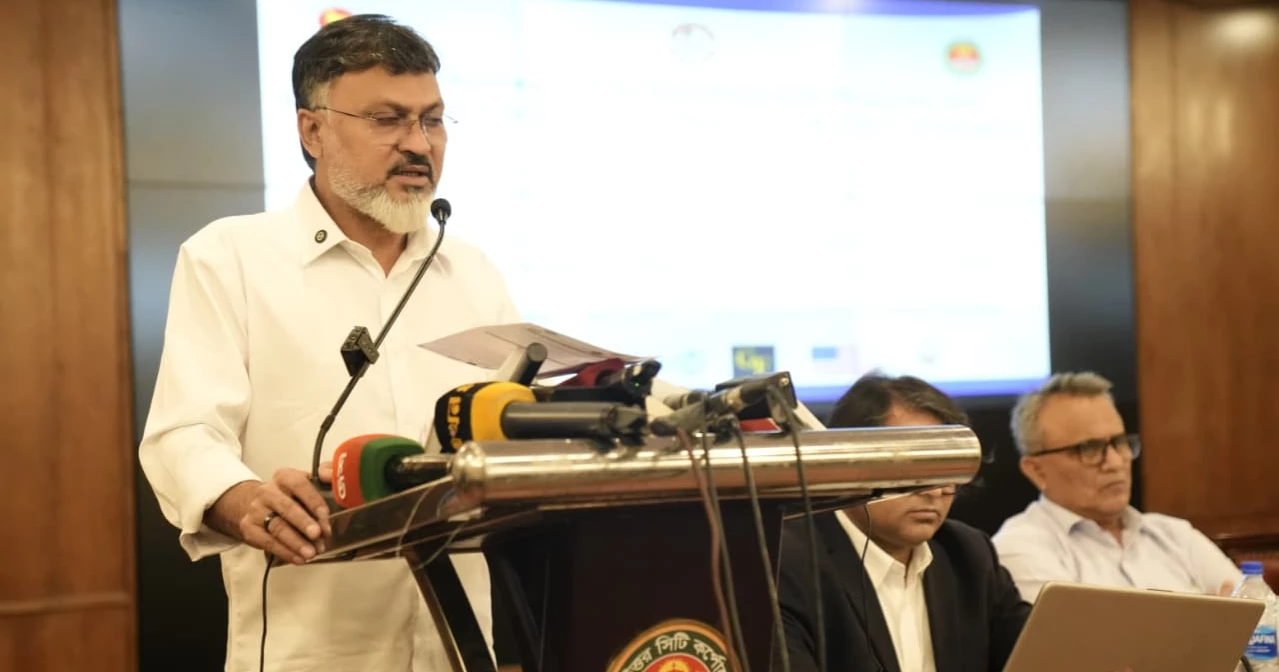
He made the remarks on Thursday afternoon while speaking at a discussion titled “Challenges and Way Forward of Coordinated Activities of DNCC Stakeholders to Strengthen Immunisation Programme and Health System in Bangladesh and Response to the 2026 Measles Outbreak”, held at the DNCC auditorium. The event was jointly organised by the Expanded Programme on Immunization (EPI), UNICEF Bangladesh, and Health Protection Foundation.
In his speech as chief guest, the DNCC administrator said ensuring healthcare for city residents is one of the key responsibilities of the city corporation. He stressed that government and non-government stakeholders must work together to make healthcare and vaccination activities more effective.
According to the meeting, Bangladesh has already eliminated polio and tetanus, brought hepatitis under control, and recently achieved 93 percent coverage for HPV (Human Papillomavirus) vaccine and 97 percent for TCV (Typhoid Conjugate Vaccine). Under the current EPI programme, vaccines against 12 diseases are being provided through nine antigens.
The EPI Coverage Evaluation Survey 2023 shows that vaccination coverage in urban areas of the country stands at 79 percent. In Dhaka North City Corporation, the coverage is 75.4 percent, which is 1.2 percent higher compared to 2019.
The meeting also highlighted the ongoing measles-rubella outbreak in 2026. According to the Directorate General of Health Services (DGHS), as of May 6, 2026, the country recorded 44,260 suspected measles cases, 6,099 laboratory-confirmed cases, and 268 suspected measles-related deaths.
World Health Organization (WHO) data shows that measles has spread across 58 of the country’s 64 districts, and the situation has been assessed as a high-risk national public health concern. A large proportion of the affected patients are children, with those under five years of age at the highest risk.
The meeting was informed that an emergency MR (Measles-Rubella) vaccination campaign targeting children aged 6–59 months began on April 5. In addition, MR vaccination activities have also been underway in Dhaka North City Corporation areas since April 20.
Speakers at the event said the Government of Bangladesh is giving highest priority to immunisation programmes. They noted that Bangladesh’s success in vaccination has been globally recognised in ensuring universal healthcare. Through effective immunisation, the country has made significant progress in preventing deaths and disabilities among children and women.
Speakers included Jagannath University professor Md Rafiq Ul Islam, UNICEF Immunization Manager Dr Riad Mahmud, and Health Protection Foundation Executive Director Dr Nizam Uddin Ahmed.
The programme was moderated by Dr Mahmudah Ali and chaired by Brigadier General Imrul Kayes Chowdhury.