
Prime Minister's Adviser on Finance and Planning Rashed Al Mahmud Titumir on Wednesday said the development of cottage, micro, small and medium enterprise (CMSME) sector is synonymous with the country’s overall economic progress, underscoring the need for a strong and inclusive financing ecosystem.
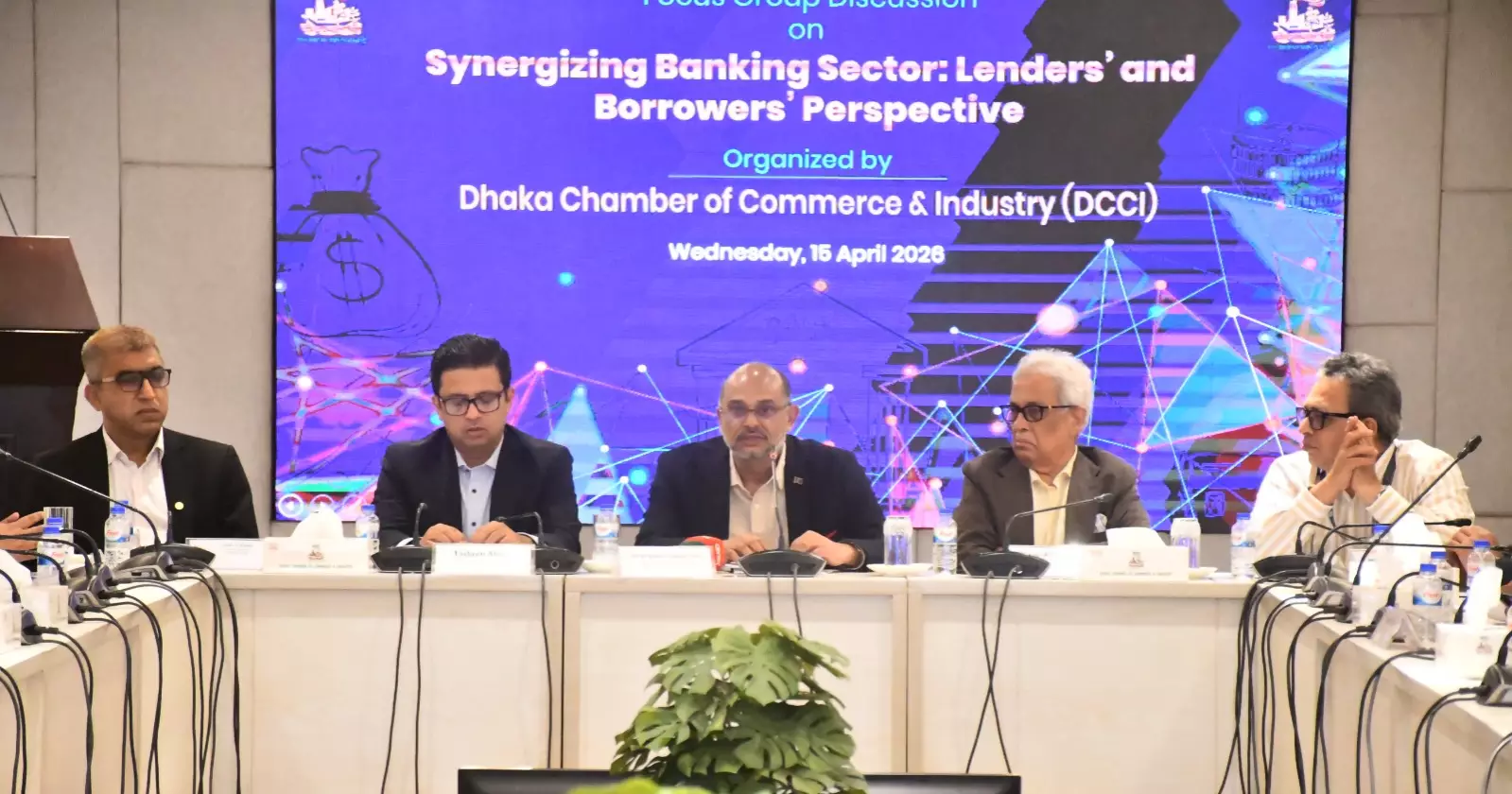
“We want to see a strong CMSME base in the country,” he said while addressing a focus group discussion titled “Synergising the Banking Sector: Lenders and Borrowers’ Perspective,” organised by Dhaka Chamber of Commerce and Industry (DCCI) at its auditorium.
Titumir stressed closer collaboration between the government and the private sector to accelerate CMSME growth, noting that reforms in the Bank Company Act and other financial laws are inevitable to build a coordinated economic framework.
Highlighting the need for sustainable financing, he emphasised developing a robust bond and capital market as alternative sources of funding alongside traditional banking channels.
“The government is committed to supporting labour-intensive industries to boost employment,” he said adding that steps will be taken to reopen closed state-owned factories, enhance industrial production and extend support to women entrepreneurs.
Acknowledging fragilities in the financial sector, the adviser said policy measures and structural reforms are underway to ensure recovery and stability.
Speaking at the event, Bangladesh Association of Banks (BAB) Chairman Abdul Hai Sarker said simplifying SME financing is crucial, noting that private banks have stepped forward to support the sector.
He pointed to a lack of coordination between policymakers and stakeholders as a key challenge.
Naushad Mostafa, Director of the SME and Special Programs Department, identified the lack of reliable data as a major barrier to effective decision-making, stressing the need for enhanced AI-based connectivity among financial institutions and government agencies.
Selim Al Mamun, Director (Research) of the central bank, said despite excess liquidity, the private sector lacks dynamism due to macroeconomic instability.
He stressed improving the ease of doing business to restore investor confidence and said efforts are underway to bring inflation down to around 7 percent.
Md Abdul Wahab, another Director (Research) at Bangladesh Bank, urged businesses not to rely solely on banks but to explore bond markets and other instruments.
NCC Bank Managing Director M Shamsul Arefin said lenders are increasingly prioritising green and eco-friendly projects, encouraging entrepreneurs to align with sustainable business models.
He also noted that poor documentation and record-keeping among CMSME entrepreneurs remain a key obstacle to accessing bank credit.
Ashanur Rahman, Deputy Managing Director of City Bank, said the implementation of IFRS 9 from next year will tighten loan provisioning practices.
He urged the central bank to expand the Credit Guarantee Scheme and simplify loan documentation to unlock CMSME potential.
He also emphasised the need for a dedicated marketplace for CMSME products, warning that without proper market access, entrepreneurs may struggle to sustain operations, affecting banks’ loan recovery.
DCCI President Taskeen Ahmed presented the keynote paper at the discussion, which was attended by business leaders, entrepreneurs, and representatives from both public and private sectors.