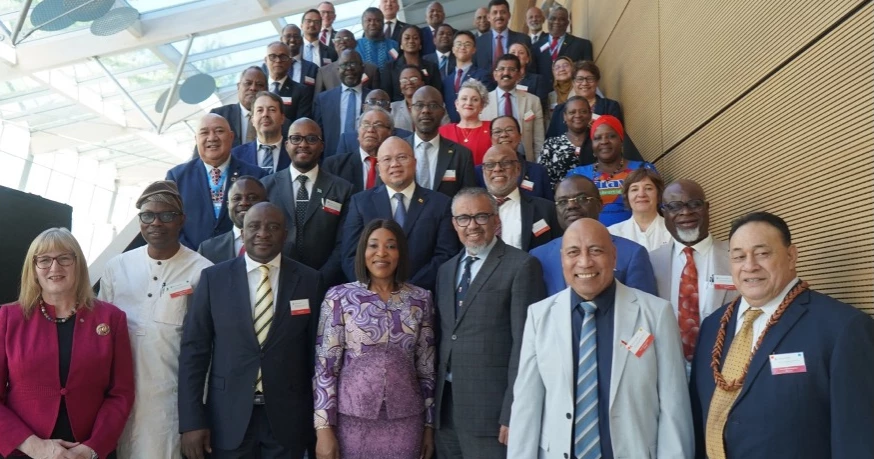
The 2025 Commonwealth Health Ministers Meeting, convened ahead of the 78th World Health Assembly, has concluded with a blueprint for unlocking sustainable health finance and delivering on the promise of quality healthcare for the 2.7 billion people across the Commonwealth.
The 37th meeting of health ministers, held on 17 May in Geneva, marks a renewed spirit of collaboration among member countries at a time when many healthcare systems are under pressure to adapt to an uncertain and challenging future.
The ministers produced a strong outcome statement with a pathway for building equitable, resilient, inclusive and sustainably financed health systems that prioritise vulnerable member countries, now at risk due to recent freezes and cuts in development assistance.
In her remarks at the opening ceremony, Commonwealth Secretary-General Ayorkor Botchwey addressed representatives from 45 member states, including 198 government officials, and 42 observers like global health leaders, youth advocates and other stakeholders, stating, “We must shift from short-term, fragmented approaches to long-term, wide investment. That means strengthening governance, the health workforce, infrastructure, supply chains, data systems, and most crucially, primary health care.
“We must find new ways to finance health. That includes blended finance, social impact bonds, and public-private partnerships. But innovation must serve equity, not undermine it. That requires strong regulation, public leadership, and shared accountability.”
In light of shrinking international assistance, she commended the efforts of Commonwealth health ministers while calling for even greater emphasis on health spending as an ‘engine of growth’ in challenging times.
Selibe Mochoboroane, Lesotho’s Minister of Health, chaired the ministerial meeting. Underscoring the need to build health systems that are sustainable, equitable and resilient, he said, “We gather at a pivotal moment as many Commonwealth countries face pressing challenges from the current global financial landscape. It is crucial to establish a sustainable financing framework that safeguards our health systems through these economic hardships.”
The ministers explored innovative strategies and solutions to increase domestic spending on health and diversity funding streams.
To achieve optimal health care, ministers underscored the importance of strengthening primary health care by investing in the health and care workforce to address worker shortages, improving access to essential medicines to achieve health equity, and investing in digital tools and strengthening country capacity for uptake by increased collaboration between the Commonwealth Secretariat and the World Health Organization, aimed at supporting countries to conduct Digital Health Maturity Assessments at the national level.