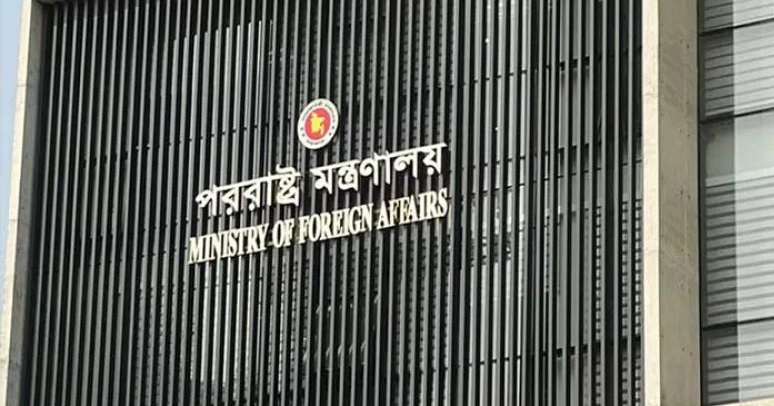
Bangladesh has strongly rejected Myanmar’s recent submissions before the International Court of Justice (ICJ) in the case brought by The Gambia over the Rohingya genocide, saying Naypyidaw’s attempt to label the Rohingya as ‘Bengalis’ is a deliberate effort to justify atrocities committed against them in 2016–17.
In a press release on Thursday, the Ministry of Foreign Affairs said Myanmar is trying to create a false narrative of illegal migration and internal security threats by referring to the Rohingya as ‘Bengalis’, portraying the so-called ‘clearance operations’ as counter-terrorism measures while diverting attention from crimes against humanity.
The government emphasised that the Rohingya are a distinct ethnic group that evolved over centuries in Arakan, even before it became part of the Barman Kingdom in 1785. Their historical presence in the old Arakan capital Myo-Haung (Mro-Haung or Rohaung) led to them being identified as people of Roshang or Rohang in Chittagong and greater Bengal, initially as an exonym. As marginalisation intensified in Burma, the community adopted the name ‘Rohingya’ for self-identification.
Bangladesh said they have deep historical, cultural, and social roots in Arakan and present-day Rakhine, predating modern borders, a fact documented in historical records, colonial demographic accounts, and independent scholarship.
The government noted that the Rohingya were integral to Myanmar’s politics, society, and governance until the 1982 Citizenship Law excluded them on ethno-religious grounds. Despite marginalisation, they retained voting rights until full disenfranchisement in the 2015 elections. Myanmar has persistently denied them constitutional guarantees of equal rights, and the final stage of this planned destruction was their eviction from Rakhine, rendering them stateless.
Bangladesh highlighted that the Rohingya possess a distinct ethnic identity, cultural heritage, traditions, social practices, and language, clearly distinct from Bangla despite similarities with the Chittagonian dialect. Calling them ‘Bengalis’ systematically denies their right to self-identify and has been used to justify exclusion, persecution, and ethnic cleansing. Myanmar itself recognised them as “lawful residents of Burma” under the 1978 bilateral repatriation agreement, which assured their integration into society as equal members.
The release said Myanmar’s failure over the past eight years to create a conducive environment in Rakhine and facilitate repatriation violates bilateral agreements signed in 2017–18 and may indicate intent to destroy the Rohingya community. Bangladesh also rejected Myanmar’s 2023 claim that “half a million Bangladeshi people took refuge in Rakhine during the Liberation War,” noting no evidence supports this, and the presence of such a large refugee population would have created massive disruption.
Bangladesh called on Myanmar and authorities in Rakhine to recognise the Rohingya as an integral part of society and state, and to ensure their safe, dignified, and voluntary return with equal rights.