The Bengali nation proudly celebrates December 16 as Victory Day. The date marks the surrender of the Pakistani army in 1971, bringing to an end the Liberation War. A new country, Bangladesh, was born after a long and bloody nine-month war. However, even after 54 years of independence, questions remain about issues such as democracy, secularism, the objective history of the war and reform of the education system.
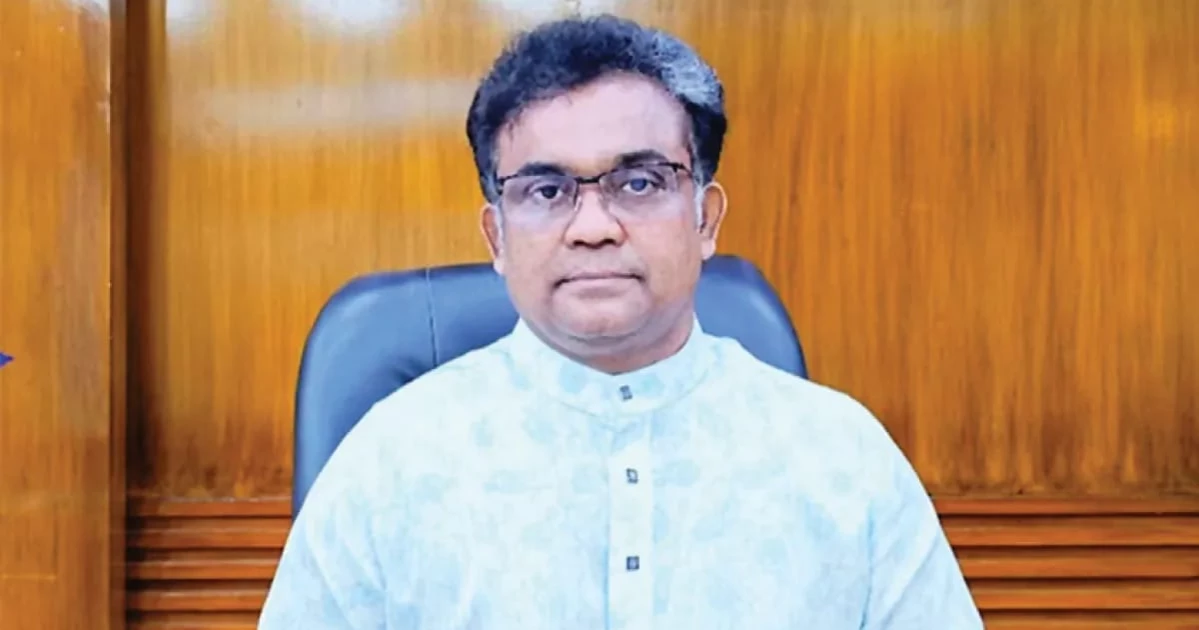
In a special interview with UNB, Professor Mohammad Kamrul Ahsan, Vice-Chancellor of Jahangirnagar University, shared his views on the importance of Victory Day, the university’s programmes, research on the Liberation War, the political reality of the 2024 Uprising, challenges in education, and the role of the younger generation.
UNB: How do you see the importance of Victory Day on its 54th anniversary?
VC: The greatest significance of this day is that Bangladesh emerged as a democratic state. Our main resistance against the Pakistani rulers was because they denied the people’s electoral mandate. The core spirit of the Liberation War lies in freedom, democracy and sovereignty. Our main goal was to establish the people’s rights and democracy in this country.
UNB: What programmes has the university taken for Victory Day?
VC: Like last year, the university administration has arranged various programmes. These include placing wreaths at the National Memorial, illuminating different offices such as the administrative building and residential halls, and providing improved food for students. There is also a plan to organise a victory rally if the situation allows.
UNB: How much participation do you expect from teachers and students?
VC: 1971 is our birth identity, and 2024 continues that journey—'24 has completed the unfinished work of '71. Due to long-term fascist rule, confusion was created, but after '24, history has been revived. I believe teachers and students will participate spontaneously.
UNB: Does the university have any initiative to research and document the Liberation War?
VC: We have established an art gallery to capture the spirit of 2024. We are also preserving the events of 2024 through an oral archive. 2024 was born from 1971 and emerged due to the unfinished promises after independence. It is important to document and remember this. If we fail to fulfil the promise of '71, '24 will return again and again.
UNB: Are there any new steps to strengthen Liberation War history in the curriculum?
VC: Every department will review its course content. Departments such as history, archaeology, government and politics should give greater importance to this topic. Many people are confused because they do not know objective history. We have both horizontal and vertical histories. The deprivation of Muslims in colonial Bengal and the contributions of Muslim thinkers of the subcontinent have not been properly highlighted. I urge the concerned departments to take immediate action.
UNB: Is there any new project on campus to honour the martyrs?
VC: There are several memorial structures on campus, including Amar Ekushey, Shaheed Minar, Sansaptak, and monuments for 1952, 1971 and 2024. Recently, we inaugurated ‘Adamya-24’ in memory of 2024. However, these are not enough. More visible initiatives are needed to commemorate 1971 and 2024. Failure to remember history has led to long dictatorships.
UNB: Do students know the correct history of the Liberation War?
VC: Except for a small number, most students do not know the correct history. Different governments have presented history based on their own ideologies. We want to ensure this does not happen again. Everyone’s contribution must be evaluated fairly. Otherwise, situations like 2024 may occur again.
UNB: Is the new generation learning enough from history?
VC: I have serious doubts. The main problem is the lack of objectivity. Awareness will grow if students learn history through interviews with families of martyrs, use of technology, oral archives and smartphones.
UNB: How much of the spirit of independence has been realised today?
VC: We are still trapped in divisive politics. Even a year and a half after 24, hatred has not stopped on the path to restoring democracy. This puts both 1971 and 2024 at risk. Despite many reasons for division, if there is even one reason for unity, we must accept it. Like '71 and '24, we must unite beyond race, religion, caste and gender.
Jahangirnagar University suspends 16 students over ragging of freshmen
UNB: What is the biggest challenge in the education system after 54 years?
VC: There is a division based on education mediums—Bangla, English, Madrasa and technical. These must be unified. The education budget is very low. Internationally, 4–6 percent of GDP is recommended, but we allocate only 1–2 percent. Due to lack of respect and financial security, talented people are not choosing teaching as a profession. An education commission and major reforms are urgently needed.
UNB: What are the future plans for academic development and research at the university?
VC: Since taking office, we have increased research funding and supported quality researchers. Our international research standing has improved, and we have ranked top nationally several times. We also plan to allocate funds for student research.
UNB: What is your message to students and youth on Victory Day?
VC: History shows that young people have always led movements for democracy and rights. The experience of elders and the energy of youth together will move the country forward. Students should spend more time in classrooms and libraries to prepare themselves to lead the nation in the future.