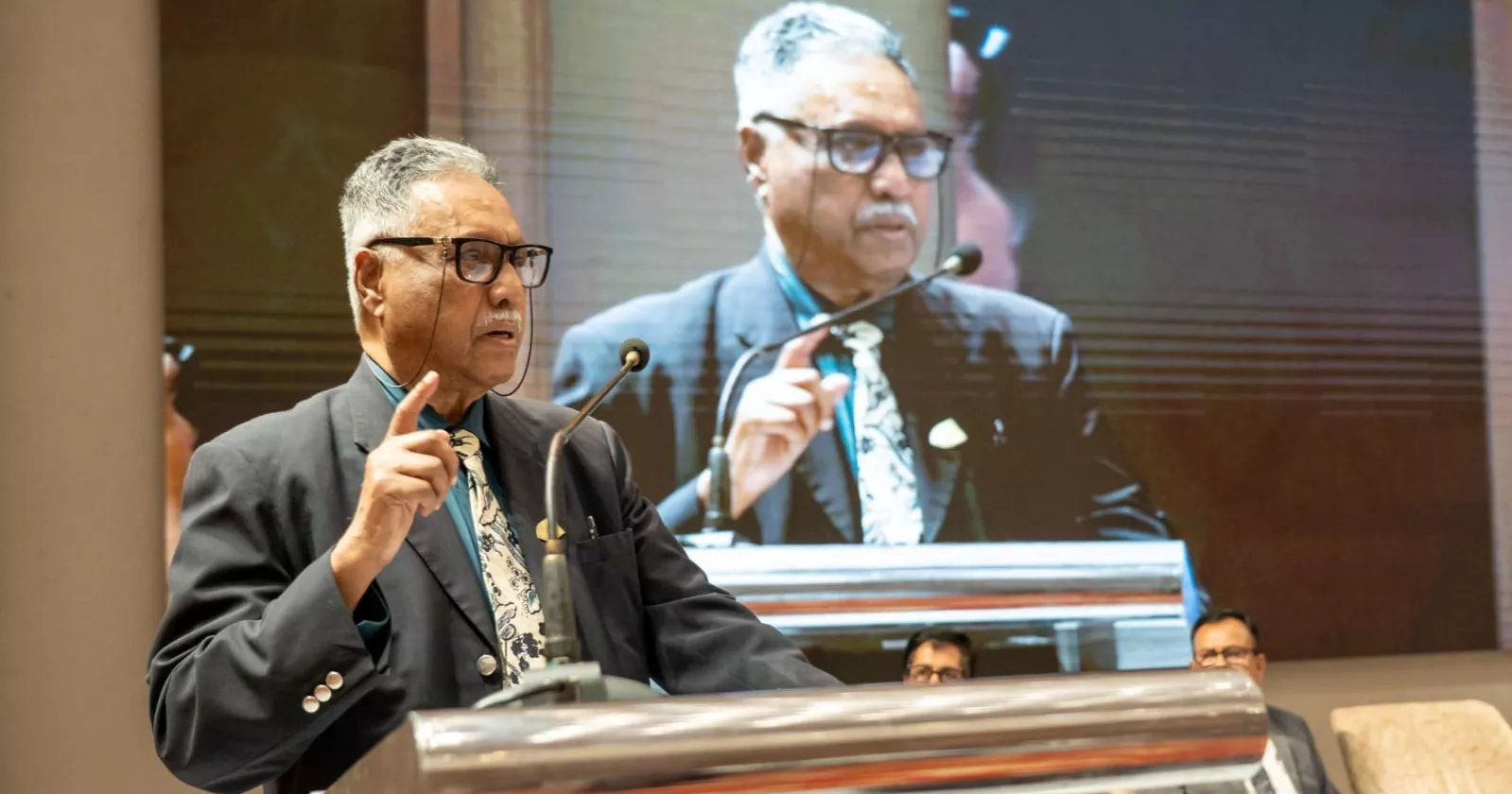
Prof Emeritus at BRAC University Dr. Ainun Nishat on Thursday said effective climate action requires full implementation of the National Adaptation Plan, alongside stronger capacity building and technology transfer.
“Integrating climate considerations across all ministries is essential to addressing this growing threat,” he said at a workshop in Dhaka.
The Finance Division of the Ministry of Finance, in partnership with the United Nations Development Programme (UNDP), convened the high-level workshop to gather perspectives from private sector representatives along with representatives from financial regulators, relevant government agencies, and development partners in relation to private finance for climate action.
The initiative comes at a decisive moment for climate-vulnerable nations.
At COP30, world leaders warned that adaptation financing remains dangerously insufficient; despite escalating risks from sea-level rise, extreme heat, and climate-related disasters.
Bangladesh, though responsible for under 0.56% of global emissions, ranks 9th among the world’s most climate-exposed countries, facing annual financing needs estimated at USD 26 billion.
The National Climate Finance Strategy, an output of UNDP’s Inclusive Budgeting and Financing for Climate Resilience (IBFCR II) project, aims to address this gap by aligning public financial management reforms, regulatory incentives, and private sector investment to mobilise climate finance at scale.
Attending as the chief guest, Additional Secretary and UN Wing Chief, Economic Relations Division, Ministry of Finance AKM Sohel said despite being highly vulnerable, Bangladesh receives only a fraction of the climate finance it requires.
“A clear Climate Finance Strategy will help us navigate this imbalance, develop bankable projects, and position Bangladesh to secure the financing necessary for long-term resilience,” he said.
Executive Director, Bangladesh Bank Md. Rafiqul Islam said Bangladesh is one of the world’s most climate-vulnerable countries, and as they shift to a low-carbon development path, sustainable and climate finance becomes pivotal.
Country Economic Advisor, UNDP Owais Parry said Bangladesh already invests billions in climate action, but the gap remains vast. To safeguard people and drive long-term growth, the country must mobilise far more and do so through both public and private channels.
“A national climate finance strategy will help Bangladesh tap new sources of capital, align policies, and unlock the financing needed for a resilient and inclusive future”
Specialist, Climate Change and Sustainable Financing, UNDP Bangladesh Dr Maliha Muzammil provided a keynote presentation on the “Need for a National Climate Finance Strategy in Bangladesh” followed by a technical session facilitated by UNDP experts.
Participants focused on the challenges of accessing both public and private climate finance, with discussions on blended finance, green bonds, sustainability-linked loans, insurance solutions, and public-private partnerships.
This event marks the first of three consultation workshops, with the Finance Division and UNDP next convening key ministries, divisions and agencies before engaging development partners and development finance institutions in a final session, after which the insights will be consolidated into a draft Climate Finance Strategy for further national consultation.
The strategy is expected to position Bangladesh to mobilize larger, more predictable, and more diversified climate finance in the years ahead—bridging global commitments made at COP30 with national efforts to protect people, livelihoods, and ecosystems.