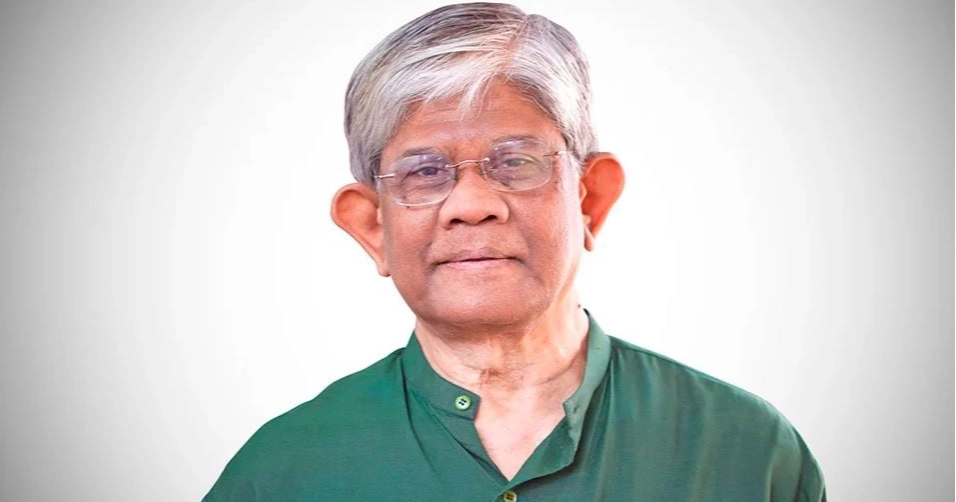
The government is weighing the possibility of downsizing the national budget and Annual Development Programme (ADP) as multiple fiscal and administrative challenges have emerged during implementation, Finance Adviser Dr Salehuddin Ahmed said on Wednesday.
After attending the meetings of the Advisers Council Committee on Government Purchase and the Advisers Council Committee on Economic Affairs at the Bangladesh Secretariat, Dr Salehuddin told reporters that the government’s original budget projections were made on a ‘realistic and pragmatic’ basis given the circumstances at the time of formulation.
“When we announced the budget, it was based on the realities and assumptions prevailing then. It was indeed realistic and pragmatic. But as implementation began, several new challenges surfaced, particularly in resource mobilisation, project execution, and the overall macroeconomic environment,” he said.
The finance adviser pointed out that disruptions in revenue collection activities, particularly at the National Board of Revenue (NBR), have affected the government’s fiscal position.
“The temporary halt in certain NBR operations has impacted revenue inflow, which is one of the major reasons we are reassessing our spending plan,” Dr Salehuddin explained.
He said that apart from the revenue side, the implementation performance of various ministries and agencies has also been uneven.
Next government to decide on new Pay Commission: Salehuddin
“Not everyone can implement projects as efficiently as expected. There are administrative bottlenecks, procedural delays, and sometimes a lack of preparedness among implementing agencies. These issues together slow down the pace of ADP execution,” he noted.
Despite these challenges, Dr Salehuddin reassured that the adjustment would not be drastic.
“We are not planning any major or sweeping cuts. The overall size of the budget and ADP will likely see minor modifications, but not a fundamental departure from what was approved earlier,” he said.
Dr Salehuddin said two major macroeconomic parameters—growth and inflation—have already been revised to reflect the evolving situation.
“We have slightly reduced our GDP growth target and kept the inflation target around 7 percent,” he said, indicating the government’s intent to balance growth expectations with inflation control measures.
Dr Salehuddin said the government’s main focus now is on ensuring fiscal discipline while maintaining the continuity of essential development activities.
“Our priority is to implement the budget in a way that ensures efficiency and value for money. Even if we have to readjust some figures, the fundamental objectives of the budget will remain unchanged,” he asserted.
Govt exceeds IMF-set limit on external borrowing: Dr Salehuddin
Dr Salehuddin also hinted that the government will continue reviewing both the revenue and expenditure sides as the fiscal year progresses.
“We will see at the end of the period how much adjustment is necessary in the ADP and where savings can be made without affecting critical sectors,” he said.
The finance adviser emphasised that the government remains committed to sustaining public investment in key areas such as infrastructure, agriculture, and social protection while addressing emerging fiscal pressures prudently.
Following a review of the latest economic conditions, the Finance Division has proposed trimming the GDP growth target from 5.5 percent to 5 percent.
The inflation expectations are being recalibrated. The Fiscal Coordination Committee has proposed raising the inflation target to 7 percent, above the 6.5 percent set out in the finance adviser's budget speech.