
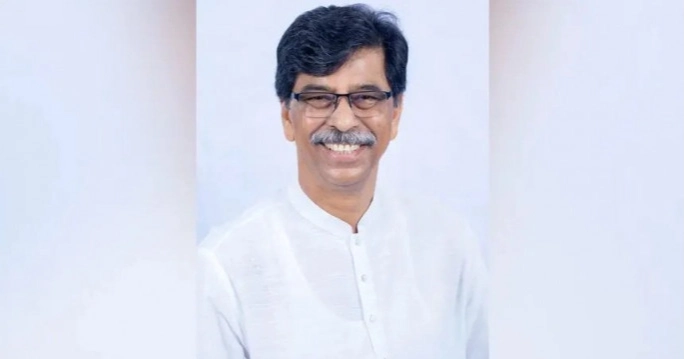
Agriculture Minister Mohammad Amin Ur Rashid told Parliament on Tuesday that the government has implemented a series of "realistic and timely" initiatives to bolster agricultural production and provide comprehensive support to farmers nationwide.
Replying to a starred question from ruling party lawmaker Reza Ahammed (Kushtia-1), the minister emphasised that as an agriculture-dependent nation, Bangladesh has prioritised food security and the improvement of farmers' living standards to drive economic growth.
In line with election pledges, the minister announced a pre-piloting programme designed to provide Tk 2,500 per farmer in incentives. These funds, intended for fertilisers, seeds, and other essential inputs, are being distributed via farmer cards specifically to landless, marginal, and small-scale farmers.
Minister Rashid informed the House that Tk 700 crore has been allocated for the agricultural rehabilitation and incentive programme in the current 2025-26 fiscal year. Of this, Tk 401.60 crore has already been released, benefiting approximately 2.522 million farmers through free seeds, fertilisers, and pesticides.
The government has also moved to alleviate the financial burden on the farming community by waiving agricultural loans up to Tk 10,000 per person. This initiative, costing Tk 1,550 crore, has benefited nearly 1.2 million farmers.
Drawing on the canal excavation legacy of Shaheed President Ziaur Rahman, the minister noted that a major project is underway to excavate and re-excavate 20,000 kilometres of canals across the country to improve irrigation and boost yields.
Regarding essential supplies, the minister stated that the government has provided heavy subsidies for fertilisers and irrigation electricity. For the current fiscal year, the government has supplied 2.6 million metric tons of Urea, 0.95 million metric tons of TSP, 1.05 million metric tons of MOP, and 1.685 million metric tons of DAP at subsidised rates.
Farmer Card to be launched soon, pilot in 11 blocks: Agriculture Minister
To address post-harvest losses, the government has constructed 180 mini cold storages for fruits and vegetables, alongside 703 model potato storage houses and 800 model onion storage facilities nationwide.
The minister concluded by noting that these policies have led to a steady increase in the production of rice, maize, potatoes, and vegetables, asserting that the government remains committed to sustaining this growth trend.