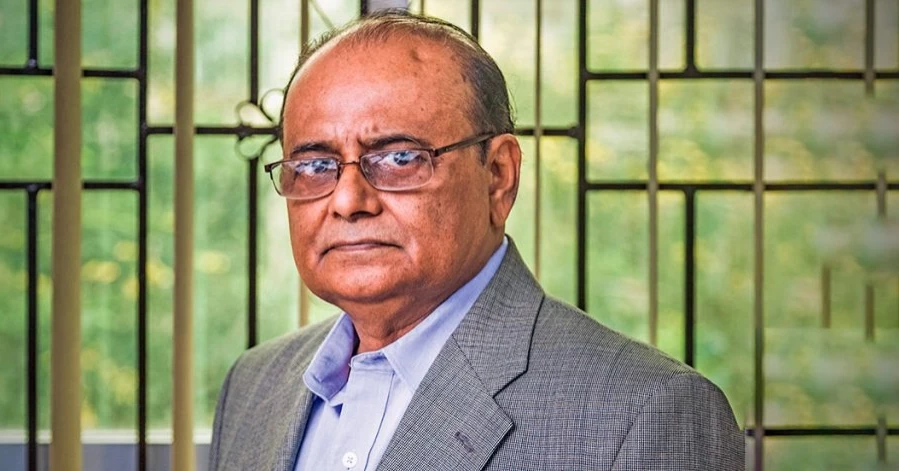
Chairman of Policy Research Institute of Bangladesh (PRI) Dr Zaidi Sattar on Monday called for bold, fundamental economic reforms similar to those undertaken in the early 1990s, warning that the country’s current situation demands urgent structural changes to sustain growth and remain competitive globally.
“Bangladesh is at a critical juncture comparable to the reform period of 1990–91, when the country moved towards a more open, market-oriented economy,” he said.
He was speaking at a programme titled “Macroeconomic Insights: An Economic Reform Agenda for the Elected Government” held at a hotel in the capital this afternoon.
The Policy Research Institute of Bangladesh (PRI) and Department of Foreign Affairs and Trade (DFAT) of the Australian Government jointly organised the event.
The discussion was attended by Finance Adviser Dr Salehuddin Ahmed as chief guest, along with leading economists, policymakers and representatives from development partners.
Presided over by Chairman of the PRI Dr Zaidi Sattar, Dr KAS Murshid, Former Director General of Bangladesh Institute of Development Studies (BIDS), Clinton Pobke, Deputy High Commissioner, High Commission of Australia to Bangladesh, spoke as special guests.
Dr Ashikur Rahman, Principal Economist, PRI, made the keynote presentation.
Dr Fahmida Khatun, Executive Director, Centre for Policy Dialogue (CPD), Dr M Masrur Reaz, Chairman and CEO, Policy Exchange Bangladesh (PEB), spoke as distinguished panelists.
The closing remark was made by Dr Ahmad Ahsan, Director, PRI.
Policy reforms, ethical business key to competitiveness after LDC graduation: Business leaders
Dr. Zaidi stressed that the present challenges offer a similar opportunity for political and economic transformation.
According to PRI chairman, recent economic shocks have slowed growth to around 4 percent, but this does not reflect the country’s long-term potential. Without reforms, the economy’s intrinsic growth rate could return to about 5.5 to 6 percent once political stability is restored.
With strong and timely structural reforms, growth could accelerate to 7 to 8 percent, he said.
Dr Zaidi, however, cautioned that external developments are reshaping the global trade landscape and Bangladesh cannot continue with ‘business as usual’.
Among recent developments, PRI chairman described the Bangladesh-Japan Economic Partnership Agreement (EPA) as a major milestone.
The agreement, he said, based on asymmetrical reciprocity, offers Bangladesh significantly wider market access with relatively lower commitments in return.
He credited the government’s negotiation efforts, noting that while a full free trade agreement (FTA) would have been more beneficial, complexities in Bangladesh’s tariff regime made that difficult at this stage.
At the same time, Dr Zaidi flagged concerns over the India-EU free trade agreement, which it said could pose a serious challenge to Bangladesh’s exports, particularly garments.
India’s improved market access and production-linked incentives could intensify competition in the European market, where Bangladesh currently enjoys duty-free access and holds a large share, he said.
With Bangladesh set to graduate from least developed country (LDC) status, he stressed the urgency of pursuing an FTA with the European Union within the next two to three years.
But he warned that the country’s “mountain-sized” tariff structure and complex trade regime remain major obstacles.
The PRI chairman also highlighted the need for deep reforms in the National Board of Revenue (NBR), describing it as a key institution that requires restructuring to support economic transformation.
He welcomed the recent initiative to split the NBR into separate policy and management divisions, though implementation has yet to begin.
The institute chairman identified major weaknesses in the current tax system, including a narrow tax base, excessive reliance on manual administration and slow progress in automation.
He noted that Bangladesh still depends heavily on indirect taxes, with a 70:30 ratio compared to direct taxes, making the system regressive.
He recommended moving towards a 50:50 balance between direct and indirect taxation to ensure fairness and improve revenue mobilisation.
He also pointed out that nearly 58 percent of revenue comes from trade taxes, a level much higher than peer countries.
The PRI chief proposed reducing reliance on trade taxes from around 2.5 percent of GDP to about 1 percent over the next decade through tariff rationalisation and tax reforms.
He further stressed that high and prolonged protection for domestic industries is discouraging exports and placing a burden on consumers.
DCCI calls for immediate normalisation of Ctg port operations
He argued that industrial protection should be time-bound and performance-based, rather than continuing for decades.
The PRI chairman also raised concerns over limited export diversification and what they described as an “anti-export bias” created by high domestic protection, which makes local sales more profitable than exporting.
He said modernising tariffs, expanding the tax base, digitising tax administration and aligning trade policies with global standards are essential for Bangladesh to integrate more deeply with global markets and negotiate future FTAs.
He expressed hope that the next elected government would take decisive steps to implement structural reforms, noting that democratic administrations are generally better positioned to carry out major policy changes.