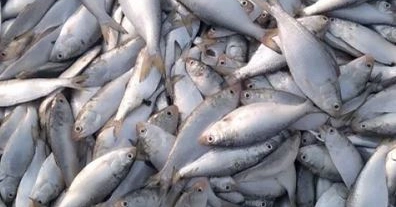
The National ‘Jatka Conservation Week-2026’ will be observed from April 7 to April 13, aiming to create mass awareness on preserving hilsa fry to boost the overall fish production.
The initiative, organised by the ministry, will be observed in 20 hilsa-rich districts across the country, Fisheries and Livestock Minster Amin Ur Rashid shared the information at a press briefing at the conference room of the ministry, marking the ‘Jatka Conservation Week 2026’
The inaugural ceremony will be held in Chandpur Sadar on Tuesday.
Besides, a three-day central programme, various awareness activities have been planned in district and upazila levels.
This year’s theme is- ‘If we stop catching jatka, rivers and seas will be filled with hilsa.’
Highlighting government measures to protect hilsa, the minister said several key steps have already been taken to ensure sustainable development of the resource.
These include a 58-day ban on all fishing in the Bay of Bengal from April 15 to June 11, a 22-day ban on hilsa harvesting during the peak breeding season and a complete prohibition on catching, transporting, and selling jatka from November 1 to June 30, the establishment of six hilsa sanctuaries, seasonal fishing bans in designated areas, declaration of a 3,188 sq km marine protected area and provision of VGF food assistance and alternative livelihood support for fishers.
Besides, projects such as ‘Sustainable Coastal and Marine Fisheries’ and ‘Hilsa Resource Development’ are being implemented alongside legal reforms and stricter enforcement, said the minister.
Due to these coordinated efforts, hilsa production in the country is steadily increasing, he said, adding that joint drives by law enforcement agencies and the administration have expanded the presence of jatka beyond the Meghna to rivers such as the Padma, Jamuna, Brahmaputra and Surma.
Significant hilsa catches are now being reported in many districts along the Padma and Jamuna, said minister Amin Ur Rashid.
Meanwhile, special drives are being conducted to curb the use of illegal nets, particularly current and behundi nets which have been identified as major threats to hilsa production, he said.
To prevent indiscriminate jatka harvesting, the government is combining awareness campaigns with strict enforcement.
A 30-day ‘Special Combing Operation 2026’ was conducted in January-February across 96 upazilas in 18 districts followed by a 15-day drive in 79 upazilas in March. The drives will continue until June.
He further said that government support for fishers has been increased to ensure their cooperation in jatka conservation.
Around 3,67,000 fisher families receive 40 kg of rice per month for four months, totaling 58,720 metric tonnes annually, the minister said.
Besides, 619,312 families received 25 kg of food assistance during the breeding season.
Under the Hilsa Resource Development and Management Project, fishers are also being provided with training, equipment, and even calves to support alternative income generation, he said.
He stressed that coordinated efforts among the ministry, the Department of Fisheries, research institutions and law enforcement agencies are ongoing to achieve this goal.
Calling for collective action, he urged the public to refrain from catching, buying, selling, or storing jatka.