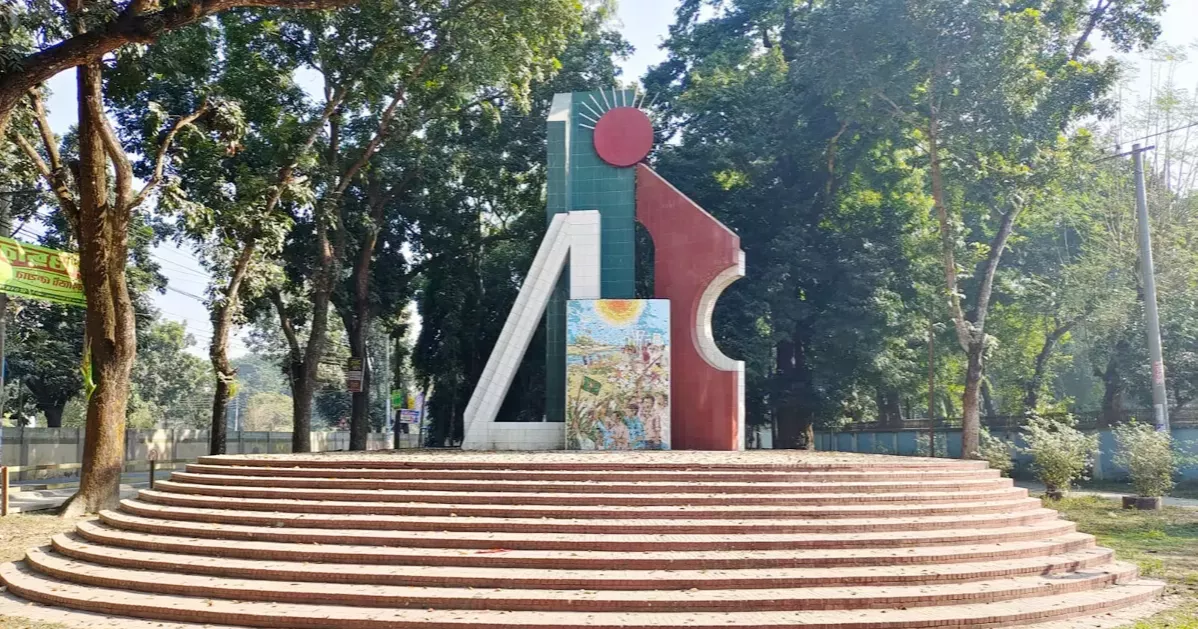
Lalmonirhat district is observing Freedom Day on Saturday as the district was freed from Pakistani occupation on this day in 1971.
On this day 54 years ago, Pakistan army troops fled Lalmonirhat amid a coordinated three-pronged assault by Mukti Bahini fighters.
Residents recall that Pakistani forces first entered Lalmonirhat by road on March 3, 1971 and after the occupation, the army, aided by Bihari collaborators as well as members of Razakar, Al-Badr and Al-Shams forces, carried out widespread killings, arson attacks and looting across the district.
The numerous mass graves scattered across Lalmonirhat still bear testimony to those atrocities.
Freedom fighter Nizam Uddin said Pakistani troops arrived in Lalmonirhat by helicopter, prompting local police and freedom fighters, led by the then Officer-in-Charge Mir Mosharraf Hossain to mount resistance that left several Pakistani soldiers and non-Bengali collaborators dead.
In retaliation, the occupation forces launched indiscriminate attacks on Bengalis including killings, arson and violence targeting women and children.
He said the joint advance of the Mukti Bahini and allied forces forced the Pakistan Army to retreat.
At dawn on December 6, the troops, along with Razakars and Al-Badr members, fled via two special trains from Lalmonirhat railway station towards Rangpur and Syedpur.
As they crossed the Teesta River retreating soldiers bombed the Teesta rail bridge, leaving it damaged.
Nizam Uddin said news of the district’s liberation sparked celebrations across Lalmonirhat.
“Thousands of people rushed toward the town, bringing out victory processions. The Mission Mor area turned into a sea of people. The following day, December 7, the city witnessed colourful victory celebrations.”
One of the most brutal massacres in the final phase of the war took place on December 5 in the Lalmonirhat railway office and residential area, he said.
With support from Razakar collaborators, occupation forces killed 373 pro-liberation railway officials, employees, intellectuals and civilians.
Three mass graves in the area still stand as evidence of the killings.
For their bravery in the Liberation War, Lalmonirhat’s son martyr Captain Tamiz Uddin was awarded the title Bir Bikrom and Captain (retd.) Azizul Haque received the title Bir Protik.
Mezbah Uddin Ahmed, commander of the Lalmonirhat District Muktijoddha Sangsad, said several mass graves including those in the railway area have been identified but many still remain unmarked.
Talking to UNB several freedom fighters said the country has achieved independence at a great cost and it is their hope that future generations will safeguard that freedom and continue to advance Bangladesh.