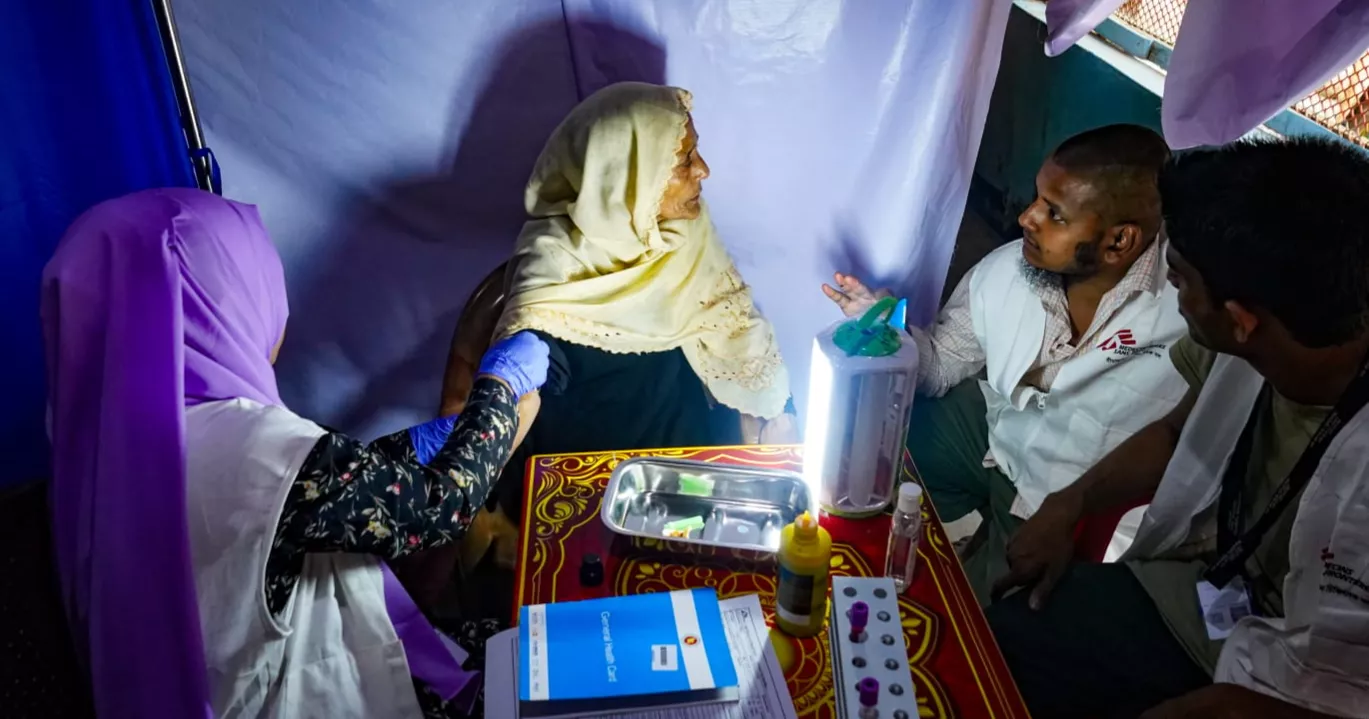
Médecins Sans Frontières (MSF) has launched a large-scale hepatitis C “test and treat” campaign in the Rohingya refugee camps in Cox’s Bazar, aiming to provide care to 30,000 people by the end of 2026 amid an alarming rise in infections and a critical lack of treatment options.
The initiative includes the establishment of three specialised treatment centres in Balukhali, Jamtoli, and Hospital on the hill, and will target nearly one-third of all people living with hepatitis C in the camps, according to MSF.
Between October 2020 and December 2024, MSF treated over 10,000 patients at its clinics. However, a 2023 study by MSF published in “The Lancet Gastroenterology & Hepatology” revealed that nearly one in five adults in the camps—an estimated 86,000 people—are living with chronic active hepatitis C infection.
“Access to hepatitis C care in the camps, where more than a million refugees have been living for the past eight years, has been extremely limited,” said Dr Wasim Firuz, MSF deputy medical coordinator.
“Treating hepatitis C is not part of the package of healthcare provided by over-stretched health care facilities. People are also not allowed to freely leave the camps to access healthcare, and even if they could, it’s unlikely they would be able to afford the cost of treatment.”
Decades of exposure to unsafe medical practices, including therapeutic injections, have been identified as major causes of the disease's transmission in the camps.
MSF’s campaign includes systematic community-based screening, rapid testing, lab confirmation, and curative drug provision, alongside awareness and adherence counselling.
“In the absence of other alternatives to hepatitis C care for tens of thousands of people in the camps, we are undertaking this substantial increase in our treatment capacity,” said Dr Firuz.
Dr Firuz said that their goal is to reach 30,000 people with curative care by the end of 2026 and this expansion represents a vital step towards preventing the spread of hepatitis C, especially to younger generations.
However, MSF acknowledges that limitations in the overall health response, including staff and resource shortages, remain a barrier to long-term impact.
“While we are scaling up efforts and working in coordination with other organisations, the limitations within the health response, including insufficient staffing, equipment, and resources among partners, present a significant obstacle,” Dr Firuz added.