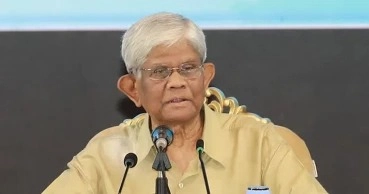
Finance Adviser Dr Salehuddin Ahmed on Tuesday said the government would not immediately implement the Pay Commission’s recommendations once its report is submitted, as the proposals would first undergo scrutiny by relevant committees.
“The report will be examined by various committees after submission, and only then will a decision be taken on implementation,” he told journalists at the Secretariat.
He said the verification and review process usually takes three to four months, indicating that the new pay structure would take some time to come into effect.
Dr Salehuddin said the Pay Commission, formed to frame a new salary structure for government employees, is scheduled to submit its report to the Chief Adviser on Wednesday (January 21).
Read More: Finance adviser urges patience on new pay scale, backs referendum
He expressed optimism that government employees would be satisfied with the recommendations, saying the commission members had prepared their proposals by prioritising the interests of public servants.
Responding to concerns over whether a salary hike could have a negative impact on the market, the finance adviser said there would be no adverse effect.
“The government is giving importance to strengthening the supply side,” he said, adding that this approach would help keep the market stable.
Asked whether the pay rise could have any electoral implications, given the upcoming national election, Dr Salehuddin dismissed the notion, saying the issue had no connection with elections.
Read More: MPO Teachers’ Alliance warns of tough action if pay scale gazette not issued by Feb 4
He described the work of the current Pay Commission as an exceptional example, noting that its members consulted a wide range of stakeholders during the process.
“They held multiple discussions with people from different walks of life — including government employees, teachers, students, various associations, as well as retired pensioners and senior citizens,” he said.
While acknowledging that it would not be possible to meet all demands in full, the finance adviser said the needs and expectations of different groups would be reflected in the recommendations as far as practicable.
He, however, reiterated that the commission’s proposals would not necessarily be implemented in their entirety, as they would be subject to review and final approval.
Meanwhile, on the reform of the National Board of Revenue (NBR), Dr Salehuddin said a final decision had been taken at the National Implementation Committee for Administrative Reform (NICAR).
Under the new structure, the NBR will be divided into two separate wings — one for tax policy and another for tax administration.
He said the existing Internal Resources Division (IRD) framework would be abolished, and NICAR has given its final approval to the new arrangement.
On January 27, the finance adviser also said that Dr Nasiruddin Ahmed would submit an important report on tax policy to the Chief Adviser. “Many aspects of future revenue management will depend on this report.”
Reflecting on their tenure, Dr Salehuddin said the current administration is initiating a number of significant reform processes that would serve as a positive legacy for the next government.
“The fact that the Chief Adviser himself will receive the Pay Commission report shows how much importance the government is attaching to this issue,” he said.