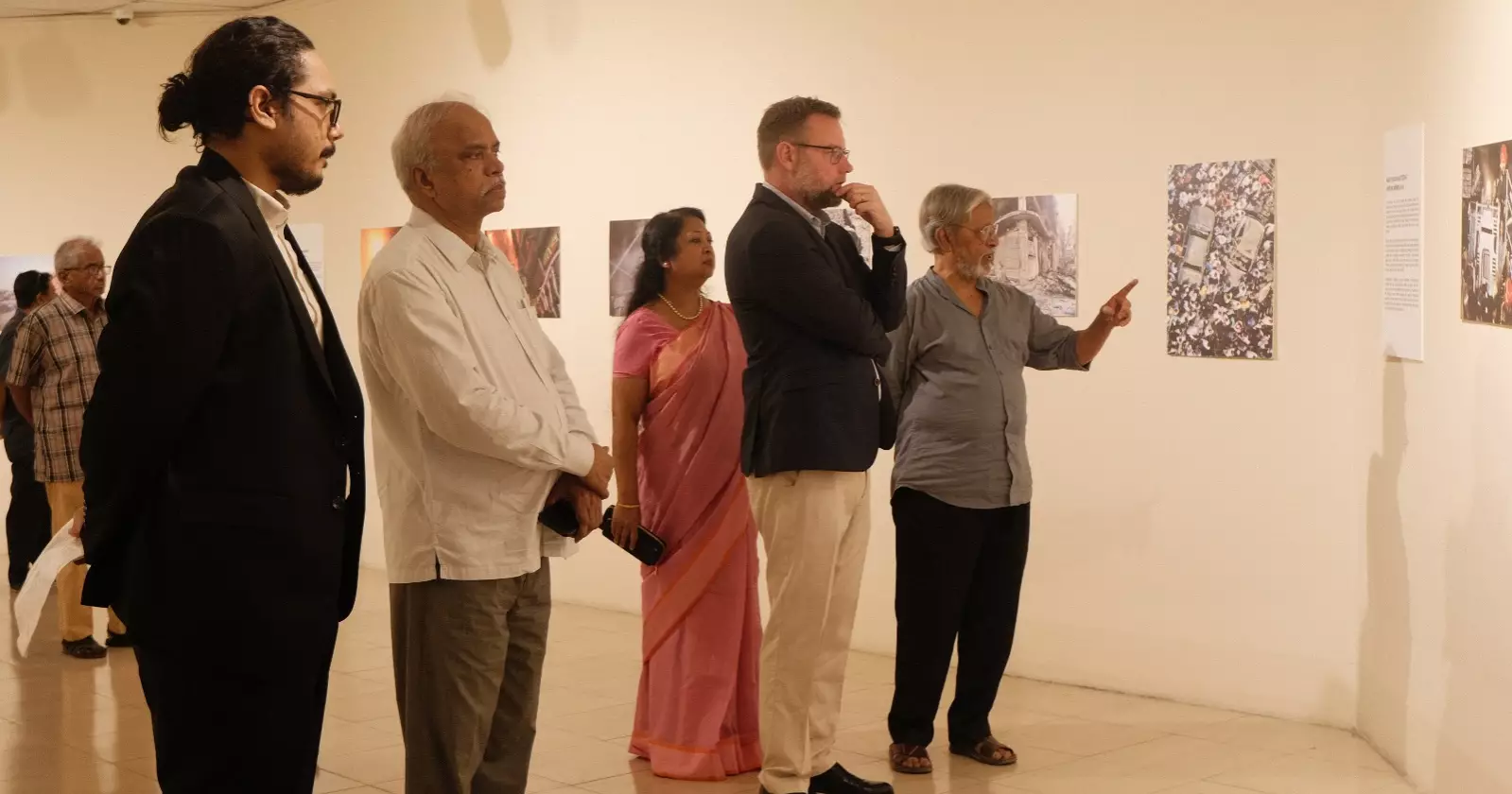
A photography exhibition titled "Still Unshaken: Bangladesh Industrial Disasters, Lives of Working People and the Value of Memory" opened today (Friday) at the Bangladesh Shilpakala Academy, calling for a more humane and sustainable working environment in the industrial sector.
Organized by the Bangladesh Institute of Labour Studies (BILS), the exhibition marks the anniversary of the Rana Plaza tragedy and aims to highlight the struggles, risks, and resilience of workers over the last two decades. The event was inaugurated at Gallery 5 of the National Art Gallery and will remain open to the public until April 27, 2026.
Injured workers, relatives pay tribute to Rana Plaza victims, demand justice
Danish Ambassador to Bangladesh Christian Brix Møller and International Labour Organization (ILO) Country Director Tuomo Poutiainen (referenced as Max Tunon in the release) attended the ceremony as guests of honor.
During the inaugural session, speakers noted that while the ready-made garment (RMG) sector has seen some safety progress over the last decade, significant challenges remain. These include structural weaknesses, inadequate monitoring and inspections, weak law enforcement, and environmental hazards that continue to threaten workers' health and safety.
"Major disasters like Rana Plaza are not just national tragedies; they reflect systemic gaps in safety and accountability," speakers observed. They emphasized that learning from these disasters is critical to implementing international safety standards and robust risk assessment frameworks.
BILS Executive Director Syed Sultan Uddin Ahmed, Jatiya Sramik Jote President Mesbahuddin Ahmed, and leaders from SKOP and various national trade union federations were also present.
The organizers stressed that sustainable change is impossible without strengthening the voices of workers, ensuring freedom of association, and fostering participatory decision-making involving the government, factory owners, international buyers, and civil society.
The exhibition serves as a poignant reminder of the hidden realities behind industrial growth, advocating for a safe working environment as a fundamental right rather than a privilege. By bringing the stories of pain and perseverance to the forefront, BILS hopes to inspire policymakers and stakeholders to take more responsible and humane actions.