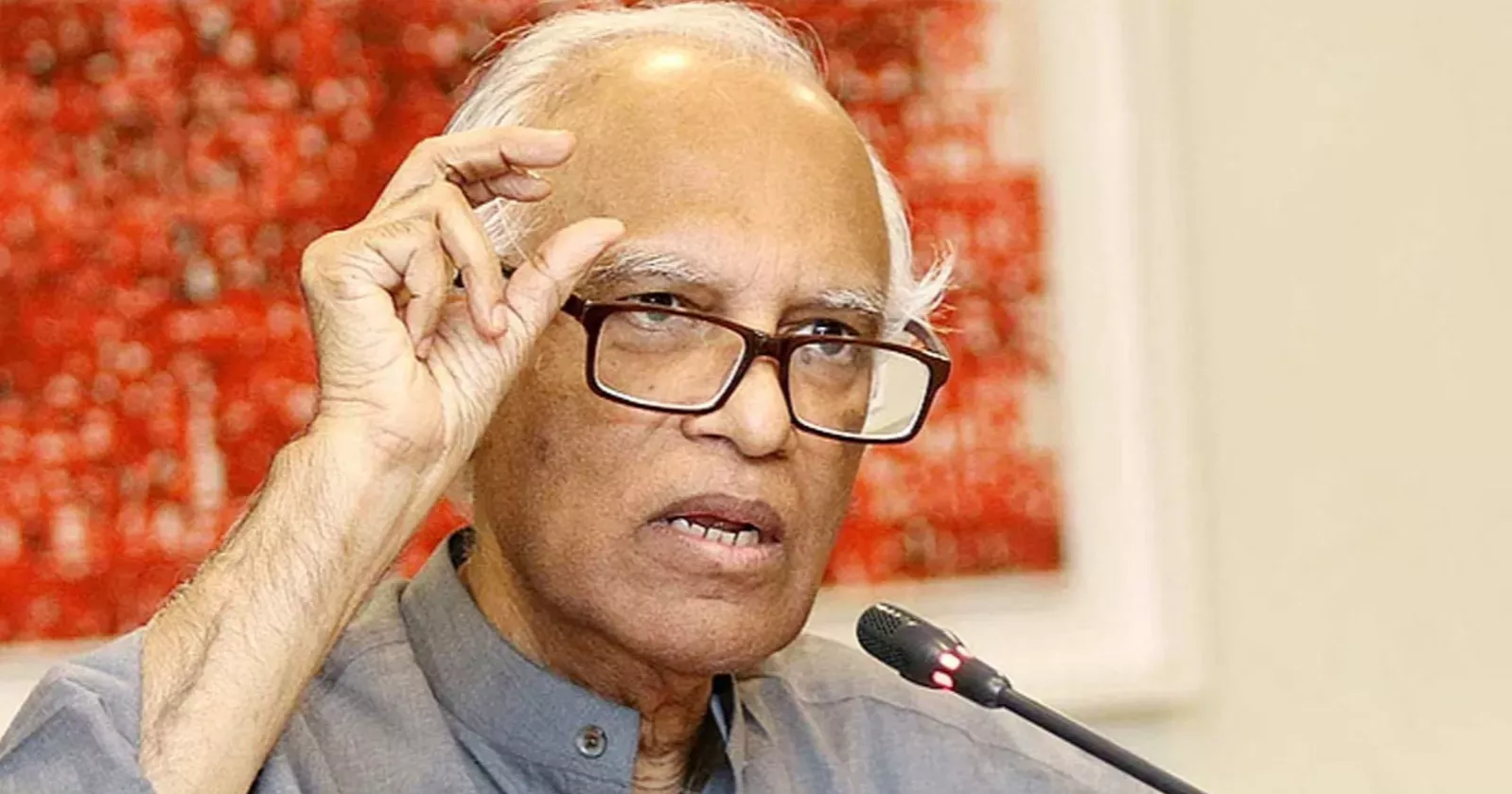
Planning Adviser Wahiduddin Mahmud on Sunday ridiculed various types of grabbers saying that Bangladesh is a unique country in the world that has so many types of dacoits.
“The varieties of dacoits in Bangladesh is very rare in the world. River grabber, land grabber, forest grabber, hill grabber, and so many,” he said while addressing a kick-off workshop on protection of forest-dependent people from forest destruction, plantation economy, climate change and land grab at CIRDAP auditorium.
Society for Environment and Human Development (SHED) organised it with executive chairman of Power and Participation Research Centre (PPRC) Hossain Zillur Rahman in the chair.
Budget is realistic and frugal: Planning Adviser
The planning adviser said that it is tough for the government to save the so little environmental resources of the country.
“We have to extract resources from the forests in a planned way,” he said.
Regarding making some mistakes in the past times taking advices from the foreigners, he said that the country has done many unplanned projects (in the forest arena) through foreign financing.
Wahiduddin said that it is not logical to live by only depending on forest resources.
“This is not right, by this they will remain under the poverty line,” he said.
He put emphasis on getting education and involve in greater economic activities. “Slowly they will enter the mainstream of the society,” he said.
He, however, expressed his determination to keep intact the diversity of culture and language of ethnic groups.
“After this we have to provide them education and bring them to the mainstream of the society for employment,” he said.
Wahiduddin Mahmud said that despite this short span, the interim government has brought reforms in many areas but did not want huge publicity of those.
The results of those will be seen in the future, he added.
He said arrangements have been made to approve some umbrella projects in the CHT region to address water problem, access to education in schools in those remote areas.
He said that the productivity among the ethnic community people and other forest-dependent people living in the forest regions could be enhanced through using modern technology, through motivating them with credit support, arranging improved marketing system and minimizing the presence of the middlemen.
Michal Krejza, Head of Cooperation, Delegation of the European Union to Bangladesh; Khushi Kabir, coordinator of Nijera Kori and country coordinator, One Billion Rising; Md. Amir Hossain Chowdhury, chief conservator of forests (CCF), Md. Yunus Ali, former CCF; and Prashanta Tripura, country director, The Hunger Project and former university professor spoke as special guests.
In the main session of the workshop, community representatives from two geographical regions shared their perspectives.
This programme is supported by the European Union and MISEREOR. The purpose of this kick-off workshop was to share plan for research, investigations, and other activities to be conducted under this programe with a broader audience.
Department of International Relations of the University of Dhaka and member of the University Grants Commission (UGC) Prof. Tanzimuddin Khan gave the welcome address where SEHD director Philip Gain placed the keynote presentation.