
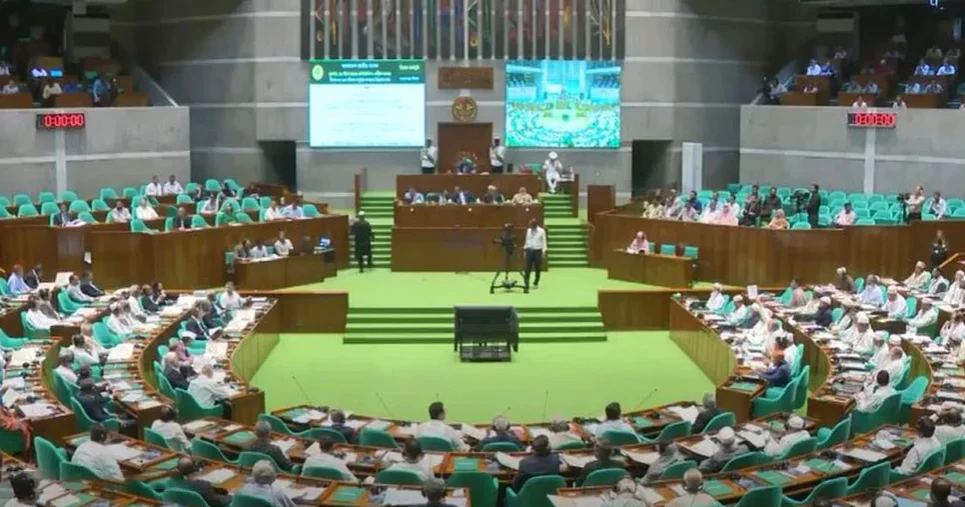
The Parliament on Sunday passed the Public Service (Amendment) Bill, 2026 inducting stringent disciplinary measures and a fast-track investigation process to ensure accountability and discipline among government employees.
The proposed law seeks to amend the Public Service Act, 2018, by inserting a new section, 37A, specifically targeting actions that disrupt public service.
State Minister for Public Administration Md Abdul Bari moved the Bill and it was passed by voice vote.
According to the draft bill, government employees will be liable for "disruptive misconduct" if they disobey lawful orders from superiors or obstruct the implementation of government circulars and directives without a valid reason.
The bill also categorizes collective absence from work without authorized leave or obstructing other employees from performing their duties as punishable offenses.
Under the new provisions, employees found guilty of such misconduct could face severe penalties, including demotion to a lower post or pay grade, compulsory retirement, or dismissal from service.
To ensure swift justice, the bill sets a rigid timeline for disciplinary proceedings. An accused employee must respond to a show-cause notice within seven working days.
If the response is deemed unsatisfactory, a three-member investigation committee must be formed within three working days.
The committee is required to submit its report within 14 working days, with a provision for a one-time extension of seven days under exceptional circumstances.
In a significant addition, the draft law holds the investigators themselves accountable. If a committee fails to submit its report within the stipulated timeframe without a justified reason, it will be marked as "inefficiency" in their Personnel Management Information System (PMIS) and official dossiers.
This record could lead to separate disciplinary actions against the committee members.
The bill allows aggrieved employees to appeal against a penalty within 30 working days. While orders issued by the President cannot be appealed, affected employees may apply for a review within the same timeframe.
The objects of the bill notes that the amendment is necessary to suppress indiscipline and ensure that the republic’s work remains unhindered.
This bill will replace the Public Service (Amendment) Ordinance, 2025, and the Public Service (Second Amendment) Ordinance, 2025. Once passed, the law will come into effect immediately.