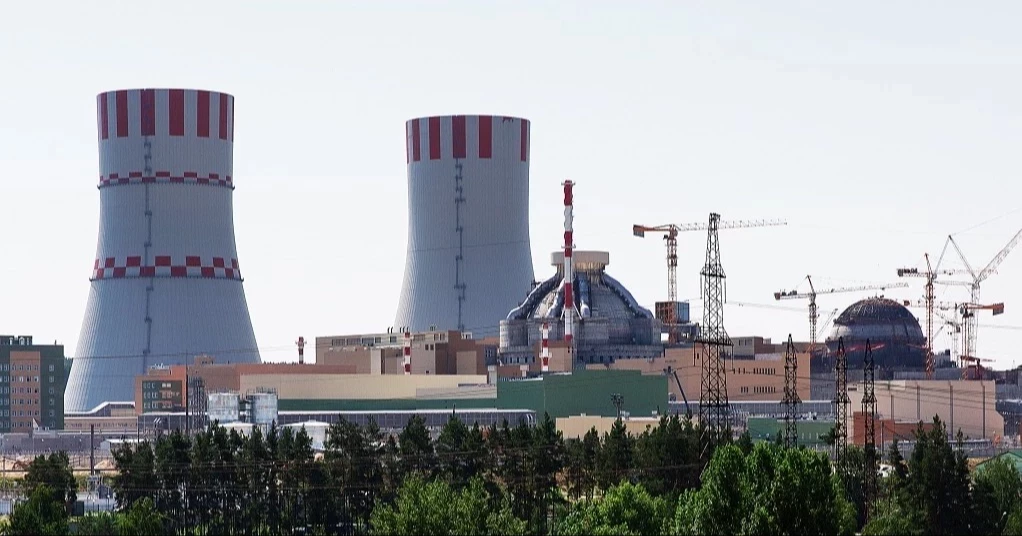
Planning Adviser Dr Wahiduddin Mahmud on Sunday said the Rooppur Nuclear Power Plant (RNPP) has faced delays mainly due to the Covid-19 pandemic and subsequent implementation challenges but its overall cost has not increased in dollar terms.
The Executive Committee of the National Economic Council (ECNEC) approved the cost hike proposal at a meeting held at the NEC Conference Room in the Planning Commission, chaired by Chief Adviser and ECNEC Chairperson Professor Dr Muhammad Yunus.
As per the new proposal the project cost hiked by Tk 25,592.85 crore.
Read More: Concerns growing over Rooppur Nuclear Plant’s viability amid high costs
Addressing concerns over rising project costs, the Planning Adviser said the apparent increase in cost is largely due to exchange rate fluctuations, as most of the project components are imported from Russia.
Bangladesh has already made repayments in dollars over time, and the taka value was calculated based on the exchange rates prevailing at the time of those payments, he added.
Dr Wahiduddin said Rooppur, with an estimated cost of around US$10–11 billion (approximately Tk 1.13 lakh crore), was originally scheduled for completion by December, 2025.
The Planning Adviser said that the project authorities have informed the government that they would need around one and a half more years to complete the work.
In addition, an extension of about two years has been sought for loan repayment as there are procedural and financial complexities involved in repaying the Russian loan, he added.
Read More: Cold run of diesel generator completed at Rooppur Nuclear Plant’s unit 1
Dr Mahmud also noted that savings have been achieved in the locally financed portion of the project.
Following revisions and corrections, the overall cost has in fact been reduced slightly, he said.
Referring to past controversies, he recalled that there had been allegations related to irregularities, popularly dubbed the ‘pillow scandal’, in the Bangladesh-funded part of the project.
The project directors later clarified that the procurement in question was carried out under a subcontract by the Public Works Department (PWD), which was responsible for that particular segment.