
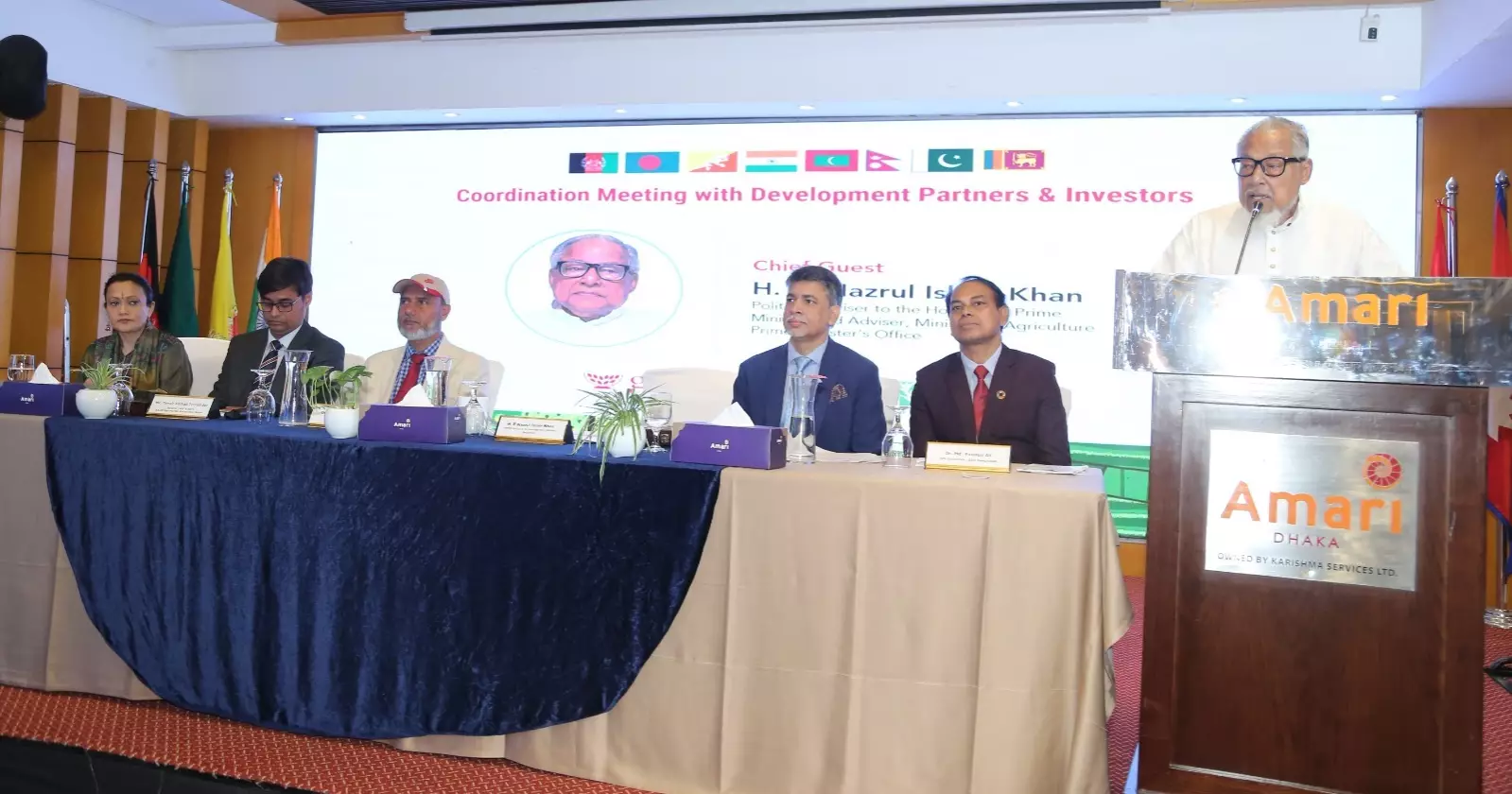
The SAARC Agriculture Centre (SAC) on Wednesday underscored the urgency of deeper regional cooperation, technological modernisation, and increased investment to ensure food and nutrition security across South Asia.
The call was made during a regional “Coordination Meeting with Development Partners and Investors” held in Dhaka. The event was organised by SAC in collaboration with the Global Alliance for Improved Nutrition (GAIN) Bangladesh and the International Food Policy Research Institute (IFPRI), South Asia.
Attending the event as the chief guest, Prime Minister’s Adviser on Political Affairs and Agriculture Nazrul Islam Khan highlighted agriculture as the region's economic backbone.
He called for the adoption of advanced technologies, including artificial intelligence (AI), to modernise the sector and address the pressing challenges of climate change.
Ambassador AKM Shahidul Karim, Additional Foreign Secretary (SAARC & BIMSTEC), stressed the need for a transition from addressing food deficits to building a sustainable agricultural future. He called for technology-driven approaches and the sharing of technical expertise among member states to move from solutions to concrete actions.
Tanvir Ahmad Torophder, Director at the SAARC Secretariat in Nepal, emphasised the necessity of robust public-private partnerships to achieve measurable results across the region.
Dr Shahidur Rashid, Director of IFPRI South Asia, noted that collaboration with SAC is a cost-effective way to address common regional issues, while Dr Rudaba Khondker, Country Director of GAIN Bangladesh, emphasised mainstreaming nutrition and innovative financing to create affordable and sustainable food systems.
Earlier, Dr Md Younus Ali, Senior Programme Specialist at SAC, delivered the welcome speech, focusing on strengthening livestock and food systems. Presiding over the event, SAC Director Dr Harunur Rashid highlighted the centre's strategic priorities, including climate resilience and innovation-led investment partnerships.
The inaugural session was followed by two technical working sessions involving investors, scholars, and researchers from various SAARC member states to draft actionable strategies for the region's agricultural development.