Water and climate expert Dr Ainun Nishat has warned that salinity levels in Khulna city’s water could rise to near-ocean levels within the next 50 years, posing serious threats to the biodiversity of the Sundarbans and agricultural production in Bangladesh’s southwestern region.
“If salinity continues to increase, the number of Sundari trees in the Sundarbans will decline, while Goran trees will become more dominant,” he said while speaking at a session of the three-day Third Coastal Water Conference.
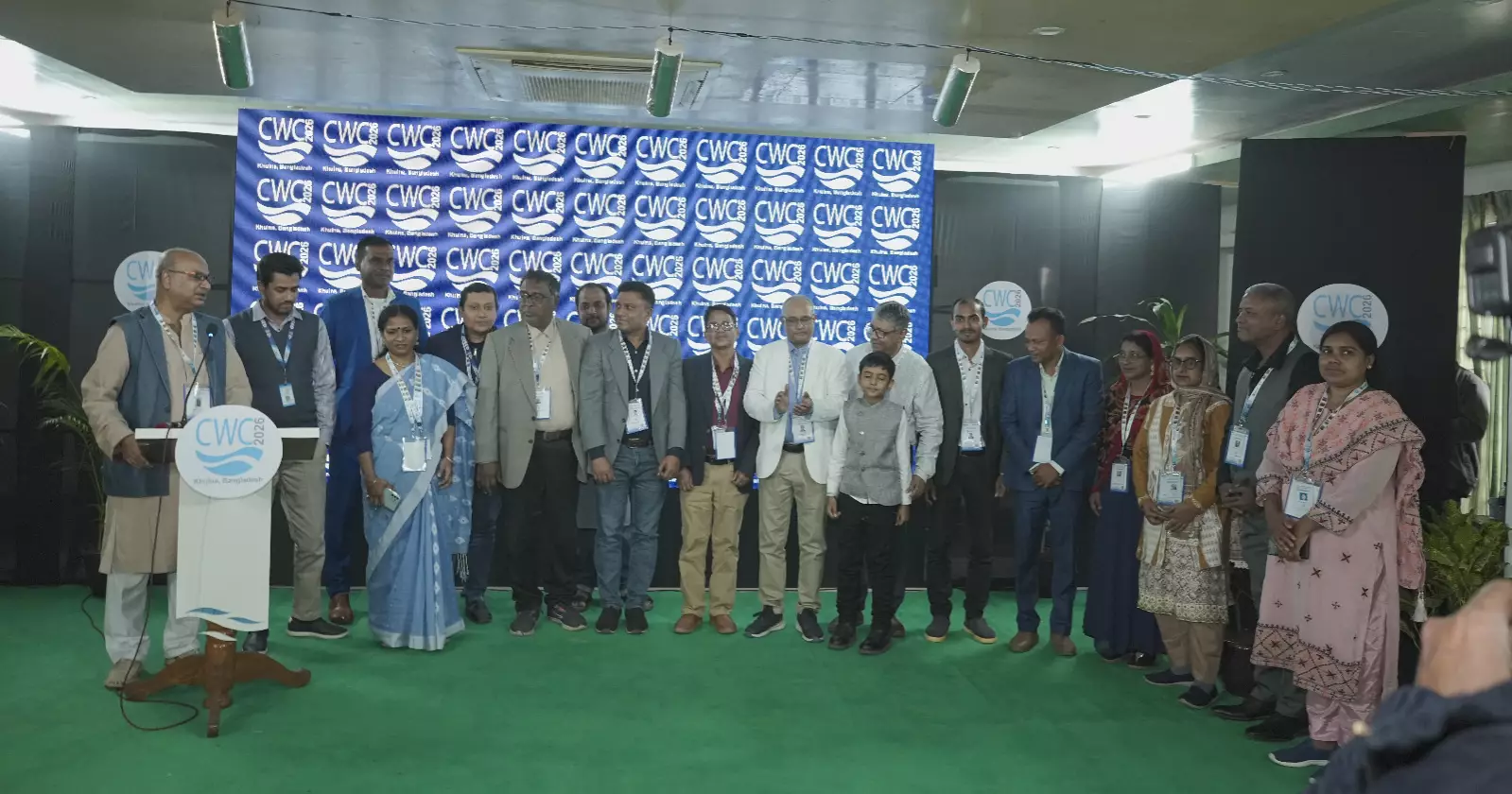
The conference, titled ‘Water and Ecosystem Protection for Sustainable Development,’ was held at the city’s CSS Ava Centre.
Read More: Annual hydrological assessment needed to resolve Teesta water sharing: Ainun Nishat
Dr Nishat warned that rising salinity would cause major changes in biodiversity, including the spread of salt-tolerant pests, and could reduce the production of conventional agricultural crops by nearly half.
To address the looming crisis, he stressed the urgent need for repairing coastal embankments and increasing the use of surface water by reducing dependence on groundwater. “If water sources cannot be protected, sustaining the people of this region in the future will become extremely difficult,” he said.
Various sessions of the conference focused on desalination, rainwater harvesting, safe water technologies, water pollution, climate change impacts, cyclone and tidal surge risks, GIS-based risk analysis, urban water management, and the growing burden of water scarcity on women and marginalized communities.
Read More: Prof. Ainun Nishat joins Bangladeshi teenager’s climate campaign
Speakers at the conference said the worsening safe water crisis in the southwestern region is increasing humanitarian and public health risks, as many people are being forced to use saline water due to the lack of alternatives, posing serious long-term health hazards.
Describing water justice as a fundamental human right, the speakers emphasized that ensuring integrated water management is the responsibility of the state.
They also called for effective initiatives from local to national levels to overcome existing policy gaps.
On the final day of the conference on Monday, a Khulna Declaration containing 12-point recommendations was adopted to address the growing water crisis in coastal and other vulnerable regions of Bangladesh.
The declaration underscored the recognition of water not merely as a resource but as a fundamental element of the environment, and called for ensuring safe water as a universal right.
Organisers said the draft declaration was prepared by reviewing the outcomes of the 2011 and 2019 Coastal Water Conferences, district-level workshops, side events, online expert opinions, and national and international water policies and action plans. It will be finalised based on expert feedback and submitted to policymakers.
Key recommendations include formulating an independent water policy, abolishing the lease system of natural water bodies, halting saline water extraction and unplanned shrimp farming on agricultural land, dredging rivers and canals, allocating a special budget for safe water supply through local governments, forming a parliamentary caucus on water and environmental conservation, and protecting the livelihoods of coastal and wetland-dependent communities.
More than 400 academicians, researchers, students, development workers, journalists and people from different walks of life attended the conference.
Shamim Arefin, member secretary of the Water Conference Committee, read out the declaration.
Organisers said the declaration would be shared with elected governments and political parties, and expressed the hope of organising the Bangladesh Water Conference in the latter half of 2028.