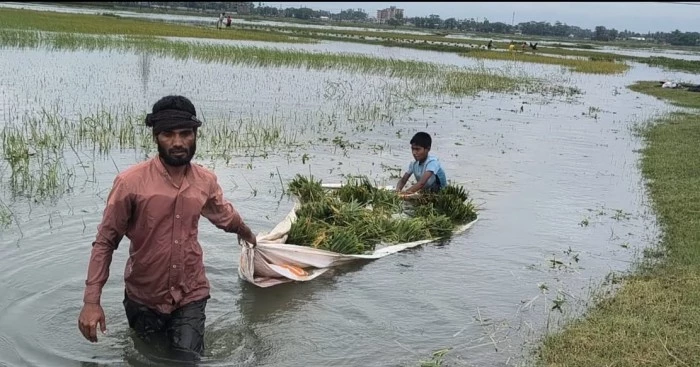
Unplanned embankments and heavy rainfall have worsened waterlogging in Sunamganj’s haor basin, causing widespread damage to Boro paddy and triggering concern among farmers and experts over recurring agricultural losses in the region.
Haor movement leader and farmer Professor Chittaranjan Talukdar (70) said the current season reflects a recurring pattern of severe waterlogging, locally described as “kachaira” years, which reappear periodically and devastate crops.
“This year is another kachaira year. Earlier people could not realise the scale of losses due to lack of communication, but now it is visible,” he said, adding that unplanned embankments and blocked drainage channels have turned haors into “water pockets.”
He alleged that annual embankment construction using huge amounts of soil has filled natural water bodies, canals and rivers, severely disrupting drainage systems. He also criticised the lack of long-term planning for haor management.
Agricultural researcher Sajal Kanti Sarkar, however, pointed to a different factor, saying the use of hybrid and high-yielding rice varieties has delayed harvesting, increasing vulnerability to early floods. He said traditional rice varieties used in haor areas used to mature earlier and were less exposed to flood damage.
He agreed, however, that blocked drainage caused by embankments has worsened water retention in the region.
Water Development Board data shows that river levels in the Surma rose sharply this year compared to last year. Between April 27 and 30, rainfall and river water levels increased significantly, with heavy rainfall recorded across multiple haor-adjacent points, including 133mm at Laurerergarh, 76mm at Chatak, 137mm at Sunamganj, and 205mm at Dirai within 24 hours.
In contrast, rainfall during the same period last year was minimal, allowing around 83 percent of paddy to be harvested by April 29. This year, only about 44.5 percent of paddy has been harvested, according to the Department of Agricultural Extension.
Officials estimate around 9,548 hectares of paddy have been submerged so far, but farmers and haor activists claim the actual damaged area is far higher, exceeding 60,000 hectares.
In Jamalganj and Dirai upazilas’ Pagnar haor, farmers said flooding began early, and disputes over embankment cutting even led to clashes before Eid-ul-Fitr. Large portions of both standing and harvested crops are now submerged.
Farmers described severe losses, with many saying they are unable to recover their investment. “Around Tk 5 lakh worth of paddy has been lost. It will take years to recover,” said one farmer, adding that hopes of repaying loans have been shattered.
Another farmer said even harvesting and drying areas are now under water, making further collection impossible.
Haor Banchao Andolan General Secretary Bijn Sen Roy said unplanned embankments have worsened drainage and caused recurring flooding. He estimated crop losses at around Tk 1,000 crore, though government figures put it at about Tk 200 crore, which he said does not reflect reality.
Sunamganj Water Development Board Executive Engineer-2 Md Imdadul Haque said rainfall has recently decreased and water levels showed slight improvement on Thursday, but waterlogging remains in most haor areas.
Department of Agricultural Extension Deputy Director Md Omar Faruq said recent adverse weather delayed harvesting, leading to crop submergence, and warned that final losses are likely to increase. A detailed assessment is underway.