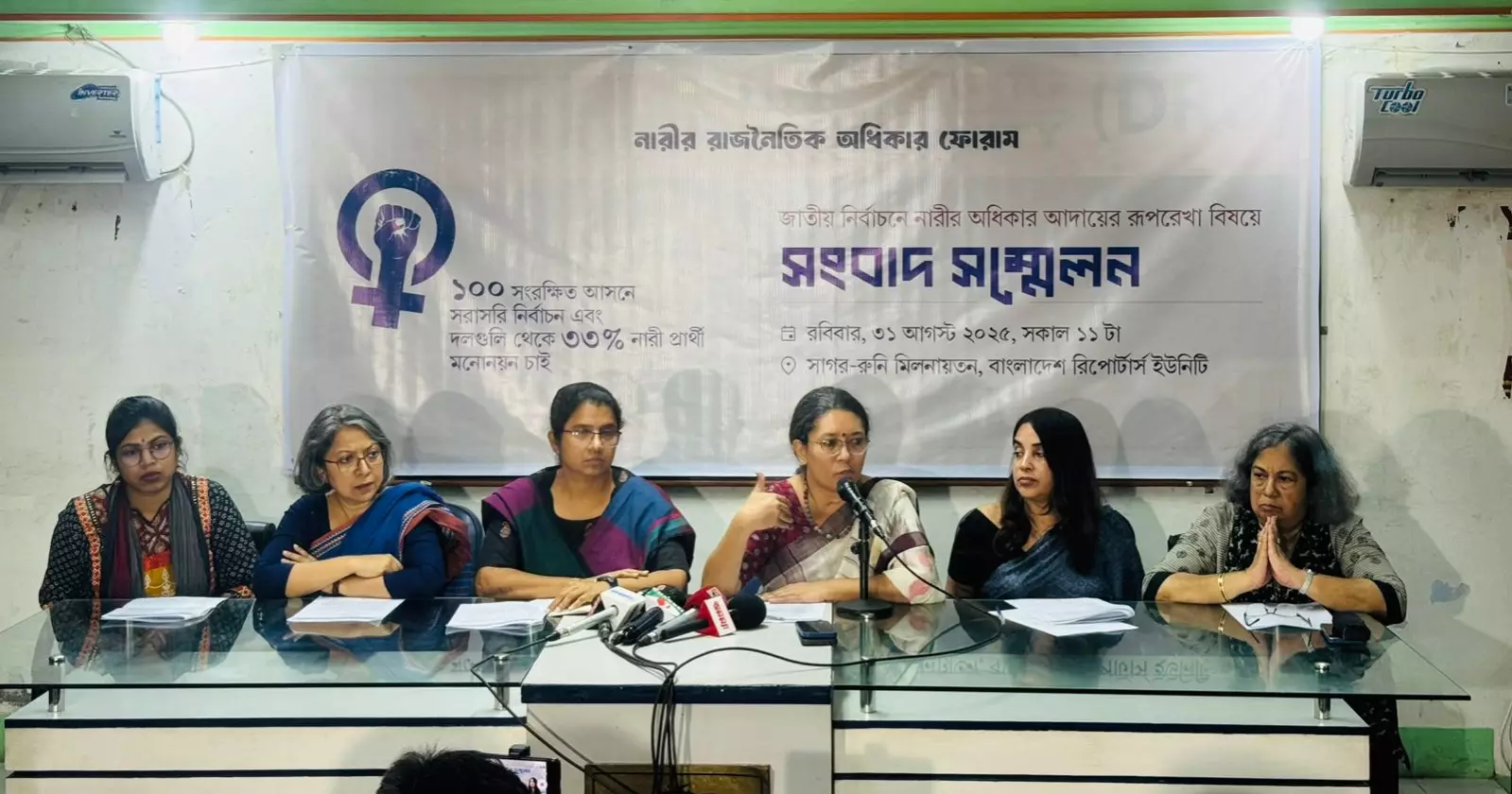
The Forum for Women’s Political Rights has called for comprehensive electoral reforms to ensure fair and inclusive representation of women in Bangladesh’s political arena.
The forum also demanded direct elections between women candidates to 100 reserved seats in parliament and the mandatory nomination of at least 33% women candidates by every political party to ensure greater representation of women.
During a press conference on Sunday at Dhaka Reporters Unity (DRU), the forum leaders said the current 50 reserved seats do not provide women with meaningful political power.
The forum leaders highlighted that although women constitute more than half of the country’s population, their representation in parliament has historically been around just 7 percent. They therefore believe that women’s representation in parliament should be increased to at least 50 percent.
They remarked that true political empowerment of women is not only a right but also essential for the sustainability and integrity of democracy.
The Forum for Women’s Political Rights outlined seven key demands aimed at strengthening women’s political participation and representation:
1. Ensure women’s participation in politics reflects their proportion of the country’s population.
2. Allow women to be directly elected to all 100 reserved seats in the 2026 elections.
3. Mandate that every political party nominate at least 33% women candidates, with a gradual increase to 50%.
4. Prioritise MPs’ focus on lawmaking and parliamentary duties, reduce corruption, and enhance the role of capable women leaders.
5. Provide government funding to assist women in covering election-related expenses.
6. Require the Election Commission to take strong measures to prevent physical and online violence, ensuring women’s safe participation.
7. Promote dialogue between women’s movement leaders and political parties through a consensus commission.
The forum also proposed a detailed allocation plan for the 100 reserved women’s seats:
64 seats allocated to each of the 64 districts
* 16 additional seats for divisional headquarters
* Extra seats based on city corporations, including Dhaka South and Dhaka North
* 3 seats reserved for the three districts of the Chittagong Hill Tracts
* 6 seats for indigenous women living in the plains
* 4 seats designated for Dalit women at the national level
* 3 seats reserved for women with disabilities
Why meaningful women’s participation in the 2026 national elections is possible
Addition of 100 Reserved Seats:
To implement this initiative, 100 reserved seats will be added to the existing 300 parliamentary seats. Voters will cast ballots for these reserved seats alongside the general seats nationwide.
No Need for Constituency Redrawing:
This process can be implemented in the 2026 elections without rearranging the current constituencies, as it fits within the existing electoral framework.
Dual Representation Can Be Managed:
While some constituencies may have both male and female representatives, this can be effectively managed by clearly defining their roles. Both can complement each other’s work, and having an elected female representative will provide women constituents with a safe space to raise their concerns.
The Forum firmly believes that with government goodwill, these carefully crafted proposals—developed through extensive consultations—can be successfully implemented.
We call for constructive discussions with political parties under the guidance of the Consensus Commission to finalise the details of this proposal. Women’s organisations stand ready to support both the government and the Election Commission in its implementation.
The forum leaders expressed their optimism that civil society, media, political parties committed to democracy and justice, students, educators, professionals, and all supporters of democracy in Bangladesh will unite behind these demands.