
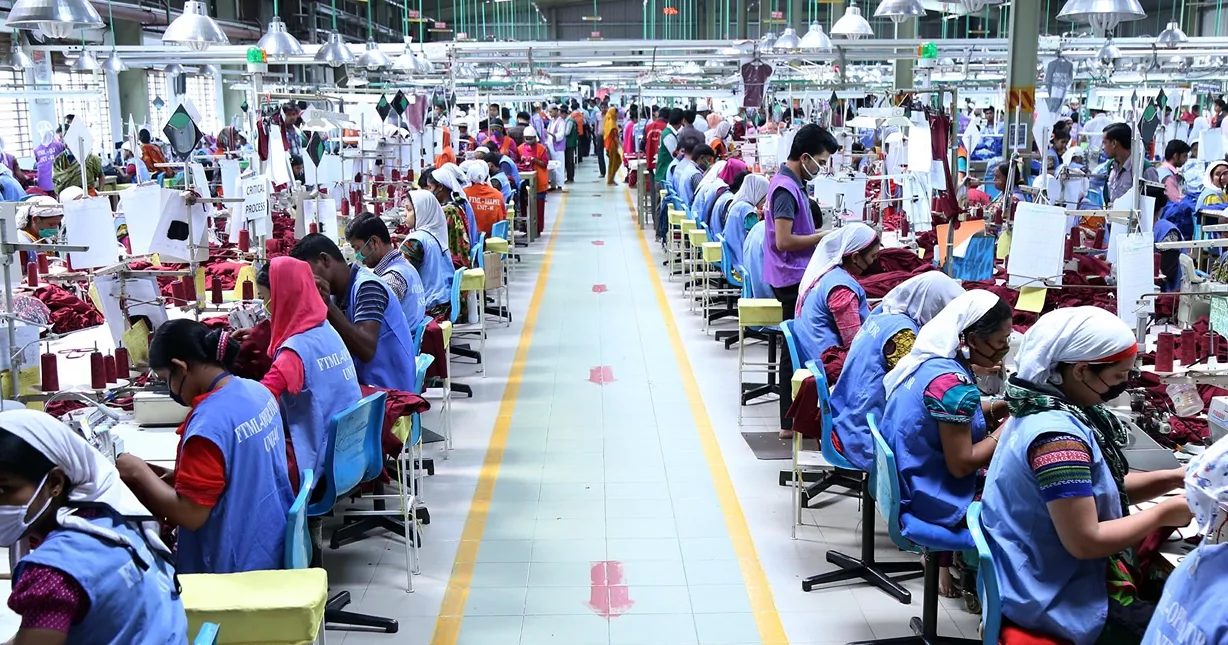
Bangladesh's readymade garment (RMG) exports to the United States – its single largest export destination – faced a setback in early 2026, recording an 8.53 percent decline in January and February, compared to the same period in 2025.
According to the latest data from the Office of Textiles and Apparel (OTEXA) of the US Department of Commerce, the downturn was marked by a "double blow" of falling prices and reduced shipment volumes. Unit prices for Bangladeshi apparel dropped by 2.47 percent, while the overall export volume (measured in square meter equivalents) fell by 6.21 percent.
The decline in Bangladesh's exports reflects a broader contraction in the US apparel import market, which saw a total decline of 13.47 percent in early 2026. Analysts suggest that high inflation, shifting consumer spending patterns, and inventory adjustments by major US retailers have contributed to this global slowdown.
Despite the overall market slump, Bangladesh’s regional rivals—Vietnam and Cambodia—managed to post positive growth, signaling intensifying competition for market share. During the same period, Vietnam’s exports to the US grew by 2.86 percent, while Cambodia recorded a significant surge of 18.43 percent.
While traditional competitors are gaining ground, China’s massive decline in the US market continues to create a strategic opening. US fashion companies are accelerating their "China Plus One" sourcing strategies due to geopolitical tensions and trade barriers.
Industry experts believe that if Bangladesh can improve its efficiency and diversify its product range, it can capture a larger portion of the vacuum left by China.
Mohiuddin Rubel, Former Director of the Bangladesh Garment Manufacturers and Exporters Association (BGMEA) and Additional Managing Director of Denim Expert Ltd, noted that the current trend highlights the vulnerability of relying solely on basic, low-margin products.
"The decline in both volume and unit price is a signal that we must pivot towards high-value-added products and improve our lead times," Rubel said.
"While the overall US market is shrinking, the growth of Cambodia and Vietnam shows that buyers are shifting orders to destinations that offer better logistical efficiency or tariff advantages,” he said.