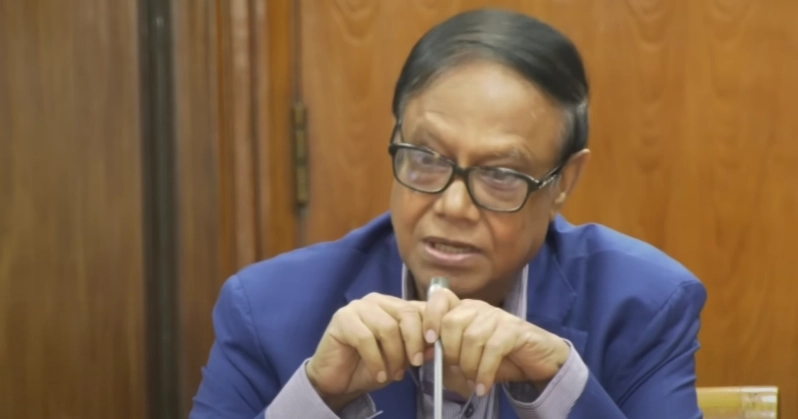
Bangladesh Bank (BB) Governor Dr Ahsan H Mansur on Thursday said the central bank is working to reduce ‘regulatory overreach’ by allowing banks greater operational freedom, provided they strictly comply with existing rules and guidelines.
“We do not want to interfere in your work, but our guidelines and regulations must be followed by everyone,” he said while speaking at a roundtable titled ‘Banking Sector Reforms’, jointly organised by Mutual Trust Bank PLC and The Financial Express at a city hotel.
The Governor said Bangladesh Bank has opted for a direct action approach by forming three dedicated task forces instead of setting up a banking commission to expedite reforms and asset recovery.
Dr Mansur explained that forming a commission would be time-consuming, requiring at least six months to prepare a report and another three months for review, leaving the current interim government with little time for implementation.
BTMA threatens shutdown of all spinning mills over duty-free yarn imports
“We have taken the approach that we will not form any commission. We will move directly to implementation through task forces,” he said.
Dr Mansur said the three task forces are focusing on banking sector reform, Bangladesh Bank reform, and asset recovery.
Referring to the challenges of recovering laundered money, the Governor said a Joint Investigation Team (JIT) has been formed comprising the Criminal Investigation Department (CID), the Bangladesh Financial Intelligence Unit (BFIU), and the Anti-Corruption Commission (ACC).
He acknowledged that capacity building remains a major challenge, noting that Bangladesh is receiving technical assistance from international partners. “The World Bank, British government, FBI and the European Union are providing technical support,” Dr Mansur said.
The Governor said the long-term goal is to establish a permanent mechanism similar to the United Kingdom’s National Crime Agency (NCA) to combat financial crimes on a continuous basis.
He revealed that authorities have identified 12 to 13 major individuals and around 200 others who allegedly laundered more than Tk 200 crore each.
Experts, farmers warn of food security crisis over poultry import ban
Expressing optimism over ongoing legal proceedings, Dr Mansur specifically mentioned the asset recovery case involving Saifuzzaman in London, adding that Islami Bank has also filed a claim in the matter.
The BB Governor said the central bank is maintaining strict political neutrality to keep the economy functional, distinguishing the current approach from that of the ‘1/11’ caretaker government period.
“We do not want any factories to close. No colour, no party—if a factory exists, the objective is how to keep it running,” Dr Mansur said.
He cited examples, noting that letters of credit (LCs) were allowed for S Alam Group’s SS Power plant due to its $2.5 billion investment, which is critical for the country’s power supply.
Similarly, facilities have been extended to the Gazi Group and Beximco, he said.
Regarding Beximco, the Governor said that out of its 18 or 19 entities, only the textile division is currently facing difficulties, while other units such as pharmaceuticals and Shinepukur Ceramics remain operational.
Dr Mansur said an exit roadmap has been developed in consultation with business representatives, allowing affected industries timeframes ranging from five to 12 years to regularise their liabilities.
11 more institutions inc. banks, municipal bodies join BIDA’s One-Stop Service portal
The Governor stressed the urgency of passing key financial laws during the tenure of the current administration, warning that future governments may find it ‘extremely difficult’ to enact them.
He expressed concern that the amendment to the Money Loan Court Act was returned by a committee on the grounds of being anti-business, arguing that without the amendment, asset recovery would be impossible.
Dr Mansur also underscored the importance of passing amendments to the Bank Company Act to strengthen governance in the banking sector.