Improved connectivity could facilitate trade, investment, boost regional tourism, and create jobs, contributing significantly to the economic growth of the region, according to the International Chamber of Commerce-Bangladesh (ICCB).
The ICCB highlighted that Bangladesh's strategic location positions it as a potential key transit route for trade between northeast India and the rest of India. Additionally, it could provide enhanced port access for Bhutan and Nepal.
The ICCB cited an estimate from CUTS International, suggesting that if regional integration occurs, the combined GDP of the region could exceed $8.3 trillion by 2035.
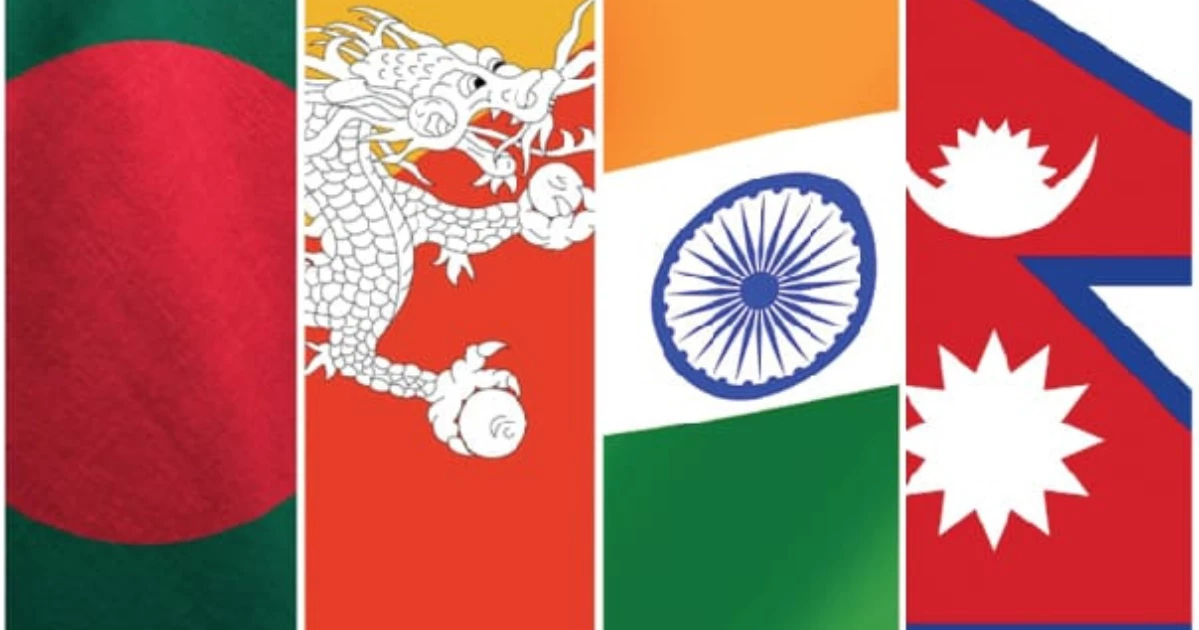
The BBIN (Bangladesh, Bhutan, India, and Nepal) initiative, launched in 2015, aims to address the logistical and economic challenges that have historically impeded South Asia's development. A central goal of the initiative is to enhance economic collaboration by streamlining the cross-border flow of goods and services, which can lower transportation costs and reduce transit times.
This is particularly crucial for landlocked nations like Bhutan and Nepal, which rely on neighboring countries for access to global markets.
According to a 2021 World Bank report, regional trade could increase India's national income by up to 7.6% and Bangladesh's by more than 16%, contributing to widespread prosperity for nearly a fifth of the world's population.
While Bangladesh, India, and Nepal have ratified the 2015 Agreement, Bhutan has yet to do so, primarily due to environmental concerns and infrastructure issues. However, Bhutan's recent participation as an observer at meetings suggests potential interest in rejoining the initiative.
A key element of the BBIN initiative is the BBIN Motor Vehicles Agreement (MVA), signed in 2015, designed to facilitate smooth cross-border vehicle movement and eliminate major trade barriers, such as complex border checks and inconsistent customs procedures.
By simplifying these processes, the BBIN agreement can expand market access, diversify trade, reduce costs, and enhance competitiveness.
The TIR Convention (1975), the only global transit system, simplifies and secures international goods transport by guaranteeing customs duties and taxes. With 76 contracting parties, including China, India, and Pakistan, it provides a reliable method for cross-border trade while safeguarding countries' revenues.
Bangladesh plays a pivotal role in initiatives like the BBIN MVA, BCIM Corridor, and BIMSTEC, aimed at expanding market access and promoting economic growth. The TIR system will further bolster regional integration and enhance Bangladesh’s access to global markets.
Despite its geographical advantages, the BBIN sub-region remains one of the least integrated areas globally. Trade between Bangladesh and India, the region’s largest economies, is minimal, representing just 1% of Indian trade and 10% of Bangladeshi trade. In contrast, interregional trade in East Africa and sub-Saharan regions accounts for 50% and 22% of total trade, respectively, according to CUTS International.
The BBIN sub-region faces high trade costs due to inadequate infrastructure and logistics. Analyzing GDP and trade from 2010 to 2019, CUTS found a positive correlation between the two. Interregional trade grew from $6 billion in 2010, with a GDP of $1.7 trillion, to $16 billion in 2019, with a GDP of nearly $3.2 trillion, making the BBIN one of the fastest-growing regions globally.
As of August 2020, the Asian Development Bank (ADB) had invested over $15 billion through the SASEC program in transport, energy, trade, economic corridors, and ICT to enhance connectivity.
Given the substantial investments in infrastructure, the ICCB urged all countries to take decisive action to implement the BBIN and MVA Agreements. It also recommended that Bangladesh, Bhutan, and Nepal join the TIR Convention to improve port access for landlocked Nepal and Bhutan and facilitate cross-border vehicle movement.