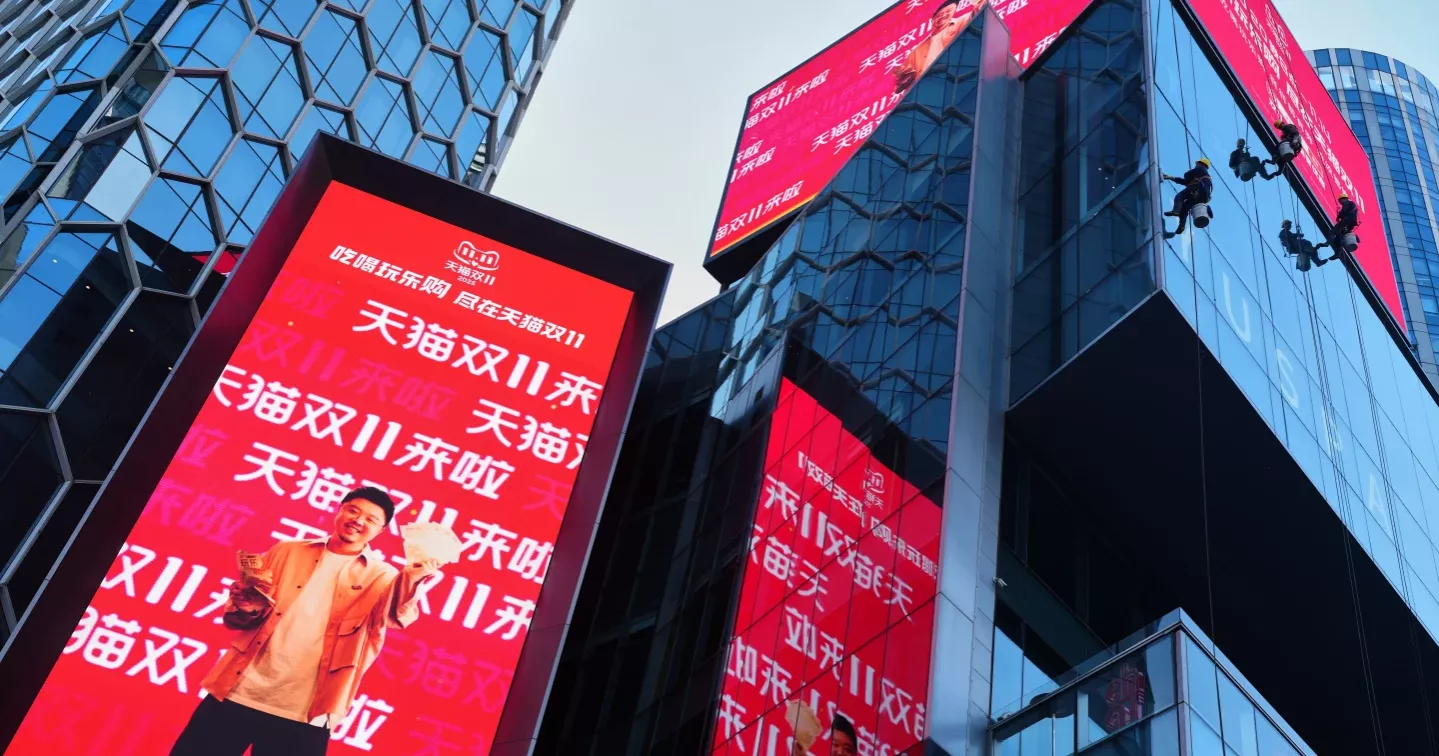
China’s annual “Singles’ Day” shopping festival, once known for record-breaking sales, is now reflecting the country’s cautious consumer mood as economic challenges weigh on spending.
Alice Zhang, a 29-year-old marketer from Guangzhou, said she spent only about half as much this year as in 2024—roughly 3,000 yuan ($421)—after her salary was cut by more than 20%. “I’ve made a conscious effort to cut back,” she said, noting she opted for cheaper products and skipped buying new shoes altogether.
The festival, created by e-commerce giant Alibaba in 2009 as China’s answer to Black Friday, has evolved from a one-day event on Nov 11 into a weeks-long sales period. Analysts say this year’s subdued enthusiasm shows consumers remain wary despite government efforts to boost domestic demand.
According to Chinese retail data provider Syntun, combined sales for this year’s Singles’ Day reached over 1 trillion yuan ($140 billion) by Oct 31. Last year, the figure rose 26% year-on-year to 1.44 trillion yuan.
Economists say household confidence remains fragile amid slow income growth, a cooling property market, and limited stimulus effects. “Confidence remains quite downbeat among households,” said Lynn Song, chief economist for Greater China at ING Bank.
Shaun Rein, managing director of China Market Research Group, said early promotions this year reflect the efforts of major platforms like Alibaba and JD.com to “drum up business” amid weak demand. However, many consumers complained that discounts were smaller and less appealing than in previous years, while analysts observed growing “consumer fatigue.”
Some shoppers also suspect that online retailers inflate prices before offering “discounts.” Guangzhou-based freelance media worker Sonia Song said she now compares prices more carefully across livestreaming apps and e-commerce sites. “I’ll only buy what’s cheapest or most cost-effective now,” she said.
Meanwhile, government rebate programs for trading in old appliances and vehicles have reduced the impact of online discounts, as consumers who already benefited from earlier deals are less likely to spend again.
Amid weak domestic demand, Chinese e-commerce giants are expanding abroad. Alibaba’s Taobao platform is running Singles’ Day campaigns in 20 countries, focusing increasingly on Southeast Asian markets like Thailand, Vietnam, and the Philippines following U.S. restrictions on duty-free small shipments.
Despite the slowdown, beauty, health, and wellness products continue to perform well, according to WPIC Marketing + Technologies CEO Jacob Cooke.
Still, many Chinese are tightening their belts. Gao Liang, who works at a fitness club in Beijing, said he expects to spend far less this year after a 20% income drop. “Our business hasn’t been doing well because people are cutting spending,” he said. “Given my unstable income, I don’t need to hoard things.”
Source: AP