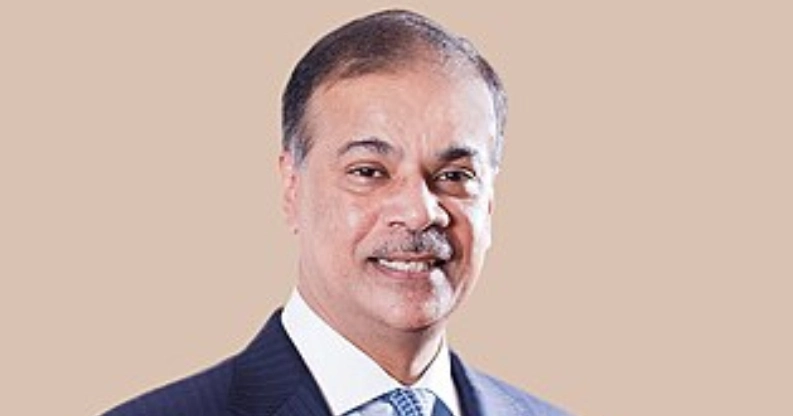
Capitalising on the rapidly growing demand for artificial intelligence and cloud services, Summit Group plans to establish a large-scale data centre in Bangladesh within the next year, its Chairman Muhammed Aziz Khan has told Japan-based news portal Nikkei Asia.
In an online interview with Nikkei Asia, Aziz said Summit is preparing to partner with a major global technology company for the venture. As the country’s leading private power producer, Summit Power International will provide the energy backbone for the project, utilising its gas-based infrastructure to ensure uninterrupted, high-uptime power supply required for Tier-1 data centre operations.
“Summit Group’s key focus going forward will be energy and data growth, with the aim of strengthening Bangladesh’s LNG sector and fibre-optic infrastructure,” Aziz said.
According to Nikkei Asia, Summit currently supplies about seven percent of Bangladesh’s total electricity demand through its 10 gas-based plants and five other power plants. In the digital connectivity segment, another concern of the group—Summit Communications—accounts for more than half of the country’s internet supply and is one of the leading fibre-optic service providers.
The Japan International Cooperation Agency (JICA) told Nikkei Asia that the number of internet and smartphone users in Bangladesh is rising steadily, driving increased demand for cloud services, mobile applications and artificial intelligence. In this context, JICA said the establishment of a full-fledged data centre has become essential for the country.
The government promulgated the Personal Data Protection Ordinance in 2024, which restricts the transfer of both personal and aggregate data outside Bangladesh.
However, due to the shortage of domestic data centres, a large volume of data continues to be hosted by foreign companies. JICA noted that setting up local data centres would significantly strengthen Bangladesh’s data protection regime.
JICA also observed that ongoing political uncertainty has made it difficult to attract private investment in data centres. Nevertheless, it believes such projects are feasible if a domestic company takes the lead.
Aziz said Summit is currently looking for a reliable international partner with proven experience in data centre development and strong marketing capabilities.
“We have been in contact with seven major global tech companies—Alphabet, Microsoft, Tesla, Nvidia, Apple, Amazon and Meta Platforms. Some of them have shown interest in working together. Summit will finalise a partnership decision within this year,” he said.
Initially, Summit plans to locate the data centre near one of its gas-based power plants close to Dhaka, operating the facility on its own land, Nikkei Asia reported.
“The three key requirements for a data centre are electricity, fibre and land—and Summit has all three. Although establishing a fully operational data centre will take several years, we aim to open services for customers within 18 months,” Aziz said.
He acknowledged concerns that the high electricity consumption of data centres could pose challenges to Bangladesh’s renewable energy targets. However, he said global realities have changed and Bangladesh must adapt.
Aziz noted that until two years ago, Summit had planned to shut down all hydrocarbon-based power plants by 2050, but current domestic and global conditions have made that goal unfeasible for now.
“We still have major plans to invest in solar and hydropower projects in India, Nepal and Bhutan and import clean energy into Bangladesh. However, strained relations between Bangladesh and India have become a major obstacle to implementing these initiatives,” he said.
Despite challenges ahead of the next national election, Aziz said Summit Group remains committed to continuing its operations in Bangladesh under all circumstances.
He also expressed optimism that operating under an elected government would be positive for the country and would improve the long-term investment climate, he told Nikkei Asia.