
Industry stakeholders and business leaders on Saturday strongly demanded the formation of a dedicated National Leather Board to serve as a regulatory and guardian body for the country’s struggling leather sector.
Alongside the demand for a centralized board, they urged the government to ease loan facilities for raw hide preservation, simplify the import of essential chemicals, and remove existing barriers to international compliance certification.
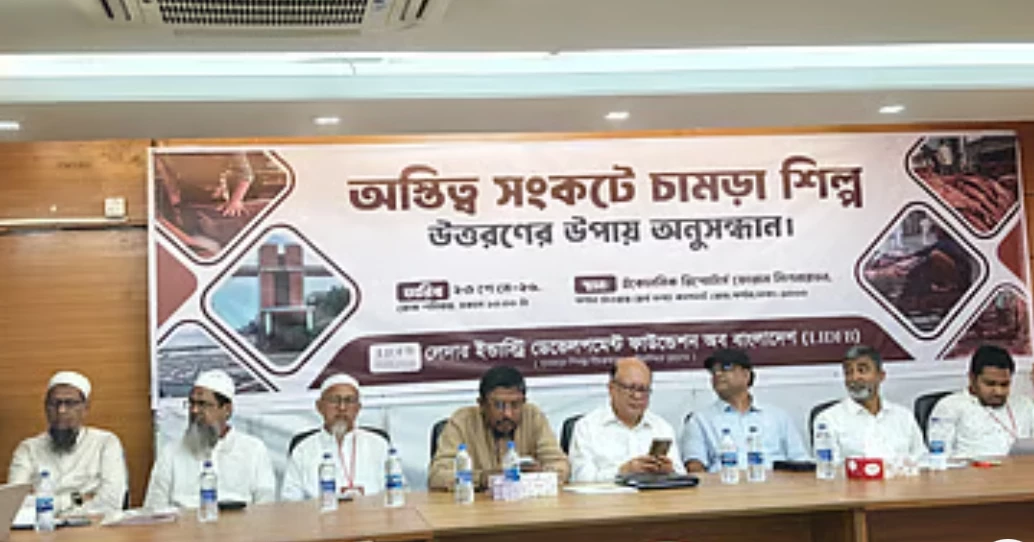
The demands were raised at a seminar titled "Finding Ways to Overcome the Existential Crisis of the Leather Industry," organized by the Leather Industry Development Foundation of Bangladesh at the Economic Reporters' Forum (ERF) auditorium in the capital's Purana Paltan on Saturday.
Presenting the keynote paper, Sadat Hossain, Convener of the Leather Industry Development Foundation of Bangladesh, pointed out the institutional neglect the sector faces despite its massive potential.
"We have a Tea Board for the tea industry and a dedicated Ministry of Textiles and Jute for the apparel sector. However, there is no guardian agency to oversee the leather sector. Therefore, the formation of a National Leather Board is a critical necessity," Sadat Hossain said while presiding over the seminar.
He lamented that although the leather sector achieves a high local value addition of over 40 percent, it receives very little state priority. In contrast, he alleged, the garment sector secures 97 percent of national incentives while contributing only a 15 percent value addition.
To overcome compliance hurdles and global certification challenges, speakers at the seminar proposed setting up small, localized Effluent Treatment Plants (ETPs) in individual tanneries with financial assistance from the World Bank.
They suggested that these micro-ETP loans could be structured to be repaid over a flexible 20-year period.
Furthermore, to stimulate domestic demand and promote local industrial growth, speakers proposed that the government make leather shoes and school bags mandatory for school-going children across the country.
The event was attended by top sector entrepreneurs, leather technologists, and economic experts, who all stressed immediate policy intervention to protect the country's second-largest export-earning prospect from sliding into a deeper crisis.