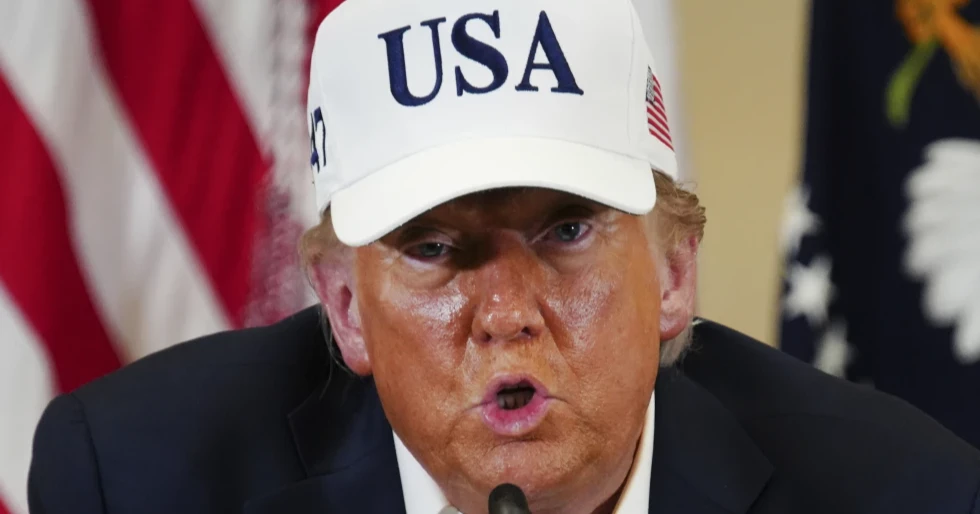
President Donald Trump on Saturday unveiled plans to impose 30% tariffs on imports from the European Union and Mexico starting August 1, escalating tensions with two of the United States' most important trading partners.
In letters posted to his social media account, Trump justified the move as part of his broader campaign to “rebuild” the U.S. economy, arguing that the country has long been exploited in global trade. He claimed the tariffs are necessary to correct trade imbalances and protect national security.
Addressing Mexican President Claudia Sheinbaum, Trump acknowledged Mexico’s cooperation on border security and drug trafficking but insisted it hadn’t done enough to prevent the U.S. from becoming a “Narco-Trafficking Playground.” In his letter to the EU, Trump accused the bloc of maintaining unfair trade policies and persistent trade deficits, calling the relationship “far from reciprocal.”
The announcement follows Trump’s previous decision to pause tariffs for 90 days to allow for negotiations. With that grace period ending this week, Trump is now moving forward, though implementation has been slightly delayed.
Trump plans to hike tariffs on Canadian goods to 35%
The response from Europe and Mexico was swift and critical. European Commission President Ursula von der Leyen said the EU remains committed to negotiations but warned of “proportionate countermeasures” if needed. French President Emmanuel Macron emphasized the EU’s unity, while Swedish and Danish leaders condemned the tariffs as short-sighted and harmful to global stability.
Italy’s Prime Minister’s Office said triggering a transatlantic trade war “makes no sense,” and trade ministers from EU nations are set to meet Monday to coordinate a response.
Mexico expressed disappointment, calling the move “unfair treatment” and emphasizing the need for “cool-headed” diplomacy. President Sheinbaum voiced hope for better terms through ongoing discussions.
If implemented, the tariffs could affect nearly every sector of transatlantic and North American trade. In 2024, trade between the U.S. and EU totaled $2 trillion, with key European exports including pharmaceuticals, automobiles, aircraft, and wine.
Critics say Trump’s moves threaten decades-old global trade rules and could isolate the U.S. from key economic partners.
Source: Agency