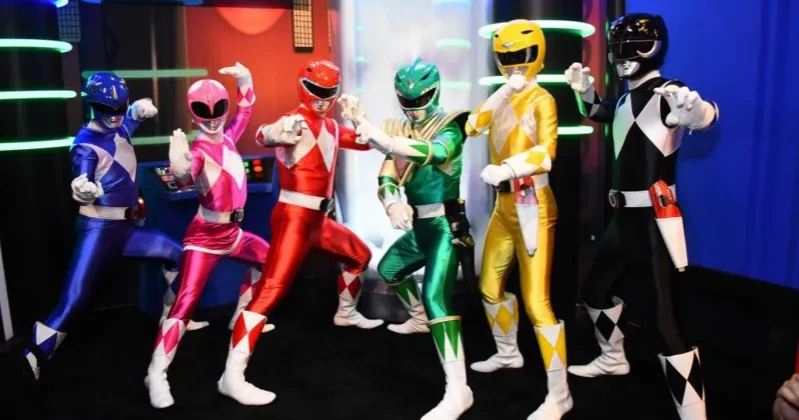
Super Sentai, the Japanese superhero series that gave birth to the world-famous Power Rangers franchise, is reportedly coming to an end after 50 years, local media said on Thursday.
According to reports, the show’s broadcaster TV Asahi is discontinuing the long-running series as income from merchandise sales and events can no longer cover its high production costs. However, the channel declined to comment on its “future programming,” the Asahi Shimbun reported.
First launched in 1975, Super Sentai featured five young heroes who transform into colour-coded fighters to save the world from alien invaders — a concept that later inspired the US adaptation Mighty Morphin Power Rangers in the 1990s.
Over the decades, the show became deeply rooted in Japan’s pop culture, helping launch the careers of numerous actors and fueling a massive toy and merchandise industry.
For audiences abroad, Super Sentai served as a gateway to Japan’s vibrant superhero and comic culture, with similar shows such as Choudenshi Bioman and Hikari Sentai Maskman gaining cult followings in countries like the Philippines.
Each season of Super Sentai introduced a new team — three men and two women — led by a red-suited fighter, with the others dressed in green or black, blue, yellow, and pink. Every episode followed an action-packed sequence, often ending with the heroes’ robot clashing with a giant alien.
The original Power Rangers series, adapted by producer Haim Saban, aired from 1993 to 1996 and spawned numerous spin-offs. Speaking to the Los Angeles Times in 2017, Saban recalled that the idea was initially rejected by TV networks. “Every selling season, I would go out and offer it to the networks — and would get kicked out of the room. They told me how crazy I was,” he said.
News of Super Sentai’s possible conclusion has saddened fans and celebrities alike. Popular actress Keiko Kitagawa shared an article about the show’s cancellation on X (formerly Twitter), captioning it “despair,” which quickly went viral with more than 15 million views.
Yasuhisa Furuhara, who played one of the Super Sentai fighters, said he felt proud to be part of its long history. “I’m proud to be part of history,” he wrote.
Fans across generations expressed their sorrow online. “My parents watched Super Sentai when they were kids, and now I do too. I’ll miss it,” one user wrote. Another commented, “If Super Sentai ends, what will the next generation of boys watch?”
Source: BBC