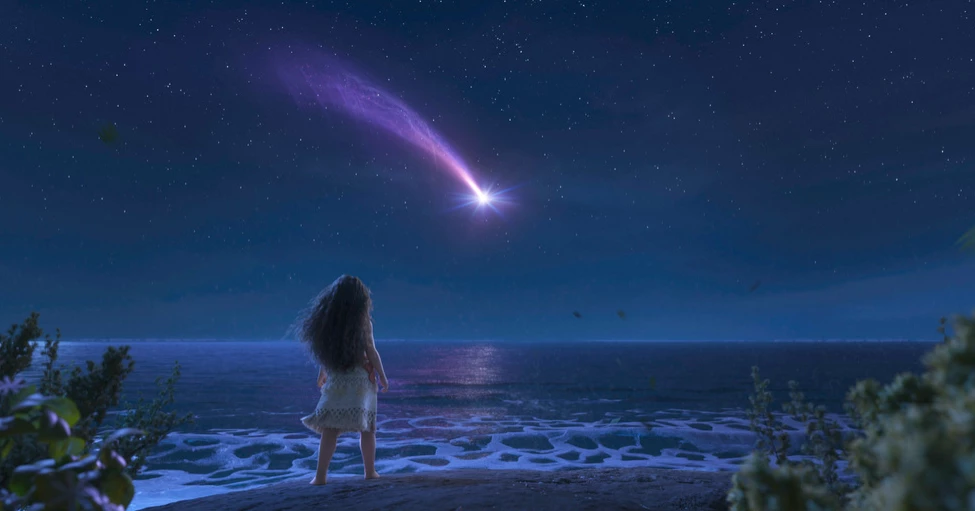
A jury has swiftly and unequivocally dismissed claims that Disney’s Moana was derived from a story about a young surfer in Hawaii.
On Monday, a federal jury in Los Angeles deliberated for just two and a half hours before concluding that the creators of Moana had no access to writer and animator Buck Woodall’s outlines and script for Bucky the Surfer Boy.
Billboard names Doechii 2025 Woman of the Year
With this issue resolved, the jury of six women and two men did not need to examine the similarities between Bucky and Disney’s 2016 animated feature, which follows the journey of a Polynesian princess.
Woodall had shared his work with a distant relative who worked for a separate company on the Disney lot. However, during the two-week trial, she testified that she had never shown it to anyone at Disney.
“Obviously, we’re disappointed,” Woodall’s attorney, Gustavo Lage, said outside the courtroom. “We’re going to review our options and consider the best way forward.”
In closing arguments earlier that day, Woodall’s attorney asserted that an extensive chain of circumstantial evidence linked the two works inseparably.
“There was no Moana without Bucky,” Lage argued.
Defence lawyer Moez Kaba countered that the evidence overwhelmingly demonstrated that Moana was the original work and the “crowning achievement” of John Musker and Ron Clements, the celebrated writers and directors behind The Little Mermaid (1989), Aladdin (1992), Hercules (1997), and The Princess and the Frog (2009).
“They had no idea about Bucky,” Kaba stated in his closing remarks. “They had never seen it, never heard of it.”
Moana went on to earn nearly $700 million worldwide.
A judge had previously ruled that Woodall’s 2020 lawsuit was filed too late for him to claim any share of the film’s revenue. Additionally, a separate lawsuit he filed earlier this year regarding Moana 2—which grossed over $1 billion—must be addressed separately. Though that case remains active, the jury’s decision does not bode well for its outcome. Judge Consuelo B. Marshall, who is also presiding over the sequel lawsuit, expressed agreement with the jury’s verdict regarding access.
“We are incredibly proud of the collective effort that went into making Moana and are pleased that the jury determined it had no connection to the plaintiff’s work,” Disney said in a statement.
Musker and Disney’s legal team declined to comment outside the courtroom.
The relatively young jury, consisting of six women and two men, watched Moana in its entirety during the trial. They also examined a 2003 story outline for Bucky, along with a 2008 revision and a 2011 script.
In later versions of Bucky, the titular character, while vacationing in Hawaii with his parents, befriends a group of Native Hawaiian youths and embarks on a quest involving time travel to ancient islands and interactions with demigods to protect a sacred site from a developer.
Around 2004, Woodall had provided his Bucky outline to the stepsister of his brother’s wife, Jenny Marchick, who worked for Mandeville Films. The company had a contract with Disney and was located on the Disney lot. He continued sending her follow-up materials over the years. He testified that upon watching Moana in 2016, he was shocked by the apparent similarities.
However, Marchick testified that she never showed Bucky to anyone at Disney. Messages presented by the defence indicated that she eventually stopped responding to Woodall’s inquiries and had informed him that she could not assist him.
Disney’s attorney, Kaba, argued that there was no proof that Marchick had ever worked on Moana or received any recognition or compensation related to it.
He further pointed out that Marchick, who is now Head of Features Development at DreamWorks Animation, spent much of the relevant period working for Disney’s competitors, including Sony and Fox, undermining the claim that she had helped develop Moana for Disney.
Woodall also submitted his script directly to Disney and had a meeting—arranged by Marchick—with an assistant at the Disney Channel regarding potential work as an animator. However, the jury determined that this did not establish a link between Bucky and Moana’s creators, Musker and Clements.
In his closing arguments, Woodall’s attorney highlighted some of the alleged similarities between the two works.
Both feature teenage protagonists on oceanic quests.
Both prominently include Polynesian demigods and shape-shifting characters who transform into various creatures, including insects and sharks.
Both depict the main characters interacting with animals serving as spiritual guides.
Kaba, however, argued that many of these elements are drawn from Polynesian folklore and universal literary themes, making them ineligible for copyright protection.
He pointed out that shape-shifting supernatural characters have appeared in multiple Disney films, including The Little Mermaid, Aladdin, and Hercules, all of which were written and directed by Musker and Clements. These films were instrumental in Disney’s 1990s renaissance and its rise as a global entertainment powerhouse.
Animal guides, he added, have been a staple of storytelling since at least 1940’s Pinocchio and feature in all of Musker and Clements’ previous works.
Aamir Khan reflects on rejecting iconic roles played by Shah Rukh and Salman
Kaba asserted that Moana was developed through Musker and Clements’ established creative process—drawing from their own inspirations, extensive research, and travel experiences.
He presented thousands of pages of development documents that detailed the entire creative process behind Moana, revealing that its initial inspiration came from the paintings of Paul Gauguin and the writings of Herman Melville.
“You can see every single fingerprint,” Kaba concluded. “You can see the entire genetic makeup of Moana.”