For a filmmaker once associated with the “slacker” generation, Richard Linklater has proven to be one of America’s most versatile and consistently outstanding directors. Among his two dozen films are thoughtful portraits of artists such as Me and Orson Welles and even School of Rock, which celebrated the joy of creative rebellion.
This fall, Linklater presents two new films about artists: Nouvelle Vague, centered on Jean-Luc Godard and the birth of the French New Wave, and Blue Moon, which explores the final chapter in the life of lyricist Lorenz Hart. Both celebrate brilliant, uncompromising creative spirits — and both are pure cinematic pleasure.
A night at Sardi’s
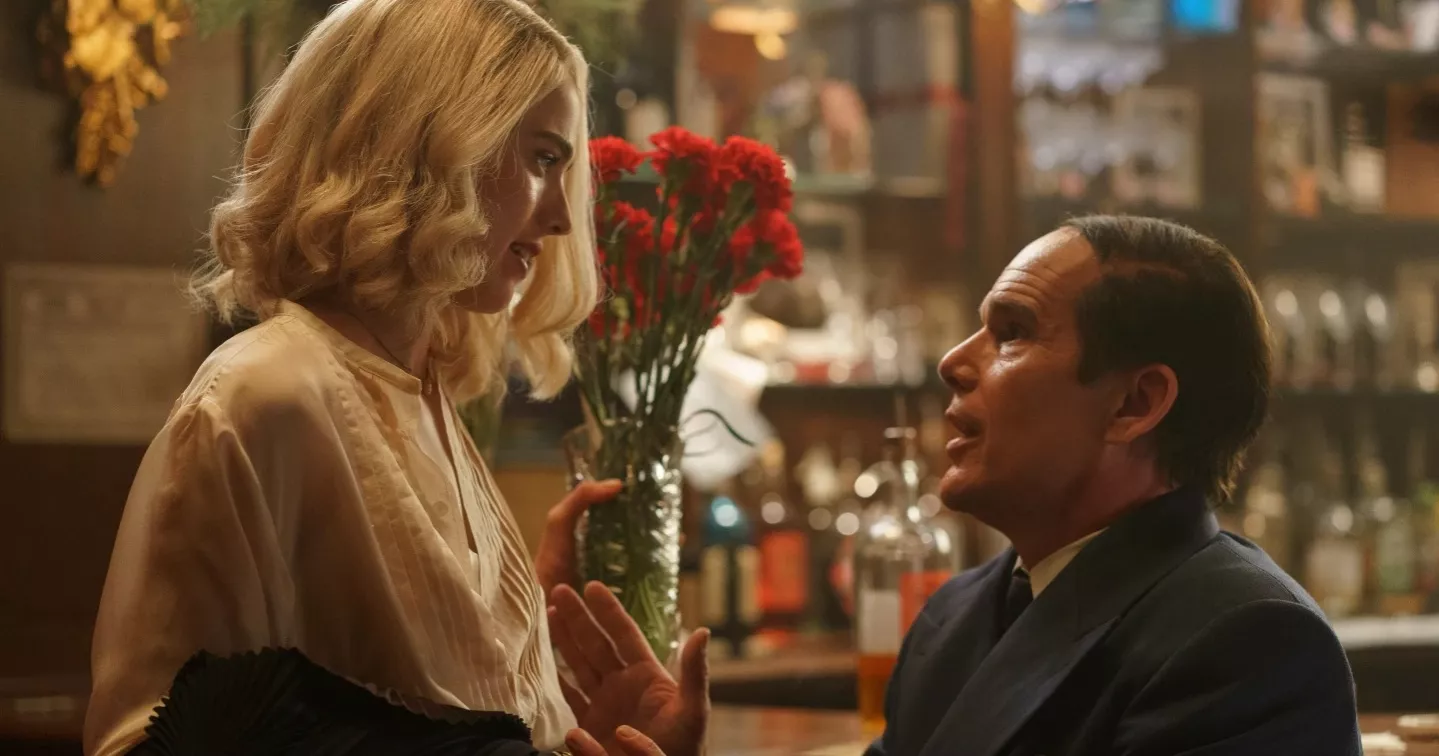
Blue Moon, the first of the two to be released, unfolds over a single evening — March 31, 1943 — at Sardi’s in New York. Down the street, Oklahoma! is premiering, marking a new beginning for composer Richard Rodgers, who has teamed up with Oscar Hammerstein II, leaving behind his longtime collaborator, Lorenz “Larry” Hart. Within six months, Hart would die of pneumonia after a night spent unconscious on a city sidewalk. He was only 48.
But Linklater’s focus is on Larry that fateful night, holding court at Sardi’s while nursing both his pride and his despair. He entertains bartender Eddie (Bobby Cannavale) and others, including writer E.B. White (Patrick Kennedy), in a witty, melancholic monologue about life, love, and lyrics — all while trying to resist another drink.
“I’ve written a handful of words that are going to cheat death,” he says, referring to timeless classics such as My Funny Valentine, The Lady Is a Tramp, Bewitched, Bothered and Bewildered, and Blue Moon.
Larry’s love for language — and for the right turn of phrase — defines him. His favorite line from Casablanca is telling: “Nobody ever loved me that much.” He admires Humphrey Bogart, noting that the actor “proves you can be both short and a leading man.”
Ethan Hawke’s finest performance
Physically transformed and emotionally unguarded, Ethan Hawke delivers what may be the best performance of his career. His portrayal of Hart — a brilliant, closeted, self-destructive artist — is both magnetic and heartbreaking. Hawke captures the charm of a raconteur and the vulnerability of a man left behind by changing times and his own demons.
When Oklahoma! becomes an overnight sensation, Larry’s bitterness turns reflective. He sees in the musical’s cheerful Americana an exclusion of the melancholy and irony that defined his own work. “It’s a fraudulent portrait of America,” he says.
Yet amid the melancholy, there’s warmth. The late-night gathering at Sardi’s becomes a small, tender act of redemption. Cannavale’s Eddie and the other patrons form a circle of quiet empathy around Larry as they share jokes and toasts — a eulogy in real time.
Also present is Elizabeth Weiland (Margaret Qualley), a 20-year-old Yale student who fascinates Larry. His affection for her — drawn from real letters between Hart and Weiland — is less romantic than aesthetic. “I drink beauty wherever I find it,” he insists.
A graceful farewell
Blue Moon is adapted by Robert Kaplow, who also wrote Me and Orson Welles. His screenplay captures both Hart’s brilliance and fragility, balancing Linklater’s conversational filmmaking with moments of deep pathos.
If Nouvelle Vague is expansive and crowded with cinematic icons, Blue Moon is its intimate counterpart — a one-man show that feels like a final performance. In its finest moments, the film becomes a loving salute not only to Hart but to every forgotten writer who tried, in his words, to “cheat death” through art.
Source: AP