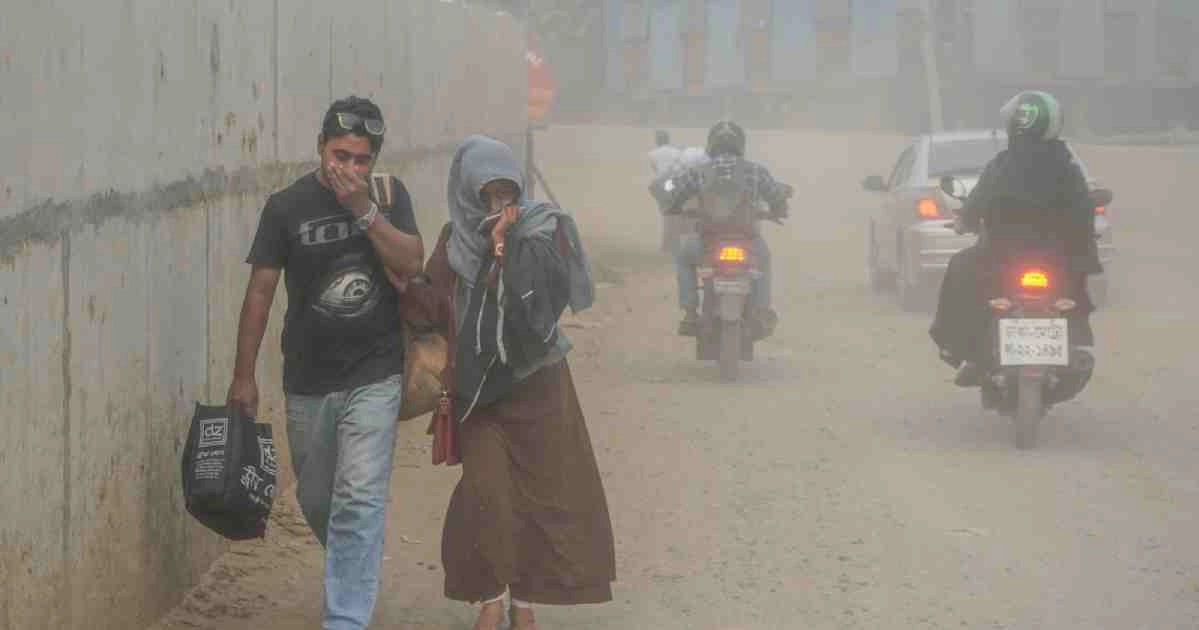
Dhaka, the capital of Bangladesh, ranked second worst on the global Air Quality Index (AQI) on Wednesday morning.
The city recorded an AQI score of 260 at 8:40am, classifying the air as very unhealthy, according to air quality and pollution city rankings.
India’s Delhi topped the list with an AQI score of 299, while China’s Chengdu ranked third with a score of 219.
An AQI reading between 101 and 200 indicates an increased likelihood of adverse health effects, particularly for people with heart or lung conditions and other sensitive groups. Higher levels pose greater health risks to the general population.
The AQI is used to report daily air quality and indicates how clean or polluted the air is, along with the potential health concerns associated with it.
In Bangladesh, the AQI is calculated based on five major pollutants: particulate matter (PM10 and PM2.5), nitrogen dioxide (NO₂), carbon monoxide (CO), sulphur dioxide (SO₂), and ozone (O₃). The Department of Environment has set national ambient air quality standards for these pollutants to safeguard public health.
Dhaka, one of the world’s most densely populated cities, has long struggled with severe air pollution. Air quality typically deteriorates during the dry season and improves during the monsoon.