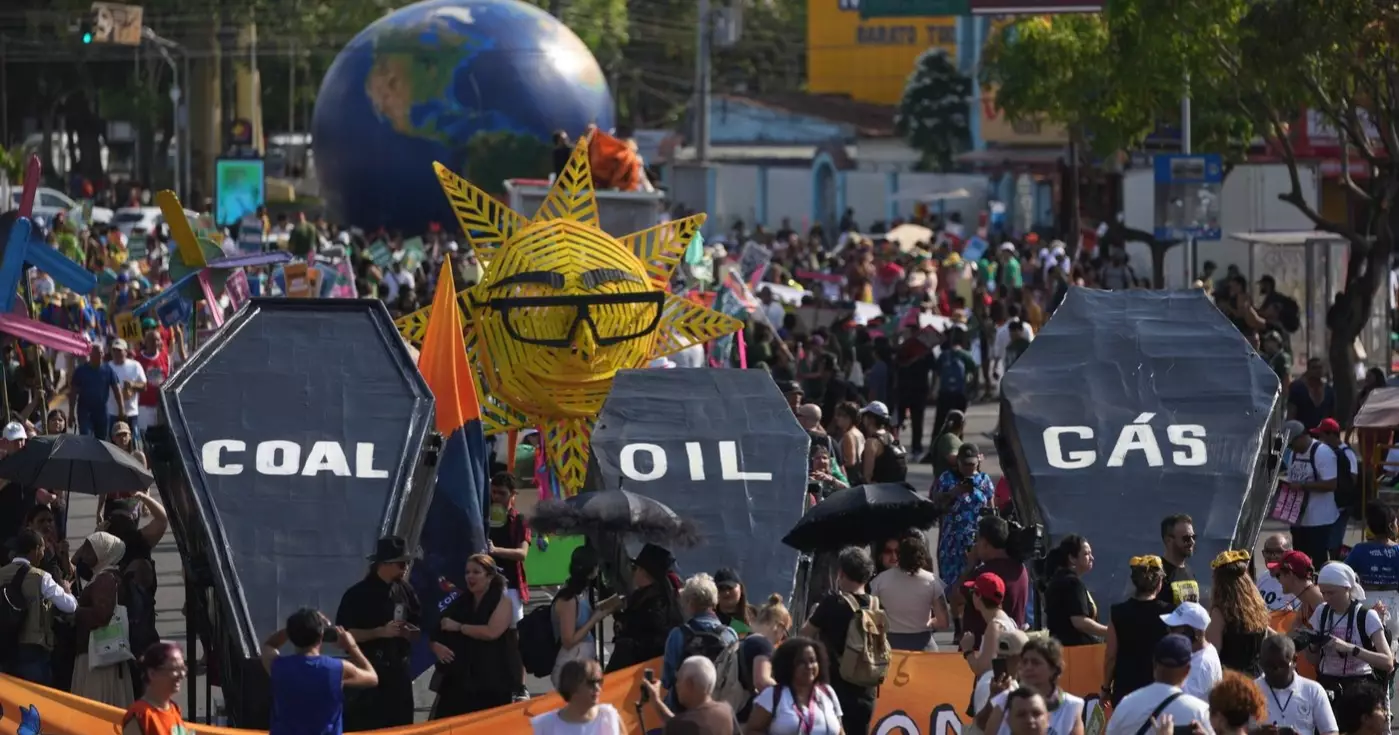
Hundreds of climate protesters marched near the COP30 venue on Saturday, using costumes, drums, flags, and chants to demand that world leaders take stronger action on climate change. Some wore black dresses to symbolize a “funeral for fossil fuels,” while others donned red shirts representing the blood of environmental defenders.
The procession, led by organizers on trucks with sound systems, included participants from diverse environmental and social movements. Marisol Garcia, a Kichwa activist from Peru, said the protesters sought to pressure leaders to make “more humanized decisions.” The march covered roughly 4 kilometers (2.5 miles) and followed earlier disruptions in which demonstrators surrounded the venue, at times injuring two security guards.
Saturday’s COP30 sessions focused on implementing $300 billion in annual climate aid pledged by wealthy nations to support poorer countries in reducing fossil fuel use, adapting to extreme weather, and addressing climate damage.
Protesters, many of whom enjoyed greater freedom to demonstrate than at recent conferences in Azerbaijan, the UAE, and Egypt, said public participation is central to the climate movement. Ana Heloisa Alves, 27, called it the largest march she had ever joined, while Pablo Neri of the Movimento dos Trabalhadores Rurais Sem Terra urged organizers to engage more citizens.
Some protesters directed criticism at the U.S., which skipped the talks following President Donald Trump’s climate skepticism. Flavio Pinto of Para state donned a costume featuring an oversized American flag hat and fake dollar bills with Trump’s face, calling out “imperialism” for environmental harm.
Other groups highlighted local environmental and cultural issues, including the protection of the Tapajos River and access to Babaçu palms, essential for both livelihoods and traditions. Observers lined the streets, capturing the colorful and spirited demonstration with their phones.
COP30 continues through Friday, with participants hoping for progress on previous commitments, particularly funding to help vulnerable nations cope with climate change.