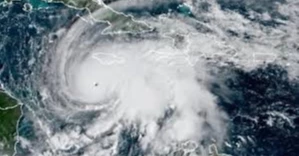
Hurricane Melissa strengthened into a Category 5 storm on Monday as it approached Jamaica, with forecasters warning of catastrophic flooding, landslides, and widespread destruction. If it makes landfall at current intensity, it would be the most powerful hurricane ever recorded to strike the island since records began in 1851.
The storm has already been linked to seven deaths across the northern Caribbean. Melissa is projected to hit Jamaica on Tuesday, move into Cuba later that day, and then head toward the Bahamas, though it is not expected to reach the U.S. mainland.
Jamaican Prime Minister Andrew Holness said he was praying for the nation’s safety, while residents in Kingston hurried to board up homes and gather supplies. “I’m definitely worried,” said Hanna McLeod, a 23-year-old hotel receptionist. “It’s my first time facing a hurricane like this.”
At Category 5, hurricanes have winds exceeding 157 mph (250 kph). Meteorologist Jonathan Porter of AccuWeather said Melissa, with sustained winds of 175 mph (280 kph), could unleash a storm surge up to 13 feet (4 meters) in Kingston, threatening critical infrastructure including the airport and power plants.
“This could quickly turn into a major humanitarian crisis,” Porter warned.
By Monday night, the storm was located 155 miles (245 km) southwest of Kingston, moving slowly northwest at 2 mph (4 kph). The U.S. National Hurricane Center predicted up to 30 inches (76 cm) of rain in eastern Jamaica and 16 inches (40 cm) in western Haiti, posing extreme risks of flash flooding and landslides.
Authorities ordered mandatory evacuations in flood-prone areas, providing buses to shelters. Still, some residents chose to stay behind. “I can manage myself,” said Noel Francis, a 64-year-old fisherman in Old Harbor Bay.
Power outages began across southern Jamaica as winds intensified Monday night. “My only concern is flooding,” said Hyacinth White, 49, who opted to remain home.
In western Jamaica’s Black River, vendor Sandra Walker continued working hours before the storm, saying she could not afford to leave despite losing her home to Hurricane Beryl last year. Officials expressed concern that fewer than 1,000 people had gone to the island’s 130 shelters. “That’s far below what’s needed for a Category 5,” warned Transport Minister Daryl Vaz.
Melissa has already killed three people in Haiti, one in the Dominican Republic, and three in Jamaica in storm-related incidents. More than 50,000 people in Jamaica were without electricity as landslides and downed power lines were reported.
Cuba issued hurricane warnings for its eastern provinces, including Santiago de Cuba and Guantánamo, and began evacuating over 600,000 residents. Heavy rainfall and coastal surges are expected. The storm is then forecast to pass through the Bahamas, which are under a hurricane warning, and affect the Turks and Caicos Islands under a tropical storm warning.
Evan Thompson, head of Jamaica’s meteorological service, warned that recovery efforts would be delayed by flooding and blocked roads. A hurricane of this intensity has not directly hit Jamaica in 174 years—the last major landfall was Hurricane Gilbert in 1988 as a Category 3.
The storm also devastated parts of the Dominican Republic, damaging over 750 homes and displacing 3,700 residents, while 48 communities were cut off by flooding. In Haiti, crop losses worsened an already dire hunger crisis affecting over 5.7 million people.
Melissa is the 13th named storm of the 2025 Atlantic hurricane season, which runs from June 1 to November 30.