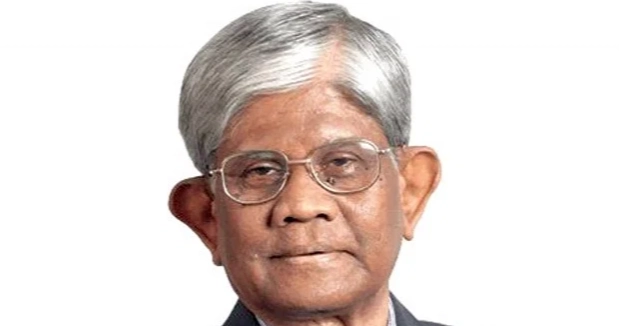
Finance Adviser Dr Salehuddin Ahmed on Monday said climate change is receiving more words than action while Bangladesh is struggling to secure the funds it needs to tackle the crisis.
“Bangladesh needs around US$30 billion to effectively combat climate-induced disasters but when it comes to securing even US$1–1.5 billion from the International Monetary Fund (IMF), we face tremendous hurdles,” he said.
Dr Salehuddin made the remarks while inaugurating a three-day training workshop on “Navigating Climate Finance: Media Reporting”, jointly organised by the Palli Karma-Sahayak Foundation (PKSF) and the Economic Relations Division (ERD) in Dhaka.
The adviser stressed that climate crisis management needs coordinated efforts from five key actors—scientists, policymakers, institutions, financiers, and the general public.
“When a fire breaks out, it is often ordinary people who respond before firefighters arrive. Bangladesh has shown leadership in disaster response but greater awareness is essential to scale up action,” he said.
The Adviser has lauded the resilience of ordinary Bangladeshis in facing the impacts of climate change, calling for greater awareness and responsibility from all sections of society.
“Bangladesh is one of the most climate-vulnerable countries in the world. People in the coastal areas struggle day and night to survive. We must utilize their experience and coping capacity,” he said.
Dr Salehuddin emphasized the role of the media in shaping public awareness. “Journalists shouldn’t only report on political or social issues but also highlight the realities of climate change and natural disasters. Through investigative journalism, it’s also your responsibility to raise public awareness,” he noted.
Referring to global practices, he pointed out that in Japan, schoolchildren receive disaster preparedness training from the primary level. “We too should introduce small initiatives such as keeping an emergency bag in every household,” he suggested.
The Finance Adviser also underlined the importance of sustainable development. “Development cannot be achieved by harming nature. Before grabbing land or constructing infrastructures in the name of social development, we must think of nature and people’s livelihoods. Only then will Bangladesh earn global respect,” he said.
ERD Secretary Md Shahriar Kader Siddiky underlined the need to highlight Bangladesh’s climate damages to secure access to global funds.
“We try to mobilise resources from climate funds but our stories of damages and vulnerabilities must reach international platforms—and here the role of journalists is crucial,” he said.
Chief Adviser’s Press Secretary Shafiqul Alam pointed to dengue outbreaks, rising floods in Sylhet, and maternal mortality as climate-linked impacts that are not being effectively communicated to the global community.
“Without telling these stories properly we cannot build strong cases for financing,” he added.
PKSF Chairman Zakir Ahmed Khan presided over the event, where 60 journalists from various media outlets are participating in the training aimed at enhancing climate reporting.