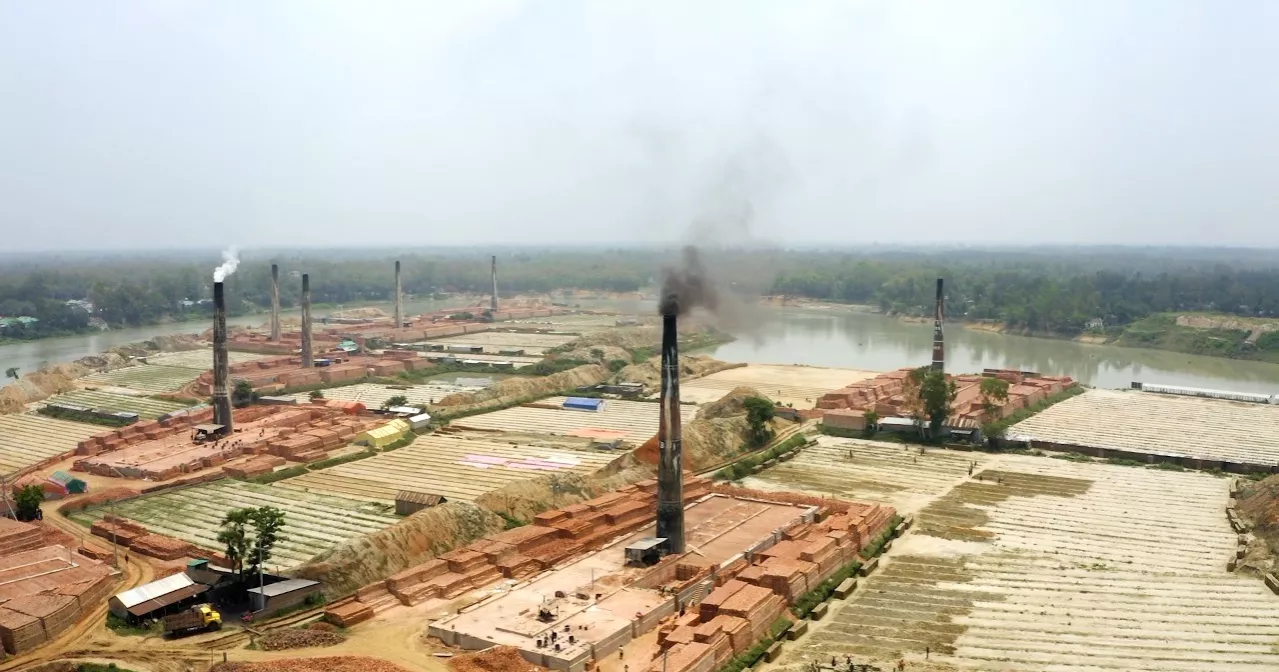
A new study has found that 65 per cent of kiln owners adopted the changes, which led to a 23 per cent drop in energy use and a 20 per cent reduction in both CO₂ and PM2.5 emissions.
Besides, brick kiln owners in Bangladesh are willing to adopt energy-efficient practices that significantly reduce emissions and improve air quality—if given the right training and support.
Conducted by researchers from Boston University School of Public Health (BUSPH), Stanford University, icddr,b, Greentech Knowledge Solutions, and the Bangladesh University of Engineering and Technology, the study demonstrates that practical, profit-aligned changes in kiln operations can lead to notable environmental benefits without the need for strict legal enforcement.
Published in Science, the study is based on a randomised controlled trial during the 2022–2023 kiln season, involving 276 kilns. The intervention provided training, educational resources and technical support to owners, encouraging operational improvements like optimised brick stacking and the use of biomass fuels.
The changes also brought savings in coal costs and better-quality bricks. Researchers found the social benefits of reduced CO₂ emissions outweighed the intervention costs by a factor of 65 to 1, with reductions achieved at just $2.85 per ton.
“Brick manufacturing is central to development, urbanisation, and construction in Bangladesh and across South Asia, but the industry has not experienced much innovation, leaving open the possibility for win-win solutions that target low efficiency,” said study lead and corresponding author Dr Nina Brooks of BUSPH.
“Our findings demonstrate that brick kiln owners are willing to embrace simple changes that protect human and environmental health when they have the knowledge and training, and those changes deliver tangible economic gain.”
Bangladesh’s brick kiln sector produces 27 billion bricks annually and contributes 17 per cent of national CO₂ emissions and 11 per cent of PM2.5 pollution.
Despite existing regulations, such as restrictions on firewood use and location bans near schools or hospitals, enforcement remains weak.
“From what I’ve seen in brick kilns, the people working there really make all the difference,” said study co-author Mr Debashish Biswas, assistant scientist at icddr,b. “It’s not just about the technology or the strategies—if the workers aren’t taken care of, things just don’t run smoothly.”
Researchers valued CO₂ reductions using the social cost of carbon at $185 per metric ton. If adopted nationwide, the changes could cut emissions by 2.4 million metric tons per brick season—about two per cent of Bangladesh’s annual CO₂ emissions.
Dr Sameer Maithel of Greentech Knowledge Solutions said, “Brick kilns and other informal industries need not always look outside for finding solutions to improve their environmental performance.”
Sameer added that identifying and scaling such local innovations is crucial. The team believes the intervention could be replicated in other South Asian countries like India and Nepal, where similar brick manufacturing methods are used.
“The remarkable success of the intervention demonstrates the benefit of deep engagement with local stakeholders,” said co-senior author Dr Stephen Luby of Stanford University.