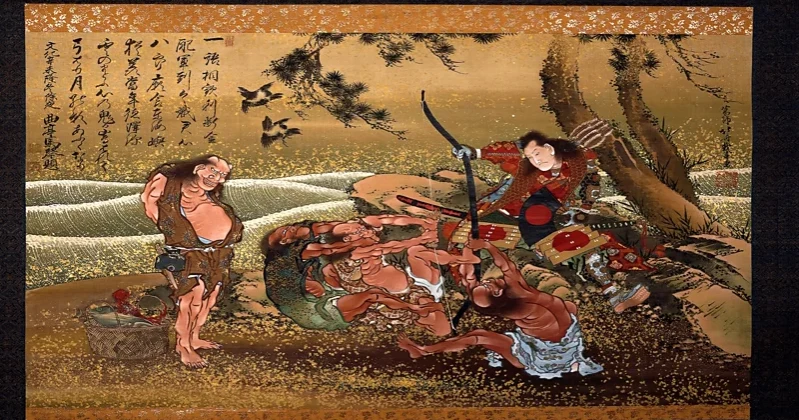
From medieval beginnings, the samurai have captured imaginations across centuries, inspiring art, literature, and films—from Shōgun to Star Wars. Yet their true history is far more complex and nuanced than the myths suggest.
The samurai’s legacy is unique in world culture. Few medieval social groups have been celebrated and mythologized as relentlessly as they have—from 18th-century ukiyo-e prints to contemporary video games, TV shows, and films. Over time, however, fame often bends toward exaggeration, and the samurai are no exception.
Were they truly fearless, loyal, self-sacrificial, disciplined, and uniquely Japanese? The British Museum’s new Samurai exhibition seeks to cut through the myth, presenting a more accurate and fascinating history of these enigmatic warriors.
Origins and evolution
The samurai did not constitute a uniform group across history. “The perception in the West is that samurai are warriors—and they certainly were,” says Rosina Buckland, the exhibition’s curator. “That’s how they rose to power in the Middle Ages. But that’s not the full story.”
Samurai origins trace back to the 10th Century, when they were recruited as mercenaries for the imperial courts. Over time, they evolved into rural gentry, but contrary to popular belief, they were not idealized crusaders bound by codes of chivalry. In battle, they often employed ambushes, deception, and opportunistic tactics, motivated more by land and status than honor or duty.
The samurai were adaptable, embracing foreign technology and multicultural influences. For instance, a samurai cuirass in the exhibition shows a Portuguese-inspired design, with a pointed front and angled sides to deflect musket bullets—a necessity after European firearms arrived in Japan in 1543.
Power, culture, and governance
The samurai rose to political power amid imperial succession disputes, with the Minamoto clan eventually establishing a government parallel to the imperial court in 1185. Buckland emphasizes that even early on, culture was central to power: “Culture is power.” Military leaders, or Shōguns, complemented their battlefield might with cultural sophistication to consolidate authority. They drew on Neo-Confucian philosophy, balancing military force with cultural skill.
Alongside warfare, samurai mastered refined arts such as painting, poetry, music, theatre, and tea ceremonies. One notable exhibit features a 19th-century fan painted with orchids by a samurai artist.
The Disney/FX series Shōgun fictionalizes one turning point: in the 1500s, Tokugawa Ieyasu (represented by the fictional Yoshii Toranaga) established a government that lasted 250 years. With peace established, samurai shifted roles from warriors to bureaucrats: ministers, lawmakers, tax collectors, and guards in castle gates.
Role of women
During the Tokugawa Shogunate, Daimyo families were relocated to Edo (modern Tokyo) to ensure loyalty, placing women in charge of households. Buckland explains that women oversaw large households—sometimes 40–50 people—managing staff, tradespeople, children’s education, and hosting guests according to strict rituals. Exhibition items, including robes and etiquette manuals, reveal the crucial role of samurai women.
The era also saw the rise of legendary portrayals in plays, poems, and artworks, often celebrating male heroism but sometimes highlighting female warriors. An 1852 ukiyo-e print depicts Tomoe Gozen, wife of a Minamoto general, who reportedly fought at the Battle of Awazu in 1184, defeating enemy warriors with her bare hands.
Demise and legacy
During the Meiji era (1868–1912), Japan modernized politically, socially, and militarily, officially abolishing the samurai class in 1869. “At this point, the samurai image becomes pure fiction,” Buckland says, noting that nostalgia revived the image about 25 years later.
International fascination grew, including Nitobe Inazō’s Bushido: The Soul of Japan (1899), which explained Japan’s success in the wake of the Sino-Japanese War and victory over Russia. The samurai image was later used domestically as military propaganda and a national symbol.
Samurai culture also influenced global media: Akira Kurosawa’s The Hidden Fortress (1958) inspired Star Wars: A New Hope (1977), and the costumes drew on samurai armor, with Darth Vader’s iconic outfit on display in the exhibition.
The true story of the samurai is one of evolution—from medieval mercenaries to gentrified bureaucrats and patrons of the arts. Yet their legend continues to captivate through art, film, video games, and fiction. Buckland hopes the British Museum exhibition will inspire new representations of these fascinating warriors.
The Samurai exhibition is open at the British Museum until May 4.