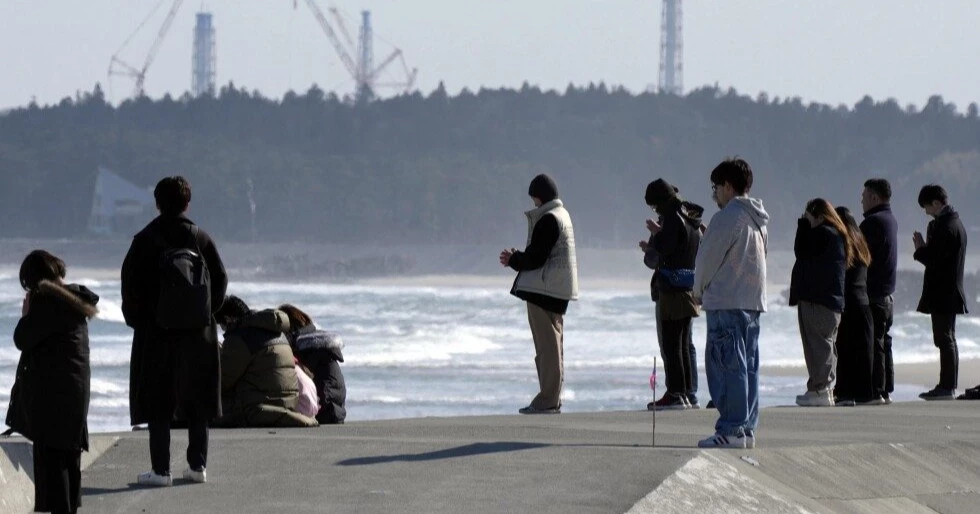
Japan on Wednesday marked the 15th anniversary of the devastating earthquake, tsunami, and nuclear disaster that struck its northeastern coast, as the government pushes for increased use of atomic energy.
The magnitude 9.0 quake and resulting tsunami on March 11, 2011, killed more than 22,000 people and forced nearly 500,000 to flee their homes, mostly due to flooding. In Fukushima, around 160,000 residents evacuated after radiation leaked from the tsunami-hit Fukushima Daiichi nuclear plant, with about 26,000 still living elsewhere due to lingering radiation fears or restrictions in their hometowns.
At 2:46 p.m., the country observed a moment of silence, marking the exact time the quake struck.
Prime Minister Sanae Takaichi, speaking at a ceremony in Fukushima, vowed to accelerate the region’s recovery over the next five years and to continue sharing “the valuable lessons learned from the disaster.” She has also pushed for faster restarts of nuclear reactors, supporting nuclear power as a stable energy source following a policy reversal in 2022 that ended a decade-long phase-out.
Early Wednesday, some residents of the tsunami-hit areas visited the coast to pray for missing loved ones. Over one million homes, schools, and offices in Iwate, Miyagi, Fukushima, and other coastal regions were destroyed or damaged. While infrastructure has largely been rebuilt, community and economic recovery has been slow, with many residents relocating permanently.
At Fukushima Daiichi, meltdowns occurred in three of six reactors, with at least 880 tons of melted fuel still inside. Radiation levels prevent full inspection, and large-scale removal is not expected until 2037 or later. Decontamination efforts produced massive amounts of slightly radioactive soil—enough to fill 11 baseball stadiums which the government plans to move, including for public works, but faces local resistance.