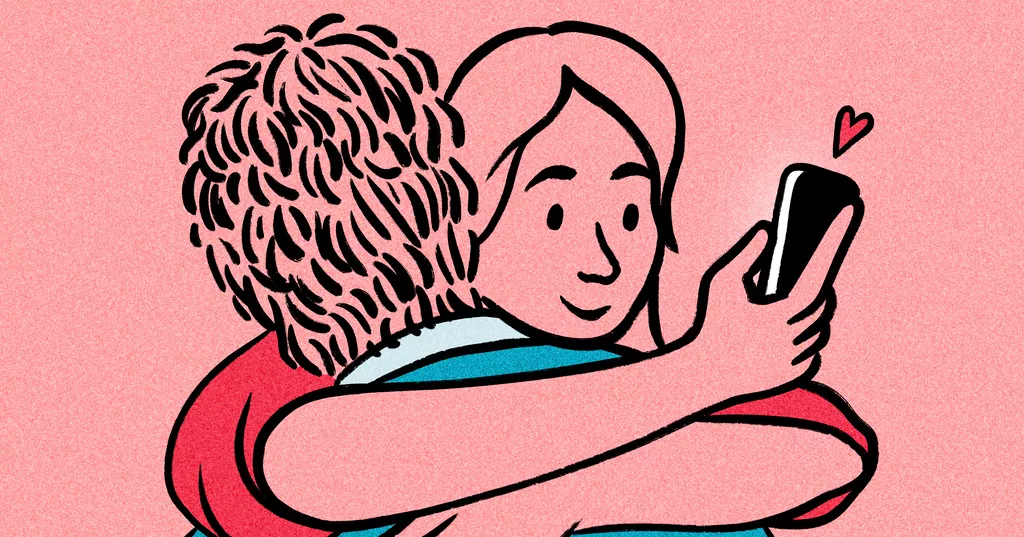
Liking a colleague’s photo online, sending them private messages, or chatting with them on Slack more frequently than before might seem harmless to some.
But to a romantic partner, these actions could be viewed as microcheating—a behaviour some interpret as a subtle form of infidelity, especially when emotional connections begin to form, even through simple gestures like heart emojis.
Though navigating boundaries in romantic relationships isn’t a new concept, the rise of remote work has amplified the issue, said William Schroeder, a therapist and founder of Just Mind Counseling in Austin, Texas.
“People are forming more digital connections now, which makes space for this kind of behaviour,” Schroeder explained. “With work-from-home setups, it’s even easier because it feels less risky.”
Defining Microcheating
The term microcheating, popularised by Australian psychologist Melanie Schilling, refers to actions that stop short of a full emotional or physical affair but are still difficult to be honest about with one’s partner.
It can include secretive online chats, spending extra time around a certain colleague, disclosing intimate details about your relationship, or dressing to impress someone specific.
“We’ve just attached a modern label to something that’s always existed,” said Abby Medcalf, a psychologist based in Berkeley, California, and host of the “Relationships Made Easy” podcast.
In recent years, Medcalf said most examples she’s seen involve texting or messaging via social platforms, and the behaviour often blurs into more problematic territory.
Why Does It Matter?
As relationship norms shift and ideas like polyamory become more mainstream, some might argue that liking a photo or posting a comment is no big deal. Medcalf noted that while many couples are comfortable with these behaviours, those who aren’t shouldn’t feel guilty.
“There’s no universal rulebook for relationships,” she said. “It really comes down to what each person is comfortable with.”
Even if a behaviour hasn’t been specifically banned, it can become problematic if it diverts attention away from the primary relationship.
“It becomes cheating if your partner disapproves, isn’t aware of it, or would be upset if they found out,” Medcalf said.
She recommended against snooping, which can signal a deeper lack of trust. Instead, consider how your partner treats you overall: “Do you feel like you’re their priority?”
How Can Couples Navigate It?
According to Schroeder, every couple sets boundaries—some explicitly discussed, others assumed. Today, though, those lines are blurrier than ever.
For example, if two people met through a dating app, it’s essential to talk about deactivating it and whether they’re committed to exclusivity. They should also define what exclusivity means—does it include avoiding flirty conversations or limiting interactions on social media?
Ideally, these conversations should happen before any conflict emerges, though it’s not always easy to know when to start. Schroeder likened it to fuelling a car.
“If you believe your tank is full, you’re not going to ask when to refuel,” he said.
Changes in behaviour—such as a partner becoming more protective of their phone or constantly scrolling social media—might indicate something’s off. But Schroeder advised approaching the situation without blame. Instead, point out the change and express your feelings, saying something like, “You seem more focused on your phone lately, and it’s made me feel uneasy.”
Approaching the conversation with curiosity rather than accusation often leads to better outcomes, he added.
Microcheating, he said, often stems from a desire for the excitement that comes with new connections. While some individuals never take things further, being honest with oneself about these actions can be revealing.
And microcheating doesn’t necessarily spell the end of a relationship.
“It can be a wake-up call—a chance to rebuild,” Schroeder said. “When these subtle behaviours come to light, it’s a good opportunity to reflect and ask, ‘Why is this happening for me?’”