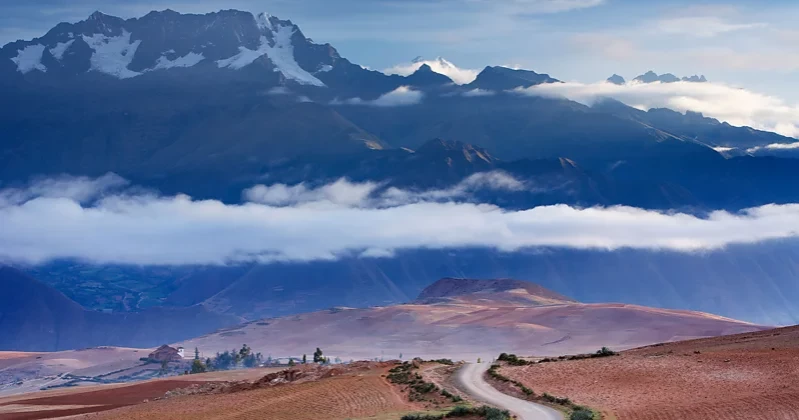
A long-delayed airport project in Peru’s Sacred Valley is fuelling fresh debate over tourism growth and heritage protection, as critics warn that the development could permanently alter the landscape surrounding the ancient Incan citadel of Machu Picchu.
The Chinchero International Airport, under construction on the outskirts of the historic Andean town of Chinchero, is expected to significantly reduce travel time for visitors by allowing them to bypass Lima and Cusco. Designed to handle up to eight million passengers a year, the airport could boost visitor numbers to the region by as much as 200%, according to Peruvian authorities.
Supporters argue the project will provide an economic boost to one of Peru’s less-developed regions. The Ministry of Transport and Communications says the airport, which has already cost an estimated 2.3 trillion Peruvian soles, has created more than 5,000 construction jobs and could benefit around one million people linked directly or indirectly to tourism.
However, Indigenous groups, archaeologists, environmentalists and local tourism operators have raised concerns about cultural loss, environmental damage and unchecked development. The Sacred Valley, carved by the Urubamba River and surrounded by the Andes, was the spiritual and administrative heart of the Incan empire and still contains functioning pre-Incan and Incan infrastructure, including roads, irrigation systems and agricultural terraces.
Opponents warn the airport threatens watersheds, wildlife habitats and archaeological sites. Local guide Luis Flores said agricultural land around Chinchero has already been sold off since the project was announced more than a decade ago, replacing traditional corn and potato fields with housing and commercial development. He fears intensified construction to support mass tourism will further reduce farmland.
Tourism professionals acknowledge potential economic benefits but stress the need for proper planning. Machu Picchu guide Lizbeth Lopez Becerra said the region’s infrastructure is already under strain, citing traffic congestion, water shortages and inadequate waste management. A comprehensive heritage impact assessment, she noted, remains incomplete.
The airport project, first proposed in 1978, has been repeatedly delayed by funding problems, construction setbacks and allegations of corruption. Officials now estimate it will be completed in late 2027, though some residents doubt it will ever open.
Concerns have also been raised about overtourism. Unesco has warned that poor management and rising visitor numbers could threaten Machu Picchu’s World Heritage status. Peru’s Ministry of Culture currently caps daily visitors at between 4,500 and 5,600, depending on the season, but a sharp rise in arrivals could place further pressure on the fragile site.
Veteran guide Efrain Valles Morales said the key issue is not visitor numbers alone, but how tourism is managed. He urged authorities to invest in guide training and diversify attractions to spread visitors beyond Machu Picchu, highlighting lesser-known nearby sites such as Chonta Canyon and ancient agricultural terraces at Surite.
Hotel owner and philanthropist Petit Miribel said while Cusco’s existing airport is overcrowded and new infrastructure is needed, development must be carefully controlled. She warned that rapid, unplanned construction is already changing the character of towns like Urubamba, adding that long-term impacts on future generations must be considered.
Although the airport has yet to open, residents say its effects are already being felt. “The damage is already there,” Miribel said, reflecting a growing concern that transformation of the Sacred Valley is underway even before the first plane lands.
With inputs from BBC