
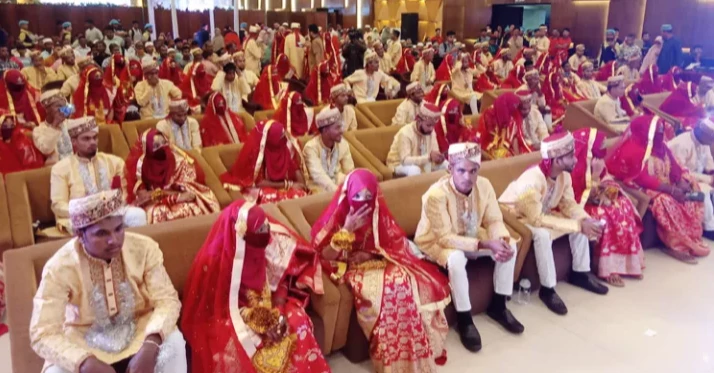
On a festive Thursday in Sylhet city, a convention hall became the setting for 126 new beginnings—where poor, orphaned, and financially struggling young men and women stepped into married life through a fully sponsored mass wedding.
The event brought together couples who, despite being adults ready to start families, had long been unable to marry due to financial hardship. For many of them, the day marked the end of years of uncertainty and the beginning of a shared future.
The initiative was funded by Seeds of Sadaqah, a humanitarian organisation led by expatriates in the UK, working to support underprivileged youth.
The event was designed not just as a ceremony, but as a complete social support package for newly formed families.
Each couple received 77 types of household items worth around Tk 200,000, aimed at helping them begin their new lives with stability and comfort. From kitchen essentials to daily-use necessities, the gifts were intended to ease the early financial pressures of marriage.
For many attendees, the atmosphere felt like a “dream wedding,” as described by organisers—filled with celebration, laughter, and a sense of shared hope. Families who had long struggled with poverty found themselves part of a moment that felt both personal and collective.
Md. Zainul Abedin, head of Seeds of Sadaqah, said the initiative reflects a broader mission. “Our goal is to create a path of happiness and self-reliance for the underprivileged and helpless people of society. Today’s event is a shining example of that,” he said.
Another organiser, Orkatul Jannat, said the support would help instil confidence in the couples as they begin their new journey together. “This assistance will bring new hope and encouragement in their lives at the start of their marriage,” Orkatul Jannat said.
Organisers added that they plan to continue similar humanitarian initiatives in the future, aiming to support vulnerable communities and help more young people overcome financial barriers to marriage.
For the 126 couples, however, the day was not about statistics or organisation names—it was about stepping into a shared future, surrounded by celebration, dignity, and a rare sense of relief.