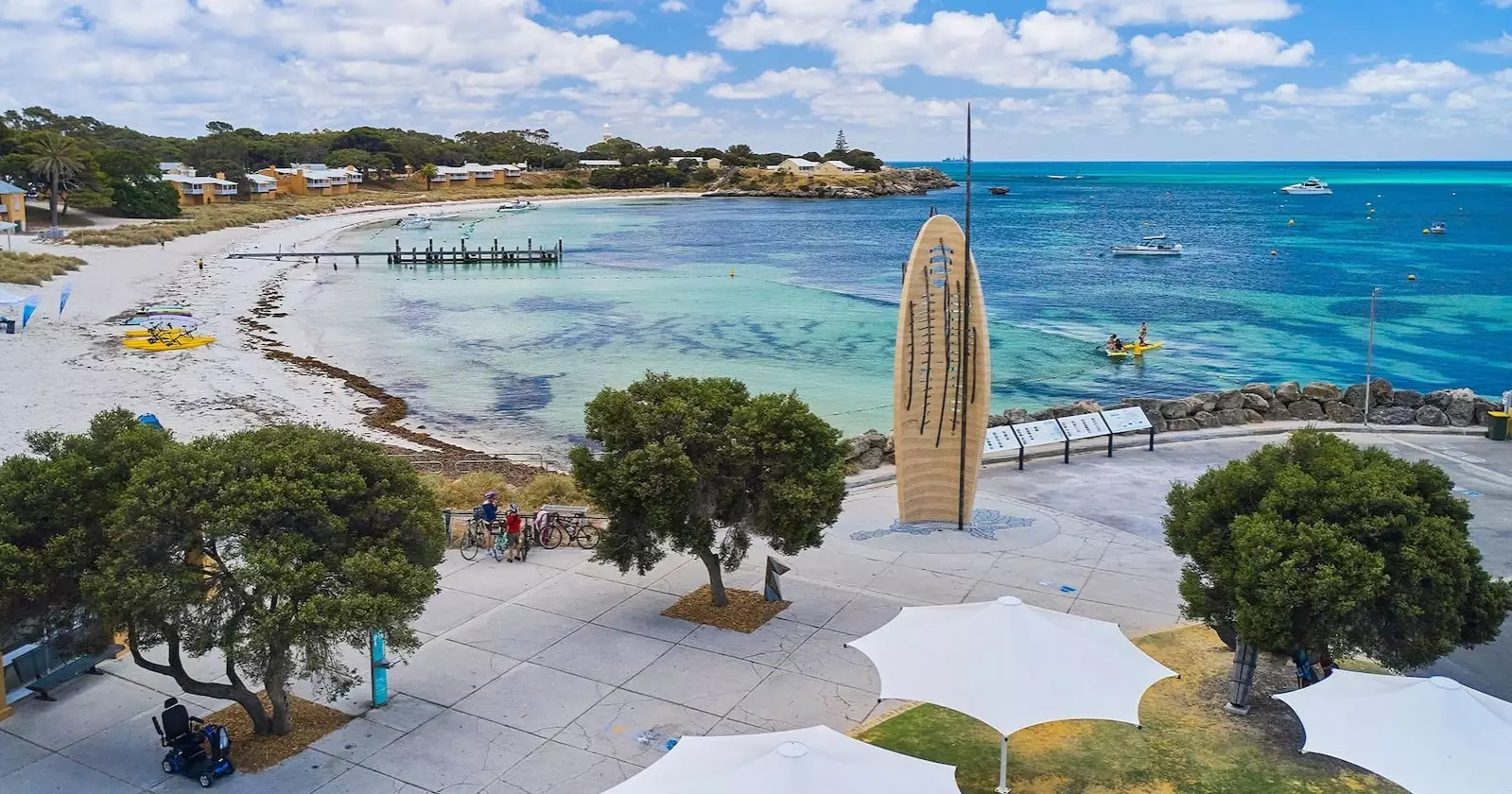
From the coast of Perth, a striking blue rise appears on the horizon, sometimes vivid, sometimes obscured by mist or ships at sea. To Glen Stasiuk, a lecturer at Murdoch University and director of the documentary Wadjemup: Black Prison — White Playground, the island feels alive. “Sometimes it wants to be seen, sometimes it wants to hide,” he says. “It has a heartbeat.”
That island is Rottnest Island, known to the Noongar people as Wadjemup, located about 19 kilometres off the coast of Fremantle. Today, more than 800,000 visitors flock there each year for its white beaches, turquoise waters and quokkas, the small marsupials that have become global social media stars.
For the Noongar people, however, Wadjemup is a deeply spiritual place. Len Collard, emeritus professor at the University of Western Australia, explains that in Noongar belief, spirits travel west to the islands after death. “It was always a place of spirits,” he says, “but it became even more so after colonisation, when it turned into a site of immense suffering.”
A prison island
Wadjemup became a prison for Aboriginal boys and men in 1838. Britain had claimed Australia in the late 18th century, and violent clashes between colonisers and Indigenous peoples followed. Aboriginal prisoners were transported to the island, often in chains, accused mainly of stealing livestock or food rations.
Many inmates came from far-flung regions such as the Kimberley, more than 2,000 kilometres away. Some had never seen the ocean before arriving. They were forced into hard labour, quarrying limestone and constructing much of the island’s infrastructure, including jetties, cottages and government buildings.
‘Fabled knights of old’: the real story behind Japan’s samurai
Conditions were brutal. Cells were overcrowded, disease was widespread, and punishment was severe. One superintendent, Henry Vincent, was notorious for his cruelty, yet was never convicted. By the time the prison closed in 1902, nearly 4,000 Indigenous men and boys had been incarcerated there. At least 373 died, most of them buried in unmarked graves.
From prison to playground
After the prison shut down, Wadjemup was quickly reimagined as a leisure destination. In 1911, the main cell block was converted into holiday accommodation, stripping away much of its historical fabric. Even more disturbing, the burial ground of deceased prisoners was turned into a campground known as Tentland.
For nearly 90 years, holidaymakers unknowingly slept just metres above one of Australia’s largest Indigenous burial sites. Although human remains were discovered in 1970, the campground was not closed until 2007. The former prison itself continued operating as tourist lodging until 2018.
Reckoning with the past
For Noongar communities, the island remains both painful and powerful. Collard describes Wadjemup as a sentinel or lighthouse, signalling a truth that must not be ignored.
In 2020, the Rottnest Island Authority launched the Wadjemup Project to formally acknowledge the island’s history of Aboriginal incarceration and deaths in custody. The initiative focuses on truth-telling, memorialisation and healing.
As part of this effort, the Wadjemup Wirin Bidi or Spirit Trail was held in 2024, bringing together around 200 Aboriginal people from across Australia to honour those buried on the island and help lay their spirits to rest.
Today, visitors can also take Aboriginal cultural tours that explore both the beauty of the island and its traumatic history. Local Noongar guide Casey Kickett, who runs Koordas Crew, works with children through art and nature-based activities to introduce them gently to Wadjemup’s cultural significance before confronting its darker chapters later in life.
Road to Heaven: Gujarat’s surreal highway flanked by water and salt pans
Despite everything, Collard says he still loves visiting the island. “My people are buried there,” he says. “I go over and say hello to them.”
Kickett offers visitors a simple gesture of respect: when stepping off the jetty, throw a handful of sand into the water and introduce yourself to the land and its ancestors. It is a small act, she says, but one that acknowledges the deep, complex history beneath this island paradise.