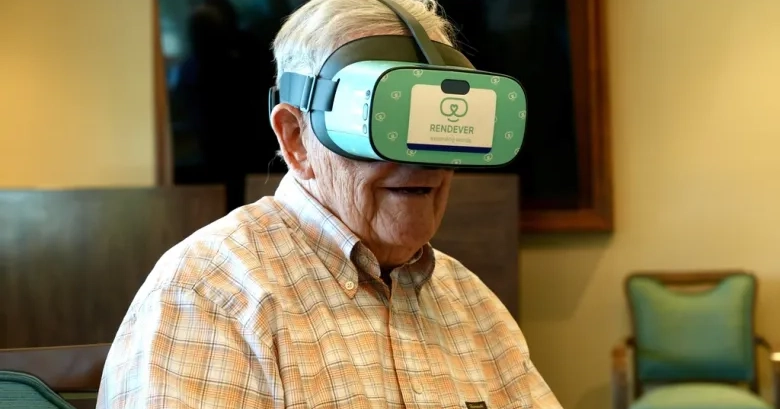
Residents at The Terraces, a retirement community in Los Gatos, California, are rediscovering adventure and connection through virtual reality (VR) technology. Many of the seniors, most in their 80s and 90s, are unable to travel far but can now explore distant places, dive into oceans, or experience thrill-seeking activities like hang-gliding—all from the comfort of their chairs.
The VR programs, curated by Massachusetts-based Rendever, aim to enhance cognitive function and foster social bonds. During one session, residents paddled along with dolphins in a 3D underwater simulation. Another virtual hot-air balloon ride left participants gasping with excitement. Some residents even revisit childhood neighborhoods through VR, evoking cherished memories. “It’s not just seeing it again; it’s the memories it brings back,” said 84-year-old Sue Livingstone.
Adrian Marshall, community life director at The Terraces, noted that VR often becomes a conversation starter, encouraging residents to connect over shared experiences. Research shows VR can improve memory, reduce isolation, and strengthen intergenerational relationships when used thoughtfully.
Doctors recommend belly laughs two to five times a week for health benefits
Rendever, which received a $4.5 million NIH grant, plans to study ways VR can reduce social isolation for seniors at home and their caregivers. Experts emphasize that while VR is not a replacement for traditional activities, it provides a meaningful and engaging avenue for seniors to socialize and enjoy new experiences.
Residents at other retirement communities, such as the Forum in Silicon Valley, also use VR to revisit past travels and experience nature or performances. For Bob Rogallo, living with dementia, a virtual hike through Glacier National Park brought joy, while 93-year-old Almut Schultz delighted in a virtual music performance and playful puppy interactions.
Source: AP