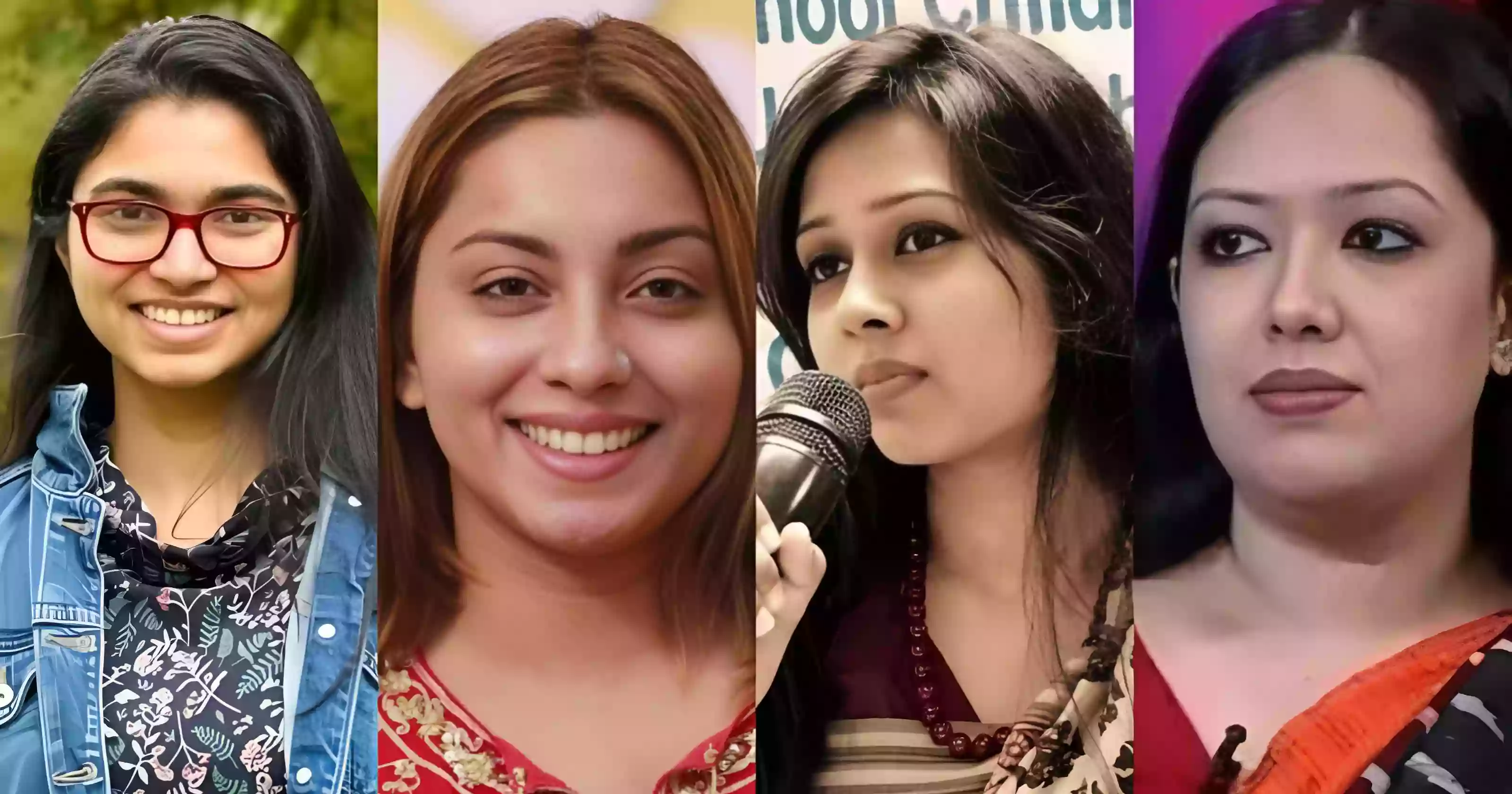
Despite decades of pledges to ensure women’s political empowerment, the upcoming national election paints a starkly different picture, with female representation on the ballot remaining alarmingly low.
The election will see participation from registered 51 political parties, yet more than 30 of them, including Bangladesh Jamaat-e-Islami, have failed to nominate even a single woman candidate in the 13th parliamentary election, raising fresh concerns over gender inclusion in national politics.
Of the 2,568 nomination papers submitted for the election, only 109 were filed by women—just 4.24 per cent of the total, according to data reviewed by UNB.
After scrutiny, the Election Commission (EC) has validated 1,842 candidates, including 1,779 men and only 63 women, meaning women make up just 3.4 percent of the final candidates.
What we know about at least one of Hadi's would-be assassins
Later, 417 candidates regained their candidacies after appealing to the Election Commission. January 20 was the last day for the withdrawal of candidacies.
According to the Election Commission (EC), a total of 1,981 candidates, including 80 women, are contesting the 13th national parliamentary election, with women making up only 4.04% of the total.
Meanwhile, Transparency International Bangladesh (TIB) noted that women make up only 3.38% of party-affiliated candidates, while the share is 10% among independent candidates.
While the world embraces music education, Bangladesh seen stepping backwards
According to EC data, the upcoming election will have 12 crore 77 lacs 11 thousand 793 registered voters, including 64 crore 8 lacs 25 thousand 361 men, 62 crore 8 lacs 85 thousand 200 women, and 1,232 third-gender voters.
Legal framework and previous elections
Under Section 22(ka)-(gha) of the July 2025 National Consensus Ordinance, every political party was to nominate at least 5 percent women candidates in the parliamentary election, gradually increasing to 33 percent in future polls. But the ordinance has not yet been implemented, making the rule effectively non-binding.
288 BNP, 224 Jamaat candidates in Bangladesh election race
Historical participation has remained low. According to Transparency International Bangladesh, women candidates accounted for 3.51 percent (55 women) in 2008, 5.55 percent (30 women) in 2014, and just 0.81 percent (73 women) in 2018.
In the 12th Jatiya Sangsad, 20 women were elected, representing 6.67 percent, the highest in four consecutive parliaments.
In the 9th Jatiya Sangsad, women lawmakers accounted for 3.32 percent, in the 10th Jatiya Sangsad 6.55 percent, and in the 11th Jatiya Sangsad just 3.68 percent.
Party-wise breakdown
Of the 51 parties contesting, only few fielded women aspirants.
Bangladesh Nationalist Party (BNP) had nominated women for the highest 15 constituencies but now has 10 valid women candidates following scrutiny and withdrawal, after the rejection of Fatema Khanam’s nomination (Natore-3) and non-scrutiny of three nominations of Khaleda Zia.
Other women candidates nominated by political parties include: 9 from Bangladesh Samajtantrik Dal-Marxist, 6 each from Jatiya Samajtantrik Dal (JSD) and Insaniat Biplab Bangladesh, 5 each from Ganasamhati Andolan and Jatiya Party, 3 each from Ganaodhikar Parishad (GOP), National Citizen Party (NCP), which emerged from mass uprising, nominated only three women out of its 44 candidates.
Election 2026: 1967 candidates left standing after withdrawals, highest since 2008
Others including AB Party, 2 each from Gong Forum and Biplobi Workers Party, 1 each from Bangladesh Muslim League, Communist Party of Bangladesh (CPB), Bangladesh Supreme Party (BSP), Bangladesh Samajtantrik Dal-Basosd, Bangladesh Republican Party, National People’s Party (NPP), Aamjanatar Dal, Islami Front Bangladesh, and Bangladesh Labour Party, nominated female candidates.
During scrutiny, several women aspirants lost candidacy: three from Basad, and one each from Jatiya Party, Ganasamhati Andolan, Biplabi Workers Party, AB Party, NPP, and Bangladesh Labour Party.
Human trafficking, instability erode global trust in Bangladesh’s passports
Among 37 independent women aspirants, only six nominations were declared valid: Sabina Yasmin (Natore-2), Dr. Tasnim Zara (Dhaka-9), Meherjan Ara Talukdar (Jamalpur-4), Akhtar Sultana (Mymensingh-6), Tahmina Zaman (Netrakona-4), and Rumeen Farhana (Brahmanbaria-2).
Among the parties, 276 aspirants from Jamaat-e-Islami, 268 from Islami Andolon Bangladesh, 224 from Jatiya Party, 104 from Gano Odhikar Parishad, 94 from Bangladesh Khelafat Majlish, and other smaller parties, each with fewer than 40 aspirants, also have no female candidates.
Potential impact
In a recent report, the international human rights organization Human Rights Watch (HRW) noted that out of 51 political parties contesting the upcoming general election, 30 have not nominated a single woman candidate.
The report highlighted that one of Bangladesh’s major parties, Bangladesh Jamaat-e-Islami, has not fielded any women candidates in the constituencies where it is contesting.
While Bangladesh has previously had two female prime ministers and witnessed significant participation of women in the student-led movements of 2024, HRW noted that women in the country are still largely deprived of the right to participate meaningfully in politics.
Telling again, no uncertainty over election: Press Secretary
Political parties must be held accountable for failing to nominate at least five percent women candidates in the upcoming national election despite pledging to do so under the July National Charter, said the Women’s Political Rights Forum (FWPR).
The forum urged political parties to treat women’s nomination as a constitutional obligation rather than a token gesture and called for structural reforms to integrate women into leadership roles and ensure a gender-responsive political system.
At a press conference titled “Nomination Crisis of Women Candidates: Gap between Parties’ Commitments and Implementation and the Accountability of the Election Commission” held at Dhaka Reporters’ Unity, forum leaders expressed concern over women’s extremely low participation.
Forum leader Reetu Satter readout a written speech in the press conference where she said the women had prominent roles in the uprising of July in 2024, but women candidates were deprived of getting party nominations for Jatiya Sangsad.
Forum leader Samina Yasmin said women voters constitute nearly 50 percent, or possibly more, of the electorate.
“If women make up 51 percent of voters, our next critical task is to raise awareness about women’s rights, organize them, and ensure their active political participation. Is it realistic to come to power by excluding 51 percent of the population and relying on the remaining 49 percent? This is a fundamental question,” she said.
Confusion clouds Shammo murder probe as key suspect remains elusive
Samina said the forum is trying to work directly and indirectly with women leaders who are contesting the election and actively campaigning. “We are observing what kinds of challenges they are facing, how they are addressing them and what effective pathways could be developed to tackle these challenges in the future.”
Despite widespread discussions on women’s rights, the number of female candidates in this election remains alarmingly low, forcing a serious reassessment of the situation, Samina added.
Meanwhile, the Social Resistance Committee, a platform of 71 organizations working on women, human rights, and development issues, has expressed concern over the low number of women candidates in the upcoming election.
In a statement, the committee said that given the prevailing misogynistic culture in society, women are hesitant to contest as independent candidates. It described this as a reflection of the patriarchal political culture and a strategy to maintain male-dominated politics.
Highlighting the need for women’s visible participation in elections and politics, the Social Resistance Committee urged all political parties and the Election Commission to ensure women’s equal participation in political decision-making and governance, emphasizing that this is essential for building a democratic and equitable society.