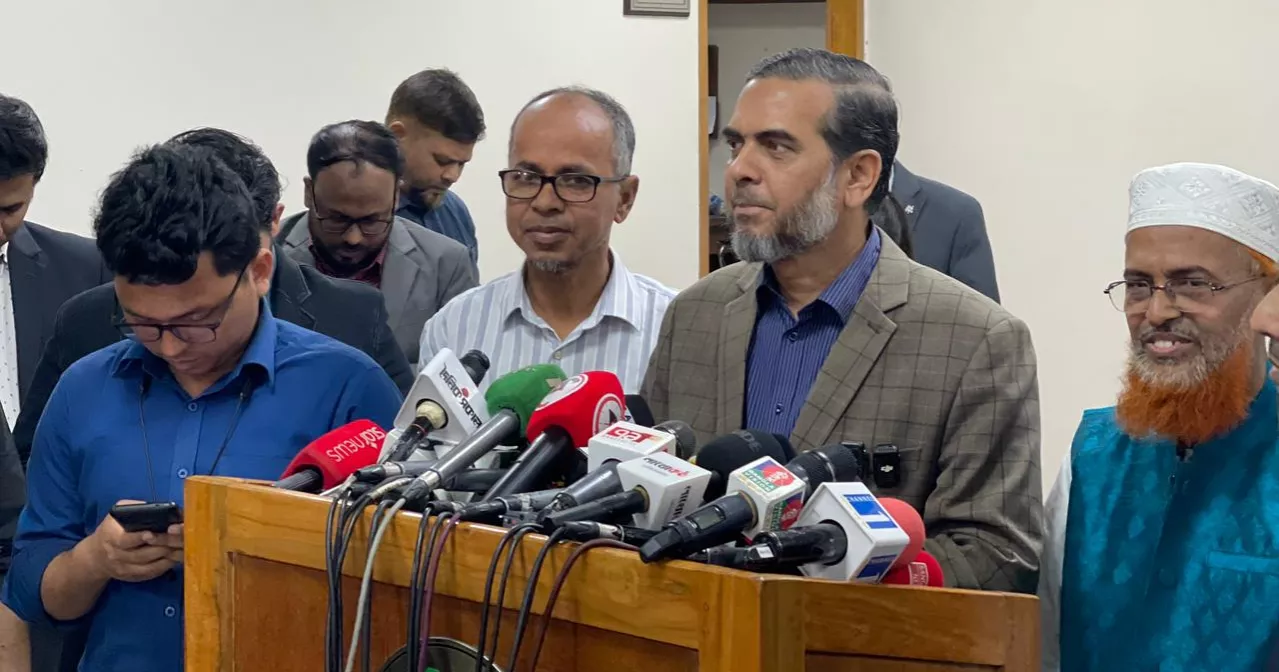
Bangladesh Jamaat-e-Islam on Monday lodged several complaints with the Election Commission, alleging that its women activists and school teachers enlisted under the Monthly Pay Order (MPO) are facing harassment while campaigning for the party ahead of the upcoming national election scheduled for February 12 next.
“We’ve noticed over the past few days that when our women activists go out to carry out election activities, they are being attacked in different places of the country. They are being harassed and humiliated,” said Jamaat Assistant Secretary General Ahsanul Mahboob Zubair.
He was briefing reporters after a Jamaat delegation, led by Zubair, met Chief Election Commissioner AMM Nasir Uddin at Nirbachan Bhaban in the city.
Zubair, also heads the party’s central publicity and media department, said even in some cases, women wearing the niqab have even been asked to remove it publicly.
Citing recent incidents in various constituencies, including Dhaka-15, he said mobile phones were snatched from women activists. Such harassment and attack created concern among women who constitute nearly half of the voters.
Noting that women are playing an excellent role in the campaign of the upcoming February-12 national election and referendum, Zubair said it is unfortunate that severe misconduct is being carried out against their women activists by members of a certain political party.
'Corruption-free, terrorism-free Bangladesh if voters give mandate': Dr. Shafiqur Rahman
Raising the second complaint, the Jamaat leader alleged that their MPO-enlisted teachers are being prevented by local officials including magistrates, from participating in election campaigns.
He questioned why an MPO-enlisted teacher should be allowed to carry out campaign when such a teacher can become a candidate.
“When a teacher is harassed or fined, he is humiliated before her colleagues, students, and the society,” he said, adding that the EC assured the delegation that appropriate measures would be taken to address these concerns.
Zubair said they again demanded the installation of CCTV cameras at polling stations and in response, the EC said steps had already been taken and a circular issued.
Promise for Future
In reply to a question as to why Jamaat didn’t field any single women candidate in this election even after it and all other political parties reached a consensus to pick at least 5 percent candidates from women in the reform dialogues, the Jamaat leader outlined four reasons behind it.
First, he said the agreed provision for 5 percent women (candidates) in the July National Charter would take effect only after the ‘Yes’ option in the referendum would pass and it is not mandatory this time.
Second, he said that the provision is for the next parliament (14th parliament). “We did not give (women candidates) this time; Inshallah, we will give (them) next time,” he said.
Raising the third reason, he said some of the other 11 parties in the Jamaat-led alliance have fielded women candidates in this election.
Fourth, he said Jamaat follows an internal selection process that begins at the grassroots level. While men must follow party guidance for candidacy, women have the freedom to decide whether to contest, considering family and personal circumstances.
Jamaat commits to implementing Teesta Mega Plan if elected: Dr Shafiqur Rahman
“From the grassroots to the apex body-Shura, over 40 percent of our leadership positions are held by women,” he added.
When attention was drawn to an allegation raised by BNP that Jamaat women activists demanded national identity and mobile payment numbers from voters, Zubair dismissed them as “completely false” and said no such incidents have occurred anywhere.
A gentlemen’s agreement was reached among political parties in the July National Charter 2025, calling for the nomination of at least 5 percent women of their respective aspirants in the next general election, and at least 10 percent women in the 14th national election. However, the agreement will not be incorporated into the Constitution.
A total of 27 political parties and alliances endorsed the agreement, while three parties issued notes of dissent. Despite this, most parties flagrantly ignored the commitment in the 13th parliamentary election.